


A powerful multiport charger just tumbled to a record low, with the Baseus 140W USB-C Charger dropping to $39.99 for Prime members. That $20 discount pushes this GaN-based brick into no-brainer territory for anyone who wants one adapter to juice phones, tablets, and even high-end laptops at top speed.
Why This 140W USB-C Charger Deal Stands Out Today
Value per watt is the easiest way to compare chargers. At $39.99 for 140W, you’re paying roughly $0.29 per watt. Popular 140W rivals commonly land around $90, closer to $0.64 per watt, meaning you’re saving well over 50% for near-identical charging capabilities. That kind of efficiency is rare, especially for a compact GaN unit that can anchor a travel kit or a minimalist desk setup.
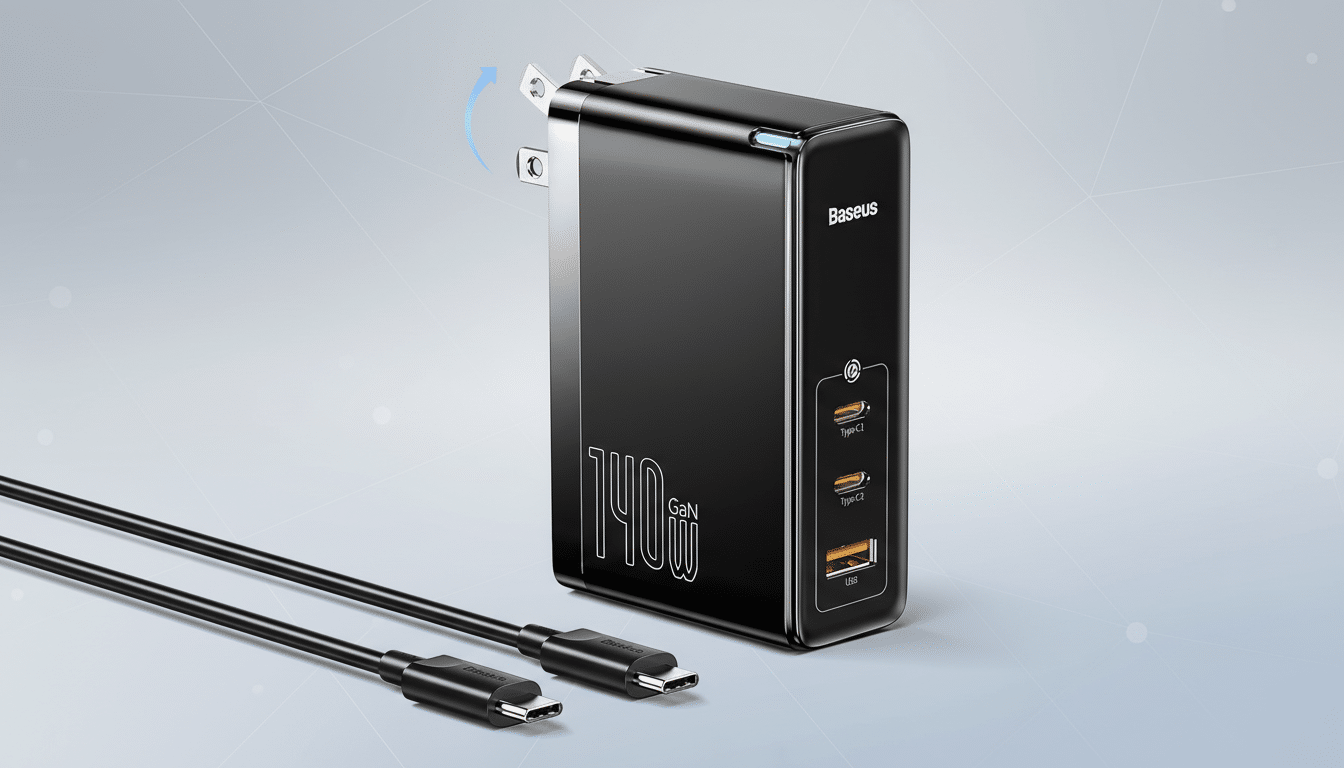
The headline spec here is USB Power Delivery capability up to 140W, part of the USB-IF’s PD 3.1 EPR standard that extends fast charging up to 240W. In plain English, it’s more than enough to fast charge modern ultrabooks and pro laptops while still handling your phone and earbuds without breaking a sweat.
What You Can Power With This 140W USB-C Charger
Single-port output up to 140W means this brick can rapidly top up power-hungry machines. Apple’s documentation notes that the 16-inch MacBook Pro can hit 50% in about 30 minutes with a 140W USB-C power adapter and the proper cable. Pair that with the growing list of Windows laptops supporting high-wattage USB-C charging, and this charger easily doubles as a laptop power supply.
On the mobile side, flagship Android phones that support USB PD or PPS can charge at their peak rates—think up to 45W on recent Samsung Galaxy Ultra models—while tablets, handheld consoles, and accessories plug in without issue. It’s the kind of one-and-done brick that simplifies a backpack full of cables.
Ports and Power Distribution on This 140W Charger
This model offers three USB-C ports and one USB-A. Two of the USB-C ports can negotiate very high power—up to 140W each when used alone—while the third USB-C tops out at 40W and the USB-A delivers up to 33W. Total output is capped at 140W, so power is intelligently shared when you plug in multiple devices. In practice, that means you can run a laptop off a high-wattage USB-C port and still fast charge a phone or tablet on another port, though the laptop may step down slightly depending on the mix.
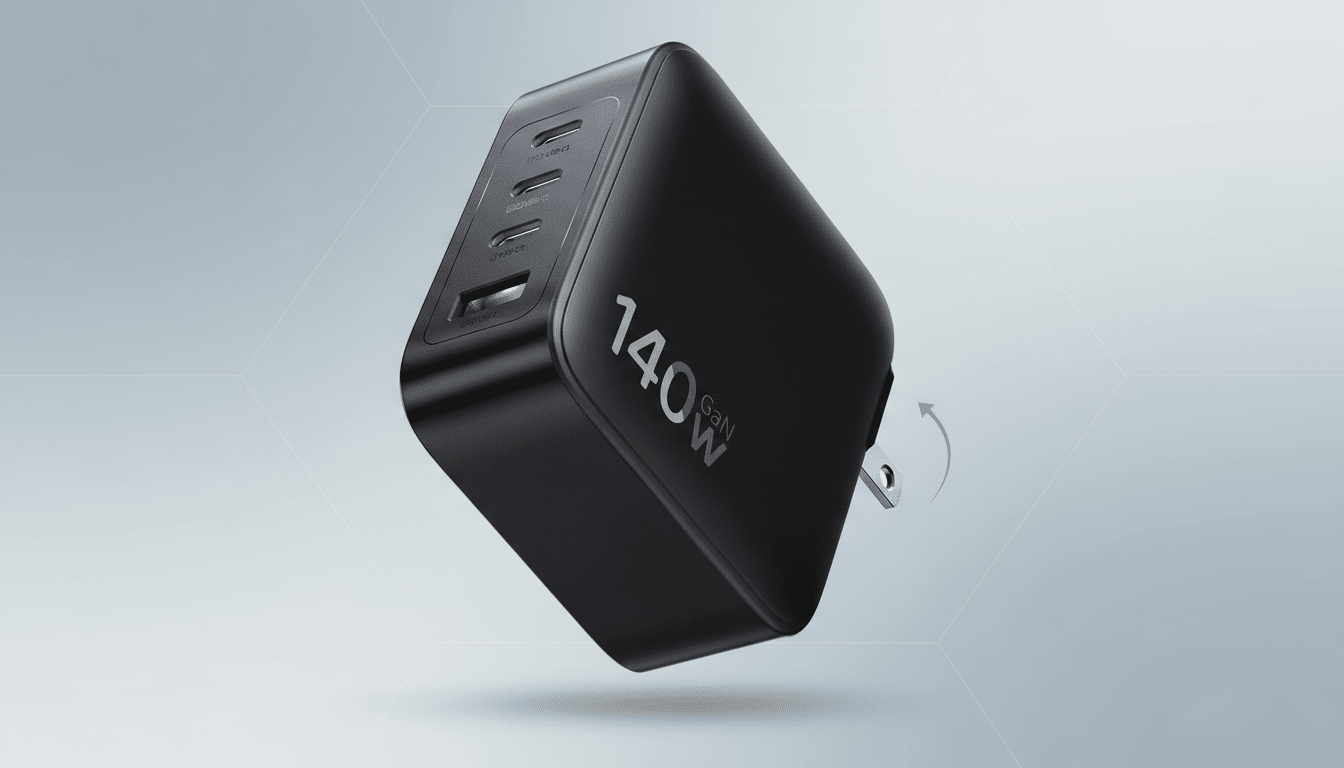
Pro tip: To unlock 140W speeds, you need a 5A USB-C cable with an e-marker chip. Many bundled cables are rated for 3A and will limit charging. If you’re pairing this charger with a high-end laptop, double-check your cable’s rating to avoid leaving performance on the table.
How It Compares to Rivals in Price and Features
Price is the headline, but parity on standards is the story. A well-known 140W competitor currently lists around $89.99, yet both aim at the same PD 3.1 EPR fast-charging tier and similar multiport convenience. Higher-priced chargers sometimes add frills like status displays, additional ports, or fold-flat prongs, but for core charging performance the gap is far narrower than the price suggests.
Safety features such as overcurrent, overvoltage, and temperature protections are table stakes across reputable brands, and GaN architectures typically deliver cooler, more efficient operation than older silicon designs. For most buyers, the trade-off here is fewer extras in exchange for standout value.
Buying Notes for Shoppers Considering This 140W Charger
This discount is available via Amazon and is exclusive to Prime members. If you want the best experience, pair it with a certified 5A USB-C cable to achieve the highest wattages and keep a shorter, high-quality USB-C lead in your bag for travel. Remember that while multi-device charging is convenient, total output still maxes at 140W—plug strategically to prioritize your laptop when needed.
Bottom Line: A Standout 140W USB-C Charger Deal
At $39.99, the Baseus 140W USB-C Charger delivers big-league power at a budget-league price. If you’ve been waiting for a single brick to handle a pro laptop and your daily mobile gear without inflating your carry, this deal is the sweet spot—lean on features, heavy on wattage, and priced to move.
