


Ashley Madison says it is retiring the “affairs” label and repositioning itself as a privacy-first service for discreet dating, rolling out a new tagline—“Where Desire Meets Discretion”—and a product narrative meant to distance the brand from its notoriety. The company frames the shift as an answer to growing demand for anonymity, not an escape from its past.
From Affairs To Discretion In Ashley Madison Rebrand
Executives describe the reboot as a move toward “ethical discretion,” courting singles, people who are separated, and those in consensually non-monogamous relationships. According to the company, recent sign-ups skewed more single than before—57% of new members, by its count—which it cites as proof that the brand already functions beyond covert affairs.
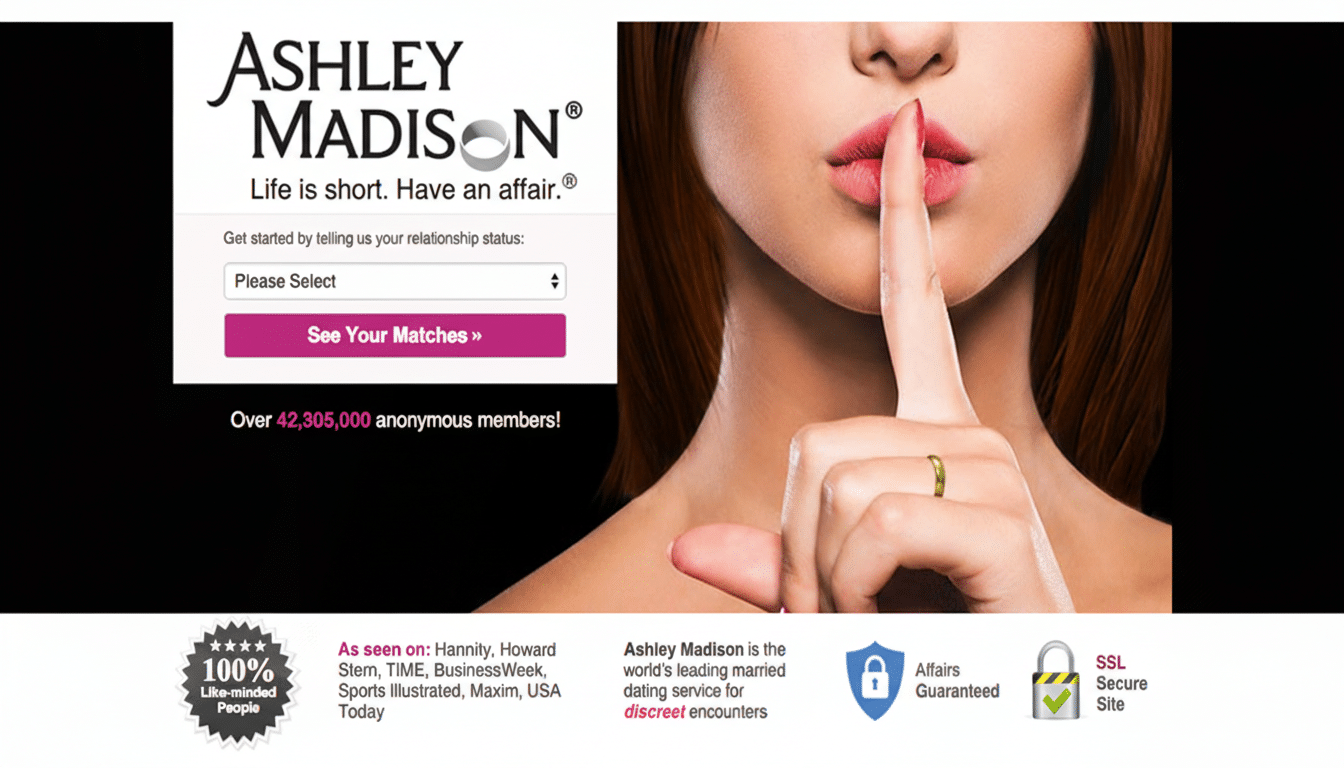
The pitch hinges on privacy as a user benefit rather than secrecy as a moral dodge. A company-partnered relationship therapist, Dr. Tammy Nelson, argues that overexposure on mainstream apps has fueled demand for platforms that minimize personal footprints. An internal survey shared by the brand says 61% of respondents chose the service primarily for discretion. That message aligns with broader user fatigue across swipe culture, where real names, social graphs, and algorithmic exposure can feel intrusive.
Reputation And Regulatory Baggage Challenges Persist
The rebrand has to contend with hard history. A devastating breach years ago exposed data on tens of millions of accounts and became a case study in what happens when intimate platforms underinvest in security and verification. In the fallout, the corporate parent restructured under the Ruby name and faced regulatory scrutiny for alleged fake profiles and security lapses.
Regulators in the United States and Canada have documented concerns about both user deception and data protection at the service. The company later reached settlements with the Federal Trade Commission and a coalition of state attorneys general, while privacy commissioners in Canada and Australia published investigations detailing compliance failures. That record is the backdrop against which today’s promises will be judged.
Privacy Features And Their Limits On The Platform
The product now emphasizes controls designed to keep identities compartmentalized: pseudonymous handles instead of legal names; photo blurring and masking; hidden albums unlocked with “Private Keys”; and a policy that bars social media handles or phone numbers in bios to reduce cross-platform tracing.
On mobile, an iOS-only Stealth Mode lets users alter the app icon and notification appearance. The platform also deploys screenshot blocking inside the app, showing would-be capturers a black screen. These tools raise the bar against casual leaks, though experts routinely warn that no feature can defeat someone taking a photo of a screen or using another device. The Electronic Frontier Foundation and other privacy advocates consistently note that “privacy by design” helps, but operational security—what users actually share and with whom—still matters most.

To satisfy skeptics, meaningful signals would include third-party security audits, transparent bug bounty results, and minimization of sensitive data storage. After the breach era, anything short of independent verification risks sounding like marketing rather than measurable reform.
A Changing User Mix And Market Positioning
Early community chatter suggests the audience is indeed shifting. Users on adultery-focused forums have noticed labels like “Attached seeking Attached” giving way to mainstream categories and broader non-monogamy tags. Some long-time members complain that an influx of singles undermines the site’s original premise. Ironically, those gripes bolster the company’s claim that it is pivoting beyond traditional infidelity.
The market context favors a privacy pitch. Consumer watchdogs report persistent harm from romance scams—by FTC tallies, losses exceeded $1B recently—while Pew Research has documented that large shares of online daters worry about personal data exposure. In that climate, a service that reduces identifiable breadcrumbs can carve out a defensible niche, even if it never fully escapes its past.
Still, the brand must thread a needle. Move too far toward mainstream anonymity and it competes with privacy-conscious dating alternatives and niche communities like those on Feeld. Lean too hard on its origins and it keeps the reputational drag that repels partners, advertisers, and wary users.
What Will Prove The Rebrand Beyond Marketing Claims
Words will not be enough. Look for concrete steps: independent security certifications; clear disclosure of data retention and deletion timelines; real-time transparency reports on moderation and fake profile detection; and enforcement logs that show bans for doxxing or off-platform sharing. Compliance with GDPR and state privacy laws, paired with frequent third-party penetration tests, would help convert rhetoric into trust.
If Ashley Madison can deliver measurable privacy safeguards and keep growing among singles and ethically non-monogamous users, the discreet dating narrative may stick. If not, the rebrand risks reading as reputation management with a new coat of paint. For now, the company has reset the message; the next test is whether its practices—not just its tagline—can sustain it.
