


After years of resistance and recurring rumors, Apple appears to be closing in on a touchscreen MacBook—targeting 2026 as the earliest window. Multiple reports point to a redesigned MacBook Pro with OLED panels and touch input, alongside macOS refinements that make finger interaction feel intentional rather than bolted on.
What Exactly Is Rumored For Apple’s Touchscreen MacBook
Bloomberg’s Mark Gurman has outlined a plan centered on the 14-inch and 16-inch MacBook Pro moving to OLED and gaining touch support. The experience is expected to include familiar gestures like pinch-to-zoom and fluid scrolling, with Apple testing UI changes that enlarge menus and surface context controls when you tap items. The company is said to be framing touch as optional—augmenting the trackpad and keyboard, not supplanting them.
- What Exactly Is Rumored For Apple’s Touchscreen MacBook
- Why OLED Is The Tipping Point For A Touchscreen MacBook Pro
- How macOS Could Adapt For Natural, Intentional Finger Use
- Design Changes To Expect On A Touch‑Enabled MacBook Pro
- Where This Leaves iPad And 2‑in‑1 Rivals As Apple Adds Touch
- Release Window And Pricing Outlook For A Touch MacBook Pro
- What To Watch Next As Rumors Build Toward A 2026 Debut
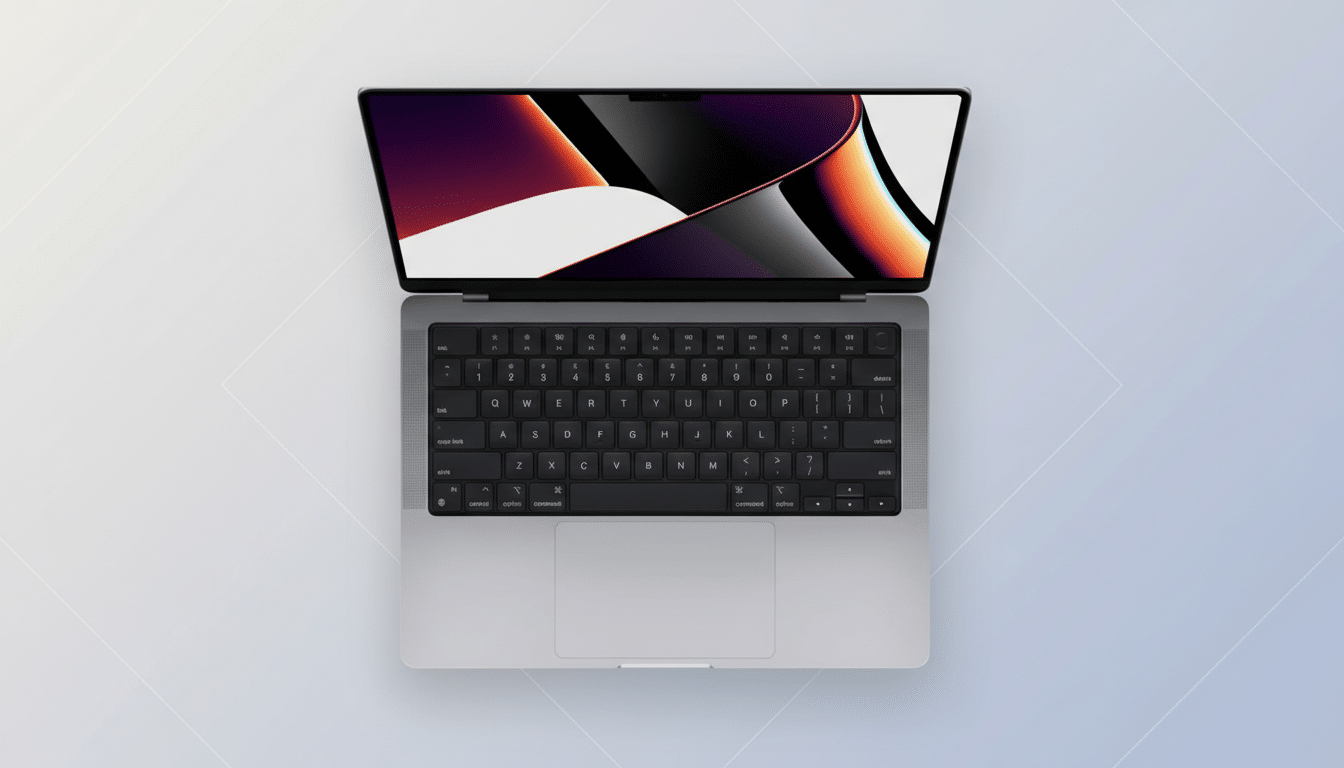
On the design front, the exterior may closely resemble today’s MacBook Pro, but Apple is reportedly exploring a camera cutout inspired by the iPhone’s Dynamic Island concept. Don’t expect a wholesale reinvention—think subtle evolution to make room for new display tech and touch hardware.
Why OLED Is The Tipping Point For A Touchscreen MacBook Pro
OLED isn’t just about blacker blacks. It’s thinner than mini-LED, can integrate touch sensors more efficiently (on-cell or touch-on-panel), and pairs well with high refresh rates for smooth interaction. That combination lets Apple deliver touch without thickening the lid or compromising the MacBook Pro’s battery and brightness targets.
The supply chain timing also lines up. Display Supply Chain Consultants has forecast OLED MacBook Pros around 2026, tied to new Gen 8.7 OLED fabs from Samsung Display and LG Display designed to cut larger laptop panels more cost-effectively. Those factories need a multiyear ramp, which helps explain why an OLED, touch-capable MacBook hasn’t happened sooner.
How macOS Could Adapt For Natural, Intentional Finger Use
Expect targeted changes rather than an iPadOS transplant. Reports describe larger tap targets in places that need them and new context menus that appear around your finger to reduce reach and precision demands. macOS already moved toward more adaptable UI elements in recent releases—Control Center, spacious toolbars, and refined system dialogs—so a “touch-aware” layer fits Apple’s incremental pattern.
Crucially, Apple seems intent on keeping the Mac’s identity intact. The precision of a pointer and the power-user workflows of macOS aren’t going away; touch is an additive modality for quick edits, scrubbing timelines, and navigating dense webpages, not a forced default. That stance also addresses long-standing ergonomic concerns—Apple executives, dating back to Steve Jobs, have warned about “gorilla arm” fatigue from sustained vertical touch use.

Design Changes To Expect On A Touch‑Enabled MacBook Pro
Beyond OLED, a smaller camera cutout could replace today’s notch, potentially enabling new status and UI behaviors along the top edge. Face ID on MacBook remains uncertain; past reports have noted the lid’s thinness complicates depth-sensing hardware. More likely are incremental upgrades—better webcams, smarter microphone arrays, and refined hinges to ensure touch taps don’t wobble the display.
Under the hood, a next-generation Apple silicon platform—likely an M5-class chip by 2026—would provide ample headroom for high-refresh OLED, new touch sampling, and advanced graphics without harming battery life. Apple’s track record suggests any touch MacBook Pro would retain ProMotion, wide color, and high sustained brightness for HDR workflows.
Where This Leaves iPad And 2‑in‑1 Rivals As Apple Adds Touch
Windows makers have offered touch on premium laptops for a decade, with Microsoft’s Surface family helping normalize hybrid input. Apple’s approach looks different: keep iPad as the pen-first slate for sketching and tablet apps, and let Mac adopt touch where it naturally improves tasks like zooming maps, annotating PDFs, or manipulating 3D models. That lane discipline reduces internal cannibalization while giving Mac users a capability many have asked for.
Release Window And Pricing Outlook For A Touch MacBook Pro
All signals point to 2026 at the earliest. The display industry’s buildout schedules, combined with Apple’s typical MacBook Pro refresh cadence, make an earlier debut unlikely. OLED laptop panels and touch stacks still command a premium, so pricing could edge higher than current MacBook Pro tiers—especially at launch—before economies of scale kick in.
What To Watch Next As Rumors Build Toward A 2026 Debut
Key tells will come from three places:
- Display supply chain reports (panel shipments, Gen 8.7 tooling milestones)
- macOS developer betas that hint at touch-friendly UI components
- Apple’s own messaging at WWDC about pointer and touch targets
If those stars align through 2025, a 2026 announcement becomes far more than a rumor.
