


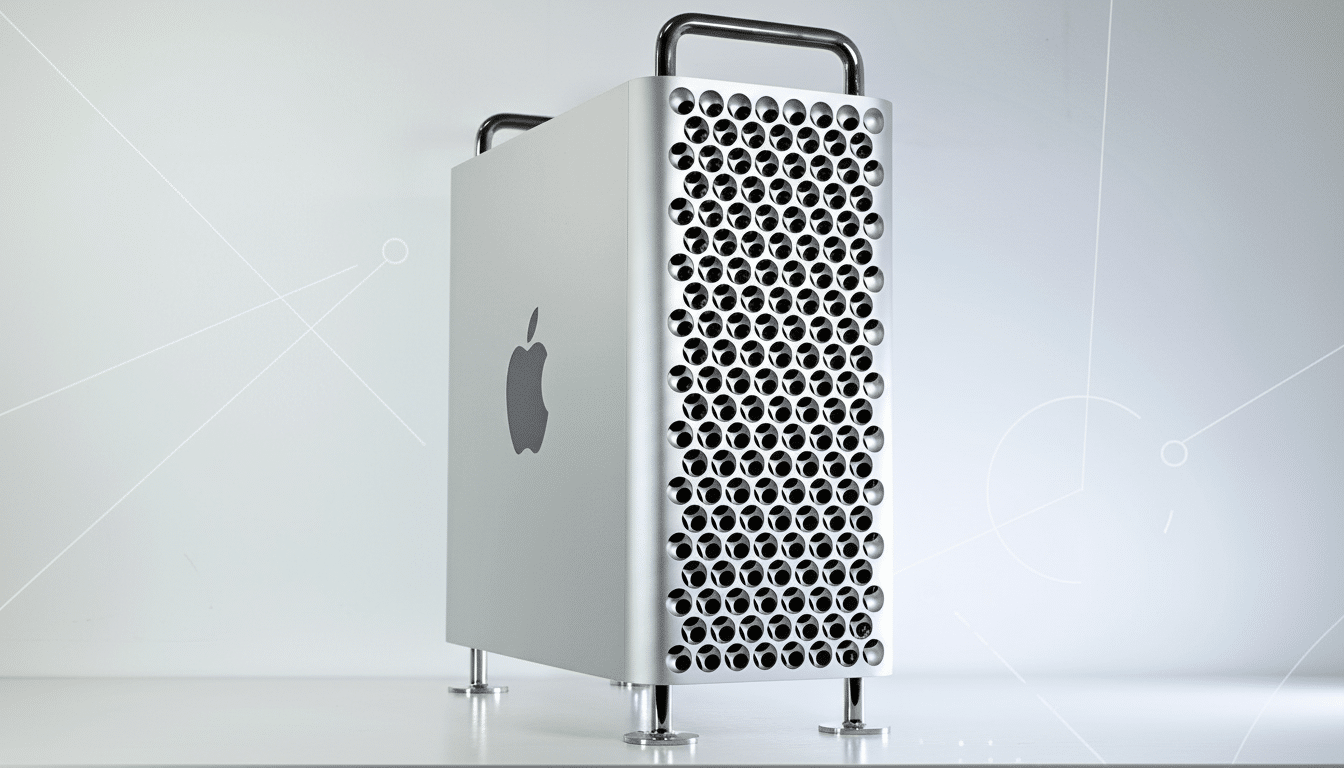
Apple has officially retired the Mac Pro, confirming to 9to5Mac that the tower will not receive future models. The company has removed the system from its online store, closing the book on a nearly two-decade run of its most iconic workstation and signaling a decisive shift in Apple’s pro desktop strategy.
What Apple said and what disappeared from its store
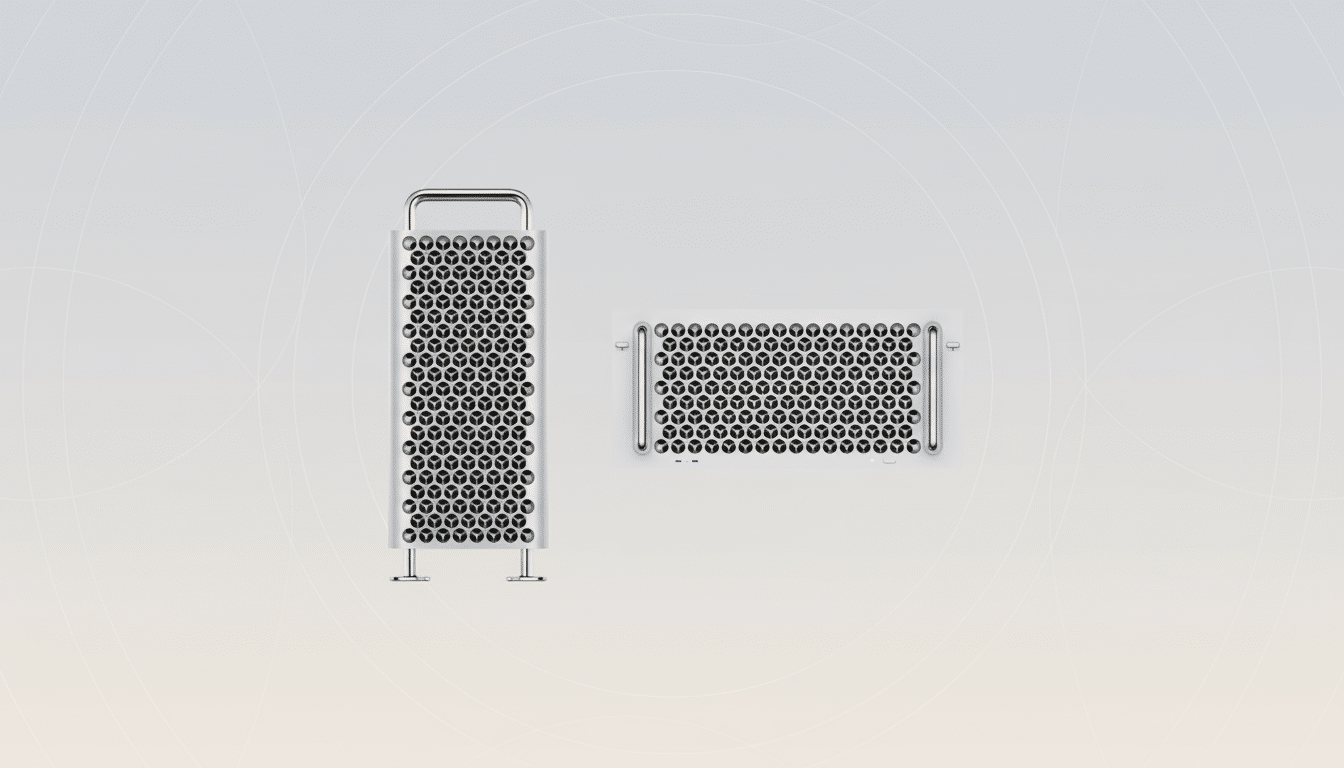
Visitors searching for Mac Pro on Apple’s site are now redirected to the broader Mac catalog. The last version, updated in 2023 with Apple’s M2 Ultra, started at $6,999. While it preserved PCIe expansion for specialty cards, it never supported discrete GPUs or user-upgradable memory—limits that made the value case difficult once the Mac Studio matured.
Apple’s confirmation ends speculation that the tower might return with a new chip generation. Instead, the company now clearly steers high-end macOS buyers toward Mac Studio, alongside iMac and Mac mini for mainstream desktop needs.
Why the tower lost its place in Apple’s lineup
Apple’s move to in-house silicon rewrote the rules of pro hardware. Unified memory and tightly coupled CPUs/GPUs deliver exceptional throughput-per-watt, but they also diminish the traditional benefits of big-tower modularity. With Apple silicon, RAM sits on-package and GPUs are integrated; external graphics and user-swappable memory are off the table.
For many creative workflows—editing in Final Cut Pro, grading in DaVinci Resolve, or producing in Logic Pro—the compute advantage of Apple’s integrated Media Engines and high-bandwidth memory has outweighed the need for slots. Meanwhile, pro users who depend on Nvidia’s CUDA ecosystem for 3D, ML, or scientific computing have long gravitated to Windows or Linux workstations. Industry analysts at firms like IDC have also noted a broader market trend toward compact desktops and high-performance laptops for professional tasks, eroding demand for traditional towers.
Performance has moved to Mac Studio for pro desktops
Mac Studio now carries Apple’s desktop performance mantle. In its M2 Ultra configuration, the platform offers a 24‑core CPU, up to a 76‑core GPU, a 32‑core Neural Engine, and up to 192GB of unified memory with 800GB/s of bandwidth—numbers that previously required hulking chassis and discrete cards. Crucially, Mac Studio delivers near–Mac Pro compute in a far smaller, quieter, and more affordable package.
While it lacks internal PCIe slots, Thunderbolt expansion covers a wide set of professional needs—external RAID arrays, SDI capture, 10/25Gb Ethernet adapters, and multi-display hubs—without sacrificing the thermal headroom Apple’s compact design reliably maintains under load.
The end of an era for Apple’s iconic Mac Pro tower
Introduced in 2006 as the Intel-based successor to the Power Mac G5, the Mac Pro earned a loyal following in studios and edit bays. The radical cylindrical redesign arrived in 2013 but struggled with thermal constraints and upgrade paths. Apple course-corrected in 2019 with the “cheese-grater” chassis built for serviceability and PCIe flexibility, then transitioned to Apple silicon in 2023—keeping slots, but not the discrete GPU or memory upgrades that once defined the tower’s appeal.
What pros should do now after the Mac Pro’s sunset
For macOS-first shops, Mac Studio is the practical successor. It matches or eclipses the most common Mac Pro workflows—4K/8K ProRes, multitrack audio, RAW photography, and motion graphics—while costing substantially less. Teams that need specialty PCIe cards for audio DSP, SDI capture, or networking can often bridge the gap with Thunderbolt enclosures from established vendors.
If your pipeline relies on CUDA or multi-GPU rendering, a Windows or Linux workstation with Nvidia RTX remains the more appropriate choice. For those determined to buy a tower form factor on macOS, remaining Mac Pro inventory may linger at select resellers for a short time, and Apple typically supports discontinued Macs with several years of macOS and security updates—though exact timelines vary by model and chip generation.
What this signals for Apple’s pro strategy
Retiring Mac Pro underscores Apple’s belief that performance leadership now comes from silicon integration, not modularity. Expect continued investment in Metal, ProRes/ProRes RAW, and hardware-accelerated codecs, along with tighter collaboration with developers like Adobe and Blackmagic to extract every watt of throughput from Apple silicon. The message is clear: the future of pro Macs is compact, efficient, and vertically optimized—just not tower-shaped.

