


DMPK assays form the experimental foundation for understanding how a drug candidate is absorbed, distributed, metabolized, and excreted before it reaches clinical testing. Researchers use these studies to identify liabilities early, compare lead compounds, and select molecules with stronger pharmacokinetic and safety profiles. A complete DMPK assays list typically includes tests for solubility, permeability, metabolic stability, enzyme interaction, transporter activity, plasma protein binding, bioavailability, tissue exposure, and clearance. Each assay answers a specific question about compound behavior in biological systems and helps reduce late-stage failure risk. When combined with pharmacology and toxicology data, DMPK results guide medicinal chemistry optimization, dose strategy, and candidate selection, making them essential tools in modern drug discovery and preclinical development programs.
Core Categories of DMPK Assays Used in Research
Absorption and Permeability Assays for Oral Drug Evaluation
Absorption-focused DMPK assays determine whether an orally administered compound can dissolve, cross biological membranes, and reach systemic circulation at useful levels. Common studies include aqueous solubility testing, pKa and logD measurement, dissolution profiling, PAMPA, and Caco-2 or MDCK permeability assays. These tests help estimate passive diffusion, carrier involvement, and the impact of formulation on uptake. Researchers also assess efflux risk, especially through transporters such as P-glycoprotein, because strong efflux can limit intestinal absorption and brain exposure. Together, these assays clarify whether poor exposure is caused by low solubility, weak permeability, or transporter-mediated restriction. That information allows teams to refine chemical structure, adjust formulation strategy, and prioritize compounds with more favorable oral delivery potential early in discovery.
- Core Categories of DMPK Assays Used in Research
- Absorption and Permeability Assays for Oral Drug Evaluation
- Metabolism and Transport Assays for Drug Behavior Analysis
- A Complete List of Essential DMPK Assays and Their Applications
- In Vitro DMPK Assays for Early Drug Screening
- In Vivo Pharmacokinetic Assays for Candidate Evaluation
- Choosing the Right DMPK Assays for Modern Research Needs
- Conclusion
Metabolism and Transport Assays for Drug Behavior Analysis
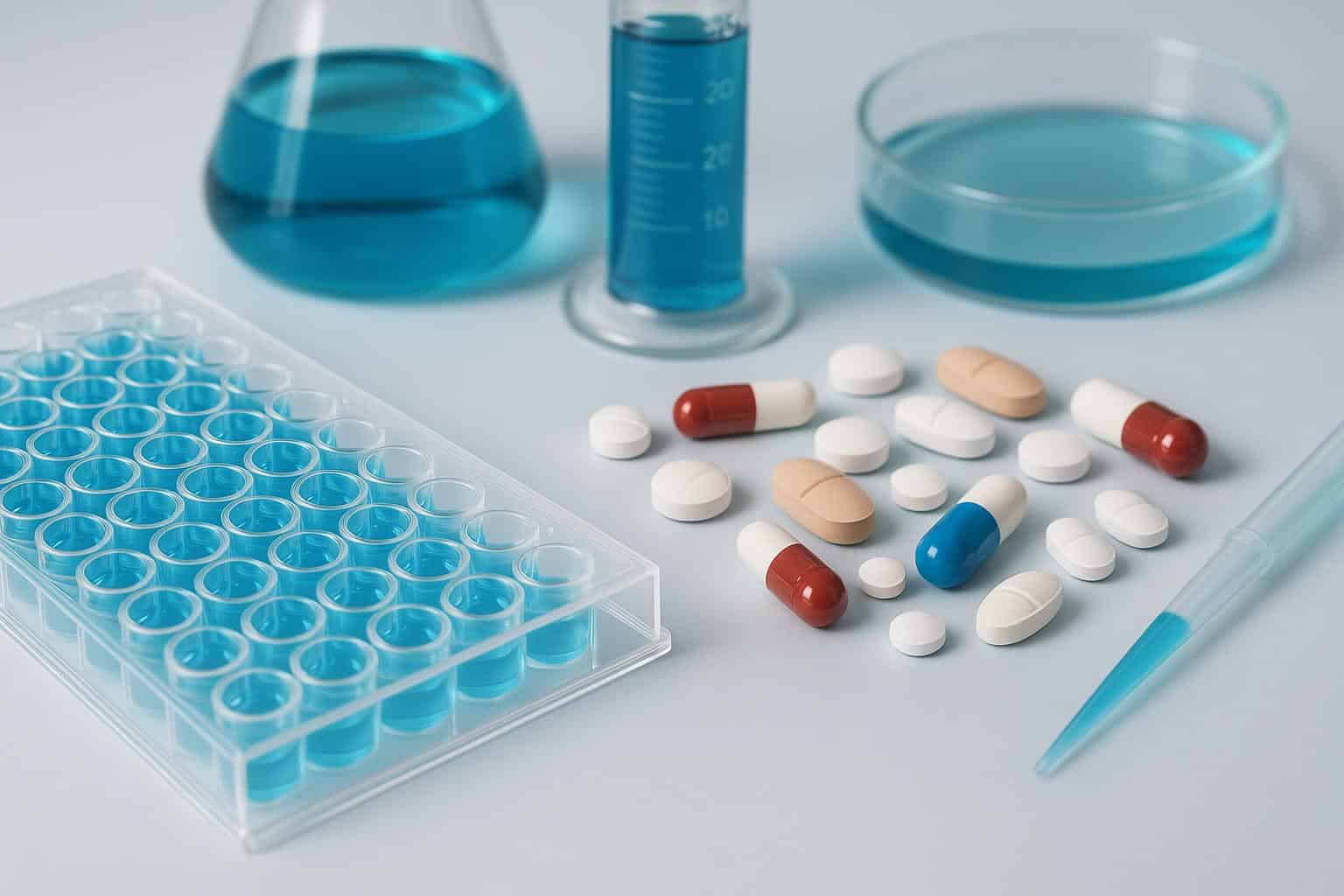
Metabolism and transport assays explain how a compound is transformed and moved through biological systems after absorption. Standard studies include liver microsome stability, hepatocyte clearance, metabolite identification, CYP inhibition, CYP induction, and reaction phenotyping. These assays reveal intrinsic clearance, likely metabolic pathways, and the risk of drug-drug interactions linked to major enzymes. Transporter assays evaluate uptake and efflux proteins such as OATP, BCRP, and P-glycoprotein, which influence hepatic disposition, renal elimination, and tissue penetration. Plasma protein binding and blood-to-plasma partitioning also support interpretation of free drug exposure. By combining enzyme and transporter data, researchers can predict clearance mechanisms more accurately, identify liabilities before animal studies, and build a stronger understanding of overall drug behavior across preclinical development.
A Complete List of Essential DMPK Assays and Their Applications
In Vitro DMPK Assays for Early Drug Screening
In vitro dmpk assays provide fast, decision-driving data during hit-to-lead and lead optimization. A practical list includes solubility, chemical stability, permeability, efflux ratio, plasma protein binding, microsomal stability, hepatocyte stability, CYP inhibition, CYP induction, metabolite profiling, transporter interaction, plasma stability, and renal transporter screening. These assays rank compounds by exposure potential, metabolic risk, and interaction liability before more costly in vivo studies begin. They also support structure-activity relationship analysis by showing how small chemical changes alter clearance or permeability. Because these assays are scalable and relatively high throughput, they help teams remove weak candidates early, focus chemistry resources, and advance molecules with balanced potency, exposure, and developability profiles.
In Vivo Pharmacokinetic Assays for Candidate Evaluation
In vivo pharmacokinetic assays confirm how a candidate behaves in a whole organism and provide exposure data that in vitro methods alone cannot supply. Essential studies include intravenous and oral PK, bioavailability assessment, dose proportionality, tissue distribution, mass balance, excretion profiling, and repeat-dose exposure analysis. Researchers measure parameters such as clearance, half-life, volume of distribution, Cmax, Tmax, and AUC to understand systemic behavior. These assays show whether predicted absorption and metabolism translate into meaningful in vivo performance. They also help define dosing routes, sampling schedules, and PK/PD relationships for efficacy studies. Strong in vivo PK data supports candidate nomination by demonstrating that the compound can achieve and maintain therapeutically relevant exposure.
Choosing the Right DMPK Assays for Modern Research Needs
Factors That Guide Effective Assay Selection
Effective assay selection starts with the development question that needs a clear answer. Early discovery often emphasizes solubility, permeability, microsomal stability, and CYP inhibition, while later programs require broader transporter, metabolite, and in vivo PK packages. The intended route of administration, target tissue, molecular class, and expected clearance pathway all shape the assay panel. For oral small molecules, absorption and hepatic metabolism studies are especially important. For compounds aimed at the central nervous system, brain penetration and efflux testing become critical. Assay choice should also reflect species relevance, turnaround time, and data integration needs. Selecting the right DMPK assays at the right stage improves decision quality and reduces unnecessary testing.
Integrating DMPK Services Into Drug Discovery Workflows
Integrating DMPK services into discovery workflows works best when assays are planned as a connected data package rather than isolated tests. Solubility and permeability data should inform metabolic stability studies, while in vitro clearance and enzyme interaction findings should guide in vivo PK design. A staged approach allows teams to filter compounds quickly, then expand testing as confidence grows. Close coordination among medicinal chemistry, biology, bioanalysis, and pharmacokinetics groups improves interpretation and speeds optimization cycles. Integrated DMPK support also strengthens model-informed decision making by linking assay outputs to exposure predictions and candidate selection criteria. When used this way, DMPK services become a practical engine for reducing risk and improving development efficiency.
Conclusion
A complete DMPK assays list covers far more than a few routine screens. It includes the absorption, permeability, metabolism, transport, protein binding, and pharmacokinetic studies needed to understand whether a compound can become a viable drug candidate. In vitro assays identify liabilities quickly and help optimize chemical series, while in vivo pharmacokinetic studies confirm exposure, clearance, and distribution in relevant models. Used together, these assays support better lead ranking, smarter experiment design, and more confident development decisions. For research teams working in modern drug discovery, choosing the right DMPK assays is a practical step toward lowering attrition and improving translation from laboratory findings to preclinical success. Strong DMPK strategy turns data into actionable guidance at every stage.

