


Cyber threats today are strange, changing, and always getting better. They can move faster, hide better, and change as soon as your guard does. The usual security tools can’t move fast enough because of this. This post looks at six different ways that AI can help you find threats and respond to them better.
1. Spotting Threats Humans Would Miss
There are so many activity logs, alerts, and systems that it would be impossible for a human team to read them all. Given the amount of background noise, there are some things that appear to be indistinguishable from the warning signs. At this moment, there are danger signals that are sub-minute in duration.
- 1. Spotting Threats Humans Would Miss
- 2. Responding Faster When Every Second Counts
- 3. Reducing False Alerts That Drain Resources
- 4. Adapting to New and Evolving Threats
- 5. Improving Decision-Making Under Pressure
- 6. Strengthening Long-Term Security Strategy
- Staying Ahead in a Rapidly Changing Threat Landscape
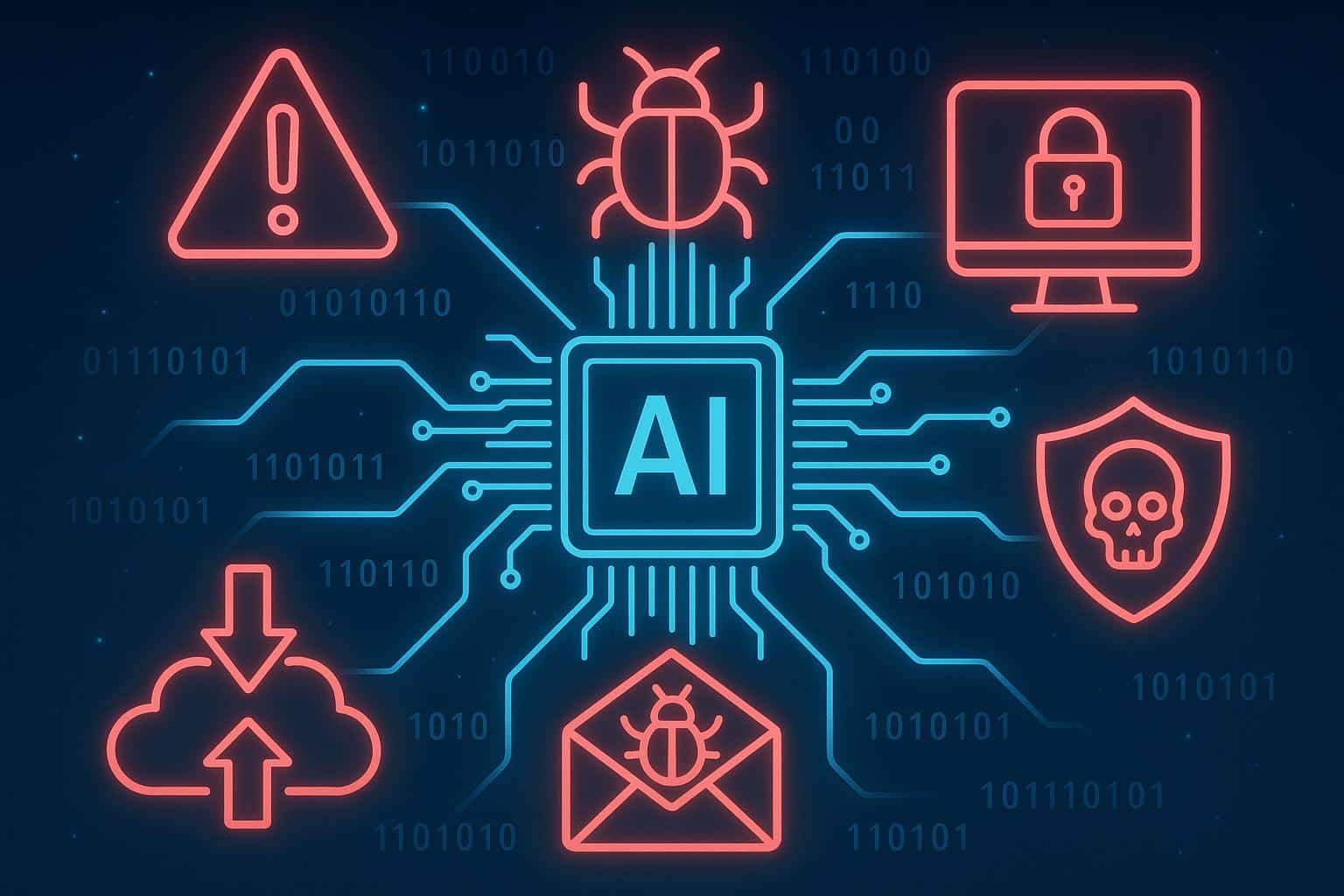
In real time, artificial intelligence is able to recognise a variety of patterns within large data streams. You are able to identify problems before they become more serious, which helps to limit the impact they have.
2. Responding Faster When Every Second Counts
The threat may have sufficient time to carry out lateral movements, further escalate access, or exfiltrate data if the delay is allowed to continue. It is common for manual response processes to result in delays the majority of the time.
Artificial intelligence-driven systems carry out automated actions in response to a threat that has been confirmed. As soon as they are discovered, they immediately contain the affected systems and reduce the threat’s reach. Thus, by engaging with an ai defense company one can achieve an accelerated response rather than depending on human reaction times.
3. Reducing False Alerts That Drain Resources
It is more likely to miss genuine dangers in this scenario because it receives a significant number of false positives. Over time, this results in a decrease in focus as well as an increase in the risks that are taken.
Based on information and behaviour in the environment, AI can learn which alerts are the most important and how likely it is that a threat is to happen. In this case, innocent activity will be discarded, and real facts will be highlighted, which will make you work with real priority.
4. Adapting to New and Evolving Threats
In the case of rapid changes to attack methods, signature-based tools fail with threats they have not encountered before. This often results in creating larger gaps that can be breached.
AI, on the other hand, uses new data to change instead of predefined rules, allowing it to identify developing trends. This feature makes it possible to provide protection even from new and unknown threats.
5. Improving Decision-Making Under Pressure
Security events require rapid decisions. The urgency and lack of comprehensive data might contribute to errors. At the same time, it is challenging to create the right approach on the go.
AI-driven decision-making processes imply analysing options and selecting the most suitable ones. The technology offers feedback in a dispassionate way, which means that you will be sure about your course of action.
6. Strengthening Long-Term Security Strategy
Threat detection is proactive; it learns and prevents recurrence. If the offence is not studied, the defence has the same gaps.
Machine learning uses historical information patterns and weaknesses. It helps to identify the vulnerabilities that the attacker has already exploited. Thus, the security system strengthens over time.
Staying Ahead in a Rapidly Changing Threat Landscape
AI does not substitute human performance and expertise; it simply helps you do your best in detecting and countering. In the final analysis, AI is quite accurate, highly effective in terms of response rate, and more flexible than a rigid algorithm. This approach enables the creation of challenges rather than constant adjustments.

