


Procurement teams carry a lot of weight. They are expected to move fast, keep costs in check, manage vendor relationships, and ensure that every agreement the organization signs is sound. Most of the time, they do this well. But even experienced procurement professionals make mistakes that look minor in the moment and create serious problems months or years later.
The challenge is that many of the most costly procurement mistakes are not obvious at the time they happen. They are not reckless decisions or oversights born from carelessness. They are the product of time pressure, incomplete processes, and assumptions that turn out to be wrong. By the time the legal or financial consequences surface, the original decision is long forgotten.
- Mistake 1: Accepting Vendor Contracts Without Proper Risk Assessment
- Mistake 2: Treating All Contracts as Equally Routine
- Mistake 3: Neglecting Renewal and Termination Terms
- Mistake 4: Underestimating Data and Compliance Risk in Vendor Terms
- Mistake 5: Failing to Standardize Procurement Decisions Across the Organization
- The Pattern Behind These Mistakes
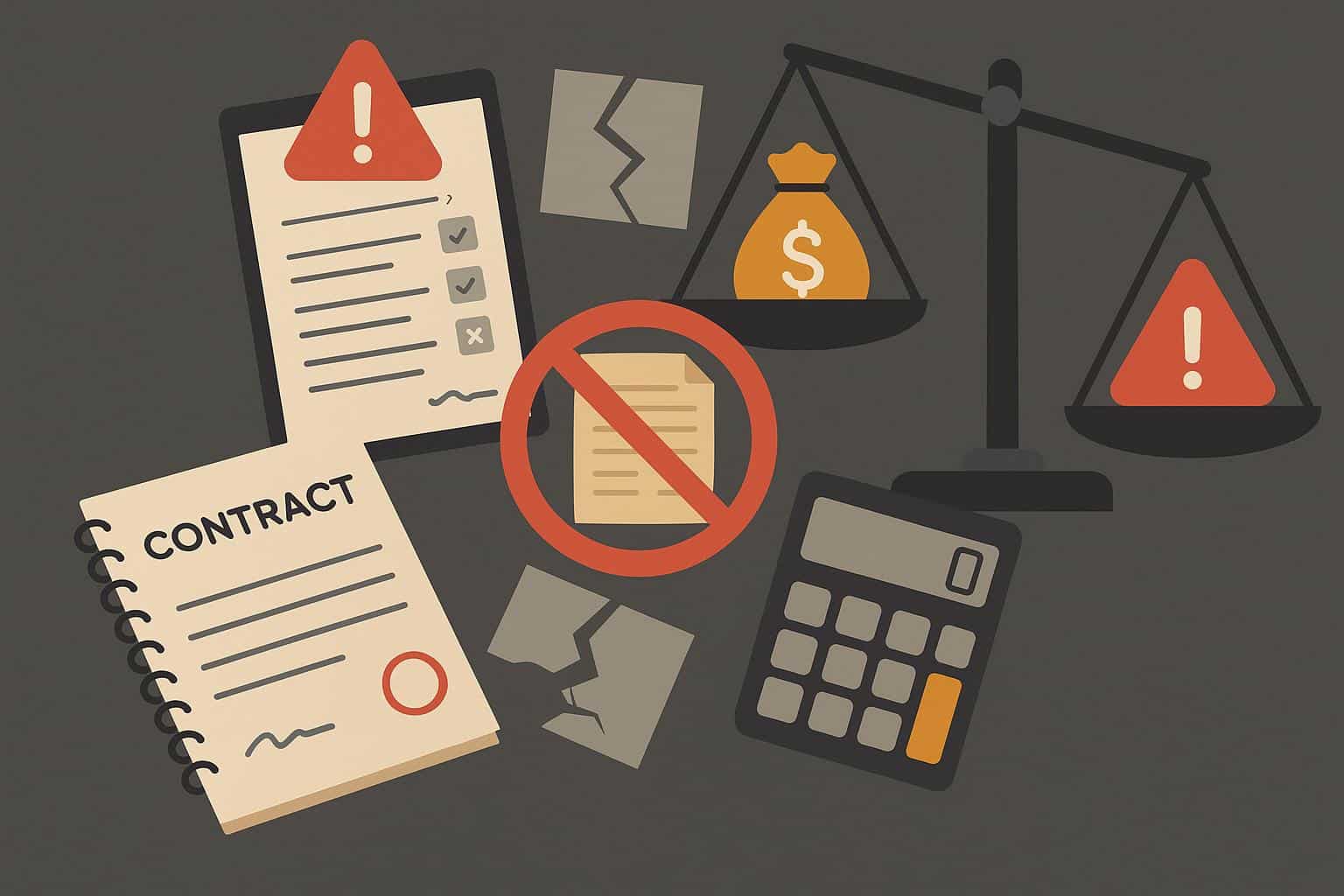
What follows are five procurement mistakes that consistently create long-term exposure, and what better practice looks like in each case.
Mistake 1: Accepting Vendor Contracts Without Proper Risk Assessment
Signing First, Reading Carefully Later
Speed pressure is real in procurement. Vendors want signatures quickly, internal stakeholders want the tool or service up and running, and the contract itself can look routine at a glance. So it gets reviewed quickly, approved, and filed.
The problem is that vendor-drafted agreements are written to protect the vendor. That is not cynical, it is just accurate. Default terms in standard vendor contracts frequently include uncapped liability on the customer side, broad indemnification obligations, unilateral rights to modify pricing or terms, and auto-renewal clauses that trigger before anyone notices. None of these is necessarily a deal-breaker, but all of them need to be evaluated rather than assumed away.
What Proper Triage Looks Like
Proper risk assessment does not mean sending every contract to outside counsel. It means having a consistent process for identifying which clauses in a vendor agreement fall outside acceptable parameters before signing. Teams that use contract intelligence tools for procurement can flag these provisions early, without requiring legal involvement on routine agreements, and escalate only the contracts that genuinely warrant closer review.
The procurement mistakes that stem from inadequate initial review tend to be the most expensive because they are locked in for the full term of the agreement.
Mistake 2: Treating All Contracts as Equally Routine
When Triage Gets Skipped
Not all vendor contracts carry the same risk. A low-value SaaS subscription for a tool used by three people carries very different exposure than a multi-year enterprise software agreement with deep data access and significant termination penalties. Yet one of the most common procurement mistakes is applying the same level of scrutiny, or lack of it, to both.
When every contract gets the same lightweight review, high-risk agreements slip through without the attention they need. When every contract gets routed to legal regardless of risk level, the legal team gets overwhelmed, and the low-risk deals slow down unnecessarily. Both outcomes are bad.
Building a Risk Tier System
A practical alternative is a tiered intake model: contracts are categorized based on factors like contract value, data access, regulatory implications, and term length. Each tier has a defined review process. Tier one agreements move quickly with a standard checklist. Tier two contracts get a structured internal review. Tier three contracts go to legal.
This kind of structure is not complicated to implement, but it requires procurement teams to be deliberate about the criteria rather than making triage decisions informally and inconsistently.
Mistake 3: Neglecting Renewal and Termination Terms
The Clauses Nobody Reads Until They Need To
Auto-renewal clauses are one of the most consistently overlooked sources of financial risk in vendor agreements. They are standard practice, often buried in the boilerplate, and rarely flagged during initial review because the focus tends to be on the upfront commercial terms.
The result is that organizations find themselves locked into another contract term they did not intend to renew, at pricing they no longer consider competitive, with termination windows they missed by a matter of weeks. This is one of the procurement mistakes that generates the most internal frustration because it is entirely preventable, yet it happens repeatedly across organizations of every size.
Termination for convenience clauses deserve equal attention. Some vendor agreements have no such provision at all, meaning the only way out is a breach by one of the parties or mutual agreement. Others include termination for convenience but require notice periods of ninety or one hundred and twenty days, plus significant wind-down fees.
These terms sound abstract when the relationship is new, and everything is working well. They become very concrete when the relationship sours or business needs change.
Building Renewal Visibility Into the Process
The fix is straightforward but requires operational follow-through: every signed contract should have its renewal date and notice window logged in a trackable system, with alerts set well in advance. Procurement teams that treat this as a standard part of contract intake rather than an afterthought avoid most of the exposure that auto-renewal clauses create.
Mistake 4: Underestimating Data and Compliance Risk in Vendor Terms
What Vendors Are Permitted to Do With Your Data
Data handling provisions have become one of the highest-stakes areas in any vendor agreement, and they are also one of the areas where procurement mistakes are most common. The default data terms in many vendor contracts give vendors significant latitude: broad rights to use, process, and sometimes share customer data for purposes that go well beyond the core service being purchased.
For organizations subject to GDPR, CCPA, HIPAA, or other regulatory frameworks, signing a vendor agreement with inadequate data processing terms creates direct compliance exposure. The organization cannot outsource its regulatory obligations to a vendor. If the vendor’s data practices violate applicable law, the customer organization shares the liability.
The Specific Terms Worth Scrutinizing
Procurement teams reviewing data-related vendor agreements should pay close attention to several areas:
- How the vendor defines the data it is permitted to collect and process
- Whether the agreement includes a Data Processing Agreement that meets applicable regulatory requirements
- What the vendor’s obligations are in the event of a data breach, including notification timelines
- Which subprocessors the vendor uses, and whether the customer has the right to object to new subprocessors
- What happens to customer data upon termination of the agreement
These provisions are not always easy to evaluate without legal input, but identifying them during procurement intake, rather than after signing, determines whether the organization has any leverage to negotiate them.
Mistake 5: Failing to Standardize Procurement Decisions Across the Organization
When Every Team Does It Differently
In many organizations, procurement is not fully centralized. Business units, department heads, and team leads have varying degrees of authority to engage vendors and sign agreements directly. This creates a situation where procurement mistakes get made at scale, without any visibility into what is being agreed to across the organization.
A marketing team signs a data enrichment tool with terms that conflict with the company’s privacy policy. An engineering team agrees to a vendor agreement that includes an IP assignment clause that no one reviewed. A finance team renews a contract two years in a row on auto-renewal without anyone flagging the cumulative cost.
None of these decisions was made maliciously. They were made by people who were not thinking about legal risk because it was not their job to think about legal risk.
What Consistent Governance Actually Requires
The answer is not to remove autonomy from every business unit. It is to establish minimum standards that apply organization-wide: every vendor agreement above a certain value threshold goes through a defined intake process, key clause types are evaluated against a standard checklist, and nothing gets signed without the relevant approval on record.
Contract intelligence tools for procurement can support this by giving non-legal stakeholders access to objective risk signals, so business units can make faster decisions within defined boundaries rather than bypassing governance entirely. The goal is to make doing the right thing easier than skipping it.
The Pattern Behind These Mistakes
Looking across these five procurement mistakes, a pattern emerges. Most of them are not caused by ignorance of the risks involved. They are caused by the absence of a consistent, scalable process for managing those risks. Individual judgment fills the gap, and individual judgment is inconsistent by definition.
The organizations with the lowest long-term legal and financial exposure from procurement decisions tend to be the ones that have invested in structure: clear triage criteria, documented risk tolerances, trackable renewal dates, data compliance checklists, and governance standards that apply across teams rather than just within the legal department.
None of that requires an outsized investment. It requires procurement leadership that treats contract risk as a core operational concern rather than something that surfaces occasionally in legal invoices.

