advertisement
On MovieTome: SEX AND THE CITY clips are here!
Find Articles in:
all
Business
Reference
Technology
News
Sports
Health
Autos
Arts
Home & Garden
advertisement

Content provided in partnership with
Thomson / Gale

Public welfare for billionaires

Insight on the News,  August 3, 1998  by Michael Rust

Owners of pro-sports franchises are pressuring many cities to provide luxurious stadiums at taxpayer expense. But some communities are throwing up a tough defense.

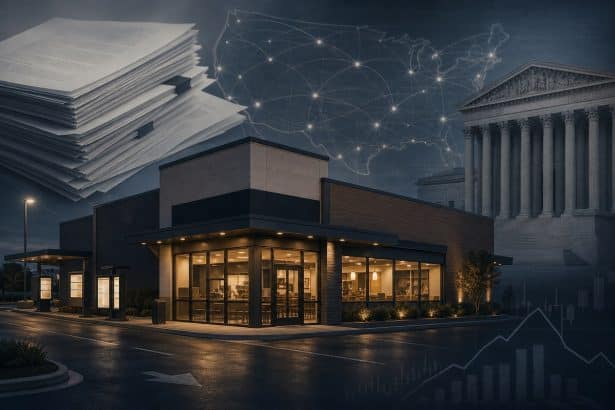
Last year Paul Allen reportedly cast his first vote. And, to add a special touch to the occasion, the Seattle billionaire cast his ballot in an election he bought and paid for. This unusual means of increasing the voter rolls resulted from a recurring drama in urban centers around the country -- the quest for a new sports stadium.

Most Popular Articles in News
The Ten Best Laptop bags
Tata plans cheapest-ever car for Indian market
GLOBALIZATION AND THE DEVELOPMENT OF UNDERDEVELOPMENT OF THE THIRD WORLD
Corn is good for you; Corn is not only a tasty treat, but also a cereal that ...
THE 50 BEST STYLISH HANDBAGS TO CARRY
More »
advertisement

Allen, who more than two decades ago cofounded software giant Microsoft with his old school friend Bill Gates, announced in 1996 that he wished to purchase the National Football League's Seattle Seahawks. This was greeted with hosannas by local sports fans who had been afraid their team would be moved to Southern California in the wake of the Los Angeles exits of both the Rams and Raiders. However, there was a catch: Allen wanted a new stadium built to replace the 20-year-old Kingdome, a massive domed structure on the edge of downtown Seattle that had been home both to the Seahawks and baseballs Mariners. (Basketball's Super-Sonics tried to play in the mammoth structure but quickly left for more intimate quarters.)

A statewide referendum was necessary to get state support for the new stadium, and Allen thoughtfully picked up the $4.2 million tab for the election. The measure lost throughout the central and eastern parts of the state, but the metro area around Puget Sound came through to deliver the billionaire a narrow victory.

It was a good deal. Allen's $4.2 million investment resulted in a $425 million construction project for his own benefit, courtesy of the taxpayers. And this 100-times-plus profit wasn't all. "The Seattle case is actually worse," Mark S. Rosentraub tells Insight. The new facility also will be able to host conventions, he explains. "So in reality, [Allen] is also taking business away from the public sector which was at the Kingdome facility. You're actually getting a niche transfer there and a net loss."

This comes as no real surprise to many observers. Rosentraub, a professor of urban policy at Indiana University, wrote in his 1997 book, Major League Losers: The Real Cost of Sports and Who's Paying for It, that "a welfare system exists in this country that transfers hundreds of millions of dollars from taxpayers to wealthy investors and their extraordinarily well-paid employees." Indeed, a plethora of new stadiums and proposals has sprung up during the last two decades as a result of the changing economics of sports. The economics are simple: Increased athlete salaries have left many teams scrambling to meet inflated payrolls. The easiest solution they can see is to construct new facilities with elegant skyboxes which they can rent for as much as $250,000 per year -- profits that the teams do not have to share with the leagues.



But this is not the argument that team owners use to carry the day. In cities without big-league franchises, the alleged economic and psychological value of reaching major-league status is trumpeted. And in cities with a tradition of professional sports, a simpler incentive is used. It is fear. "I've noticed that the `I'm not going to move the team, but you never know who might' ploy is a common one," says Neil deMause, coauthor with Joanna Cagan of the recently published Field of Schemes, a scathing account of how tax money has become a seemingly integral part of pro sports. "Certainly, in Seattle, the threat to the team was there."

Rosentraub agrees. "I don't think in any community right now you've got support for these types of facilities," he says. "You've got people grudgingly voting yes. What you basically have now is a great deal of anxiety and I think people are looking for the public sector to come forth with some better ideas to stop the subsidies."

The stadium merry-go-round was displayed in the checkered history of the Oakland Raiders, for years the most successful franchise in football. The Raiders regularly sold out their home games at the Oakland Alameda Coliseum, but that did not stop the Raiders' owner, Al Davis, from moving the team to Los Angeles in 1982, following commitments from Los Angeles-area governments that were anxious for a team to replace the Rams, who had moved to Anaheim. (The Rams later decamped for St. Louis to replace the Cardinals, who had headed west to Arizona.) Los Angeles County lured the Raiders with promises of renovations to the aging Coliseum, but the L.A. market never embraced the Raiders as had the fans in Oakland, and the Los Angeles-area governments were not willing to respond to Davis' increasing requests for additional assistance. As a result, when Oakland increased the size of the subsidy it was willing to provide to the team, the Raiders returned home for the 1995 season.

Likewise, from 1986 through 1994, the Cleveland Browns averaged more than 70,000 fans for each of their home games. The city also agreed to spend $176 million to improve Cleveland Stadium, but that didn't stop owner Art Modell from taking the team to Baltimore, which had been left without its beloved Colts when that franchise moved to Indianapolis in 1984.