On MP3.com: MP3.com Staff Picks 2007
Find Articles in:
all
Business
Reference
Technology
News
Sports
Health
Autos
Arts
Home & Garden
advertisement
advertisement

Content provided in partnership with
Thomson / Gale

The Lost City of New Orleans?

Risk & Insurance,  Dec, 2000  by Lori Widmer

Louisiana's marshlands, the only buffer for hurricanes that come out of the Gulf, are slipping into the ocean at an alarming rate. New search indicates that just one major hurricane could put New Orleans under water.

The Big Easy is in big trouble. New Orleans is sinking. And fast. But what's the big deal? Local businesses and residents have heard it all before. They've built levees to control the raging Mississippi. They've developed pumping systems to deal with rain and flooding. They've dug canals to move the water out of the city. And still they survive, wearing the battle scars earned from each hurricane and each flood as badges of honor.

New research by the U.S. Geological Survey, however, indicates that New Orleans is sinking faster than many realize and could be under water within 50 years. The city is facing a series of issues--disappearing wetlands that protect from hurricanes, levees that are too low to hold back flood waters, rising water tables, to name a few--that if not addressed soon could have New Orleans suffering the same fate as Atlantis.
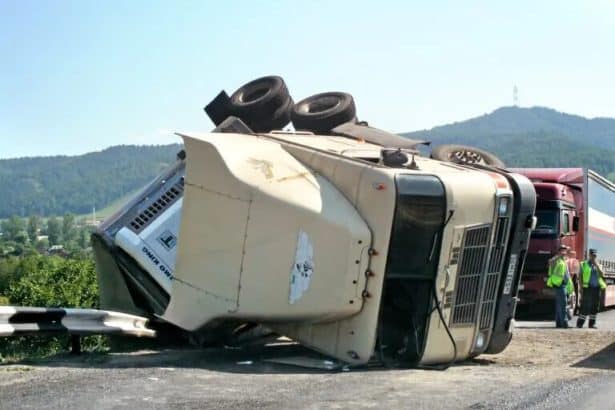

Dramatic, yes. But not unlikely, according to Shea Penland, geologist and professor at the University of New Orleans. "When we get the big hurricane and there are 10,000 people dead, the city government's been relocated to the north shore of Lake Ponchartrain, refugee camps have been set up and there $10 billion plus in losses, what then?" he asks.

Penland has been studying hurricanes and the Louisiana coastline for decades, and he sees disaster coming. "Along the south shore of Lake Ponchartrain, there was a restaurant built in 1859 and some 200 homes that were built on pilings out on the lake around the 1930s. They had all been through the hurricane of 1948, Betsy in 1965, Camille in 1969. Hurricane Georges destroyed every one of them. Georges had a particular track that had the wind blowing directly across the longest distance that build the biggest waves."

And it is a hurricane on a particular track with a particular force that could submerge New Orleans. According to data supplied by Risk Management Solutions, a leading catastrophe modeling firm in Menlo Park, Calif., hurricanes of Category 4 or stronger make landfall within 100 miles of New Orleans about once every 35 years. There have been four storms of Category 4 strength or greater since 1899. Hurricane Camille made landfall as a Category 5 hurricane and was one of only two Category 5 hurricanes to hit the U.S. in the last century. Hurricane Betsy, a Category 4 hurricane, struck about 80 miles to the west of New Orleans, subjecting the populated areas to the stronger winds and surge on the right side of the storm path.

Another factor in how the city survives a hurricane is the natural buffer between the city and the sea. Louisiana's marshes are depleting at a rate of 25 miles to 30 miles per year, or the equivalent of a football field every 15 minutes. Since 1930, the state has lost well over 1,500 square miles of wetlands. Each year, New Orleans inches closer and closer to the Gulf of Mexico. The shrinking wetlands that bring the city closer to the coast are the same ones that have protected the city from catastrophic disaster in the past. Wetlands and barrier islands are a natural protection against hurricanes.

New Orleans sits on a bed of silt, sand and clay, which historically has been rebuilt with each flooding; new silt and sand are deposited when the river floods. But the levees that protect the city from flooding also prevent the rebuilding of the silt. As a result, New Orleans is sinking at a rate of one-third of an inch per year, which is not good for a city that is already eight feet below sea level. To make matters worse, global warming is causing the sea level to rise.

Because of these factors, Louisiana is a hot bed for claims, says Diana Herrera, regional marketing manager for the National Flood Insurance Program (NFIP) that operates through the Federal Emergency Management Agency. Flood claims for just the Orleans parish region since 1978 have totaled well over $309 million. Nonresidential property claims in that same area total more than $36 million, paid on 2,177 claims.

"Historically, we see more damage (from flooding) in the Jefferson, Orleans, and St. Tammany parishes. The May 1995 flood was the number one single largest event in the history of NFIP, and we paid more than $500 million in losses in that area," says Herrera.

The stakes are high, and not just for businesses in the region. Louisiana's contributions to the national economy are substantial, according to a report from the Louisiana Coastal Restoration Association. The infrastructure of the coastal area could experience a loss of more than $150 billion. That infrastructure supports several industries, including the $18.6 billion offshore oil and gas industries. Crude oil production and natural gas extraction in Louisiana contribute 89 percent and 83 percent of the country's oil and gas production. Thirty percent of the nation's fisheries are in and around the Louisiana coastline, and oyster production makes up 25 percent of the national market.