


Better targeting, stronger campaign structure, and clearer landing-page alignment can help turn paid clicks into qualified business opportunities.
Paid search can create momentum quickly, but it can also create expensive
noise. Many businesses launch campaigns, see activity in the account, and assume the program is moving in the right direction. Then the leads stay inconsistent, the cost per lead climbs, and no one is fully sure where the budget is leaking.
That is usually not a sign that paid search is ineffective. It is a sign that the campaign is not aligned tightly enough with buyer intent, landing-page experience, and the business outcome being measured. Google itself evaluates search campaigns through signals such as expected clickthrough rate, ad relevance, and landing-page experience, which means wasted spend often begins with weak alignment rather than weak effort.
Weak targeting creates expensive clicks
One of the fastest ways to lose efficiency in paid search is to attract the wrong visitor. Broad keyword choices, loose match strategy, weak geographic controls, and missing negative keywords can all open the door to clicks that never had strong conversion potential.
This is especially common when businesses focus on volume before intent. More clicks can make a campaign look active, but activity alone does not make a campaign efficient. A searcher looking for general information behaves very differently from a searcher comparing vendors or requesting a quote. When those audiences are blended together, budgets tend to spread too thin.
That is why many businesses reviewing campaign performance also look at resources on Google Ads to better understand how structure and targeting influence cost control. In practice, stronger paid search performance usually starts with narrowing the traffic mix so the account is spending more often on searches tied to real business intent.
Clicks do not matter much if the landing page breaks the journey
A campaign can bring in relevant visitors and still underperform if the next step feels unclear. Google states that landing-page experience is one of the core components of Quality Score and specifically points advertisers toward pages that are relevant and useful to the person who clicked the ad.
That matters because many businesses still send paid traffic to pages that are too broad, too slow, or too disconnected from the ad message. If the ad promises a specific service, offer, or problem being solved, the page should continue that same conversation. When it does not, the user has to work harder to confirm relevance, and hesitation tends to replace momentum.
For a corporate audience, this is often where lead quality problems begin. The ad may generate enough interest to earn the click, but the landing page may not provide the clarity, proof, or next-step structure needed to move the user forward. In that situation, the campaign can look busy while still failing to produce enough qualified opportunities.
Campaign structure determines how easy it is to improve performance
Many underperforming accounts are not failing because the market is too competitive. They are failing because the structure makes smart optimization harder than it should be. When ad groups are too broad, messaging is too generic, and conversion actions are not defined clearly, decision-makers lose the ability to understand what deserves more investment and what needs to be cut back.
Google’s conversion measurement guidance is useful here because it defines a conversion action as a specific customer activity that is valuable to the business and explains that those measurements are used to refine campaigns toward advertising objectives. If the business has not clearly defined those valuable actions, optimization becomes guesswork.
A stronger structure usually means tighter keyword groupings, clearer ad themes, cleaner segmentation by service or intent, and conversion tracking that reflects what the business actually values. That structure does not just improve reporting. It improves decision-making, because the account begins to show where clicks, enquiries, and costs are connected.
Reporting clarity is what turns ad activity into business insight
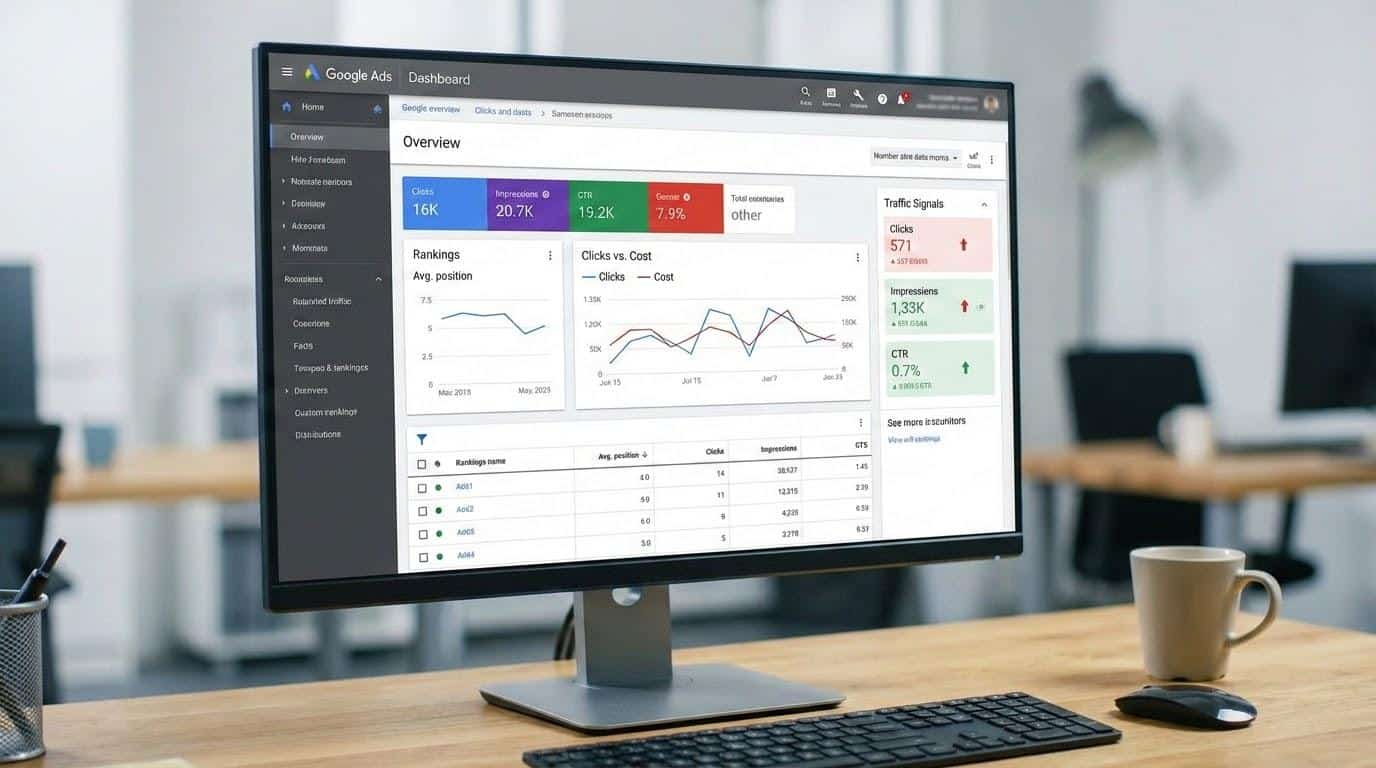
Business owners do not need more dashboards for the sake of dashboards. They need clearer answers to practical questions. Which searches are producing real leads? Which campaigns are driving consultations instead of low-intent form fills? Which landing pages are helping the sales process rather than slowing it down?
This is where many teams lose confidence in paid search. They can see impressions, clicks, and spend, but they cannot easily connect those numbers to business outcomes. Google’s guidance on conversion counting and measurement makes it clear that advertisers can define and count valuable actions in different ways depending on business needs. That flexibility is useful, but only when the account is designed around the right goals in the first place.
The broader business lesson is simple: marketing performance should be tied to planning and measurable outcomes, not just activity. The U.S. Small Business Administration also frames marketing as part of a larger sales and planning process, which is a useful reminder that advertising should support business decisions rather than operate in isolation.
When paid search underperforms, the answer is rarely to spend blindly or pause everything at once. It is usually to improve the relationship between targeting, ad relevance, landing-page experience, and conversion measurement. That is what helps turn Google Ads from a source of motion into a source of qualified growth.
Additional Resources
Businesses comparing options for PPC Agency Toronto may find it useful to review how targeting, landing-page alignment, and conversion measurement work together over time.

