


Georgia restricts trucks from certain highway lanes mainly to improve traffic flow, reduce conflicts between large commercial vehicles and passenger cars, and make busy roads safer. Because trucks are larger, heavier, and generally require more space to change lanes or stop, keeping them out of certain lanes can help create a more predictable flow of traffic.
Georgia has a large freight and transportation network, with major interstates carrying significant amounts of commercial traffic. The state’s highway system also includes heavily traveled routes around Atlanta, where congestion can make lane changes and merging more difficult. Georgia’s truck-lane rules are designed to address these traffic and safety concerns.
- What Does Georgia’s Left Lane Law Require?
- Why Are Trucks Kept Out of the Left Lanes?
- How Do Truck Restrictions Improve Highway Safety?
- What Happens on Highways With Three or More Lanes?
- What About Highways With Only Two Lanes?
- Can Georgia Designate Special Truck Lanes?
- Are There Other Truck Restrictions in Georgia?
- What Happens If a Truck Driver Violates Lane Restrictions?
- Why Should Other Drivers Understand These Rules?
- Key Takeaways
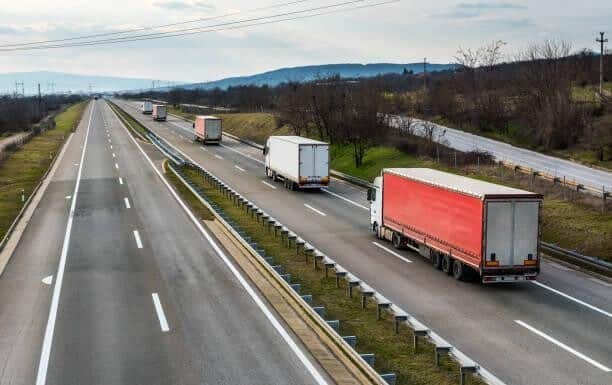
What Does Georgia’s Left Lane Law Require?
Georgia’s left lane law places restrictions on where trucks can travel on multilane highways. Under Georgia law, trucks generally must remain in the two rightmost lanes when a highway has three or more lanes moving in the same direction. On highways with only two lanes going the same direction, trucks generally cannot use the left lane except in certain situations, such as passing or preparing for a left turn.
These rules are not simply suggestions for truck drivers. Georgia law establishes specific requirements for truck lane usage, and violations can result in traffic penalties.
Why Are Trucks Kept Out of the Left Lanes?
One major reason is traffic management.
A fully loaded commercial truck can take longer to accelerate and stop than a passenger vehicle. When a large truck occupies a lane commonly used by faster-moving traffic, it can create a slower-moving section of traffic.
Restricting trucks to the right lanes helps separate slower commercial traffic from vehicles traveling through the highway at higher speeds.
It can also make lane changes more predictable. Drivers entering or exiting highways can better anticipate where large trucks are likely to be.
How Do Truck Restrictions Improve Highway Safety?
Large trucks have different handling characteristics from passenger vehicles.
They have greater weight, larger blind spots, and longer stopping distances. A truck also needs more room to maneuver safely.
Keeping trucks in designated lanes can reduce unnecessary interactions between commercial vehicles and smaller cars. It may also reduce situations where a passenger vehicle suddenly finds itself alongside a truck while trying to move across several lanes.
These restrictions can also help reduce congestion by preventing slower-moving commercial vehicles from blocking multiple lanes of traffic.
What Happens on Highways With Three or More Lanes?
On a highway with three or more lanes traveling in the same direction, Georgia generally limits trucks to the two lanes farthest to the right.
For example, if a highway has four lanes moving in one direction, a truck would generally use either the far-right lane or the lane immediately to its left.
There are exceptions. A truck may need to move outside those lanes when preparing for a left turn, and certain highway-specific lane designations can change how the rule applies.
Drivers should always pay attention to posted signs because specific restrictions may apply to particular roads.
What About Highways With Only Two Lanes?
The rule is somewhat different when there are only two lanes traveling in the same direction.
Generally, trucks cannot operate in the left lane unless they are actually overtaking another vehicle, preparing for a left turn, or fall within another applicable exception.
This helps keep the left lane available for passing traffic while allowing trucks to maintain a steady position in the right lane.
Can Georgia Designate Special Truck Lanes?
Yes. Georgia law allows the Department of Transportation to designate specific lanes for truck use or prohibit trucks from particular lanes on certain interstate highways with four or more lanes moving in the same direction.
When those restrictions are posted with official signs, truck drivers must follow the designated lane rules.
This gives transportation officials flexibility to manage traffic based on the needs of a particular corridor.
Are There Other Truck Restrictions in Georgia?
Georgia has restrictions that go beyond individual lanes.
For example, O.C.G.A. § 40-6-51 restricts certain commercial vehicles from traveling on portions of I-20, I-75, I-85, and Georgia Highway 400 within the I-285 perimeter unless the driver has a qualifying reason, such as a pickup or delivery, travel to a terminal or repair facility, or travel to a residence within the perimeter.
The purpose is to limit through-truck traffic in the Atlanta perimeter and reduce congestion on major routes.
What Happens If a Truck Driver Violates Lane Restrictions?
A truck driver who ignores Georgia’s lane restrictions can receive a traffic citation. The violation can also create problems for a commercial driver because truck-related traffic offenses may affect a driver’s driving record.
For commercial drivers, maintaining a clean driving record is particularly important because repeated violations can have consequences for their ability to operate commercially.
Why Should Other Drivers Understand These Rules?
Knowing where trucks are permitted to travel can make highway driving easier and safer.
Passenger vehicle drivers should still avoid cutting closely in front of trucks, remain aware of large blind spots, and give commercial vehicles enough room to stop or change lanes.
Understanding truck restrictions also helps explain why a truck may remain in the right lanes even when the road appears open.
Key Takeaways
- Georgia restricts trucks from certain lanes to improve traffic flow and safety.
- Trucks generally must use the two rightmost lanes on highways with three or more lanes in the same direction.
- On two-lane highways, trucks generally cannot use the left lane except for permitted situations.
- Georgia can designate specific truck lanes on certain interstate highways.
- O.C.G.A. § 40-6-52 establishes Georgia’s truck lane usage rules.
- Large trucks need more space to stop, maneuver, and change lanes.
- Georgia also restricts certain commercial vehicles from traveling through parts of the I-285 perimeter.
- Truck drivers who violate lane restrictions can face traffic penalties.
- Passenger drivers should understand these rules and give commercial vehicles adequate space.

