


Netflix’s Vladimir ends in a blaze and a provocation, swapping tidy answers for a question posed straight to viewers. The cabin inferno that closes the season is less a plot twist than a statement of purpose, daring us to decide what, and whom, we believe.
What The Finale Actually Shows—and What It Withholds
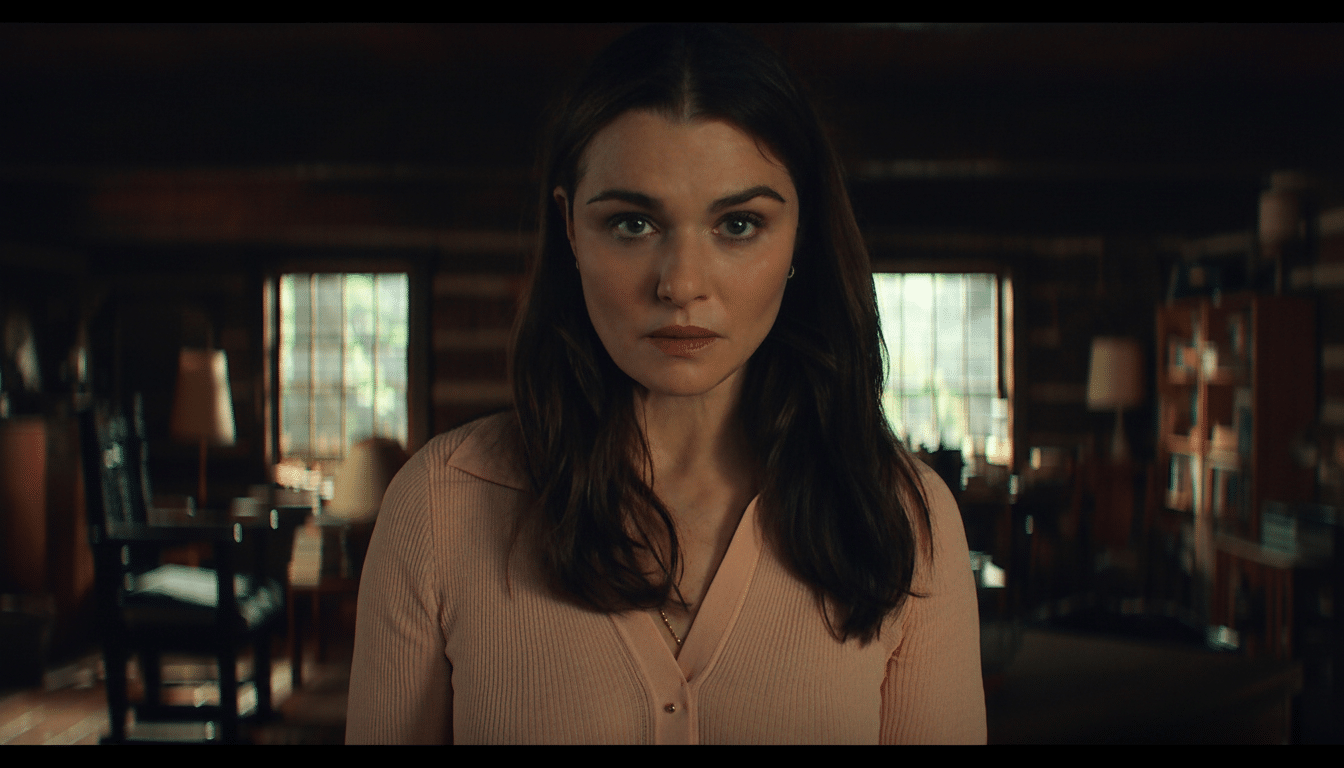
The unnamed professor (Rachel Weisz) finally sleeps with her charismatic colleague Vladimir (Leo Woodall) at her woodland retreat. Her husband John (John Slattery) arrives from a Title IX proceeding that ends in dismissed complaints; tensions spike, and all three bed down in separate rooms. While they sleep, the space heaters she shoved too close together spark a blaze. The men wrestle with a jammed door; she lunges for her handwritten manuscript. Then, staring into the camera, she insists she escaped, dialed 911, and got everyone out.
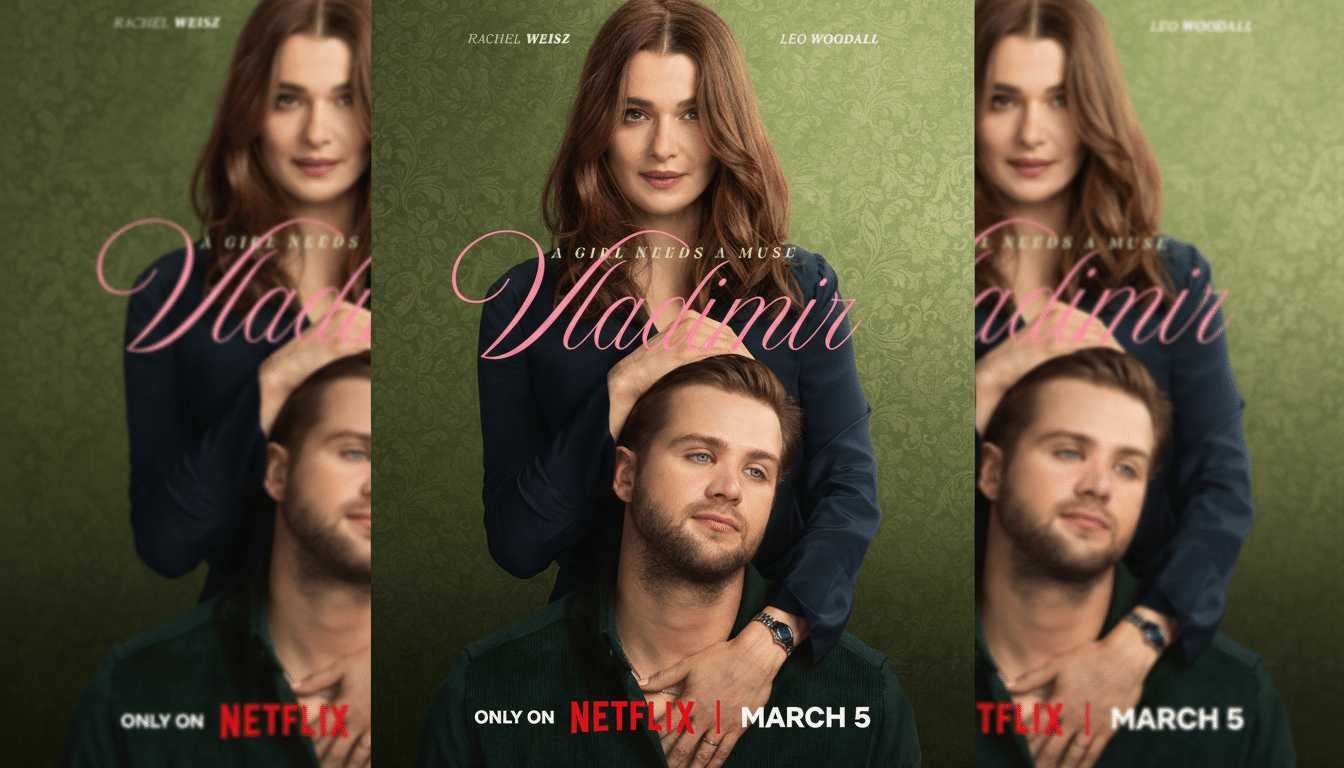
Onscreen, we never actually see John or Vladimir outside the burning cabin. The image holds on flames and her voice, not proof. The gap between what is shown and what is said is deliberate—and unsettling.
An Unreliable Narrator Turns Up The Heat
From the pilot’s salad fib—she swore colleagues devoured her dish that sat untouched—the show trains us to doubt its storyteller. The finale weaponizes that pattern. By delivering a tidy rescue as monologue instead of action, Vladimir leans on a tradition that literary scholar Wayne C. Booth dubbed the “unreliable narrator,” where the storyteller’s self-justifying version diverges from observable reality.
Form supports the suspicion. Direct address to the audience, a technique that once promised intimacy, becomes a defense brief. Editing elides crucial beats, sound design swells over evidence, and the camera keeps returning to the pages she tries to save—the one thing we know she prioritizes over people throughout the season.
The Fire As Fiction Inside The Fiction Of Her Story
The series repeatedly ties her sexual obsession to a creative reawakening: she starts drafting a new novel about a professor transfixed by a younger colleague. In the cabin, two endings present themselves in dialogue—recommit to John, or schedule trysts with Vladimir—but she rejects both as uninspired. A catastrophic blaze functions as the narrative sledgehammer that clears space for a “whole new life,” whether literal or literary.
That meta-possibility is baked into the finale’s dream logic. Scenes fracture, motivations compress, and the camera lingers on the manuscript like a Chekhov’s gun made of paper. Prestige TV has played with this membrane before—think the perspective trap of Black Mirror’s White Bear or the self-authored spirals of The Flight Attendant—using form to suggest that what we’re seeing may be a character’s crafted reality, not an objective record.
How The Series Rewrites The Novel’s Clear Ending
Julia May Jonas’s source novel (Jonas also created the series) resolves the blaze and its consequences head-on. The professor and John survive and relocate to New York. Vladimir publishes a thinly veiled account that earns prize longlists but little commercial heat, while his wife Cynthia becomes a bestseller. The protagonist stays with John, essentially reset to status quo.
The show opts out of that clarity. By halting at the moment of crisis and refusing to verify her claims, the adaptation reframes agency. Instead of closing the loop on marriage, career, and desire, it leaves her hovering between retribution, reinvention, and self-delusion—an author who may be rewriting her life in real time. Adaptation theorists like Linda Hutcheon note that shifts in medium often warrant shifts in emphasis; here, ambiguity itself becomes the theme.
Accident Or Arson Or Alibi: Three Reads Of The Blaze
Three credible reads remain.
- The fire is accidental, born of reckless heater placement, and everyone escapes offscreen.
- The blaze is real, but her monologue is a self-serving alibi that erases failures—or worse—amid smoke and chaos.
- The entire sequence is the ending of her in-progress novel, a pyrotechnic fix to two unappealing romantic resolutions.
Clues tilt each way. The show seeds the heaters early, making accident plausible. Her impulse to snatch pages over helping people indicts her reliability. And the finale’s heightened, slightly disjointed texture feels authored, not documentary. The point is less to solve the puzzle than to expose how she constructs stories—about sex, about power, about herself—and how we collude by wanting a clean answer.
Why The Ambiguity Works For Vladimir’s Bold Finale
Vladimir has always been about authorship—of narrative, of reputation, of desire—set against campus systems where formal judgments (like Title IX dismissals) rarely settle the moral ledger. An ending that withholds certainty is thematically faithful. It invites second-screen forensics and seminar-style debate, the same post-finale energy that kept open endings from The Sopranos to Inception alive for years.
Whether you read the cabin as crime scene, cautionary tale, or chapter ending, the finale lands its true thesis: the most dangerous fire is the one our narrator lights on the page, then asks us to admire. Vladimir is now streaming on Netflix.

