


Months after Google said Gemini would arrive in cars via Android Auto, many drivers still don’t see it. Frustrated users across forums say they’ve updated every app, flipped every switch, and even set Gemini as their phone’s default assistant, only to be greeted by the same old Google Assistant when they plug in.
The disconnect between the promise of a broader release and the reality on dashboards points to a staggered or throttled rollout, with Google offering no fresh timeline. That vacuum has sparked a familiar chorus in the Android ecosystem: is this another server-side slow burn, or a sign of deeper hurdles bringing generative AI safely into the car?
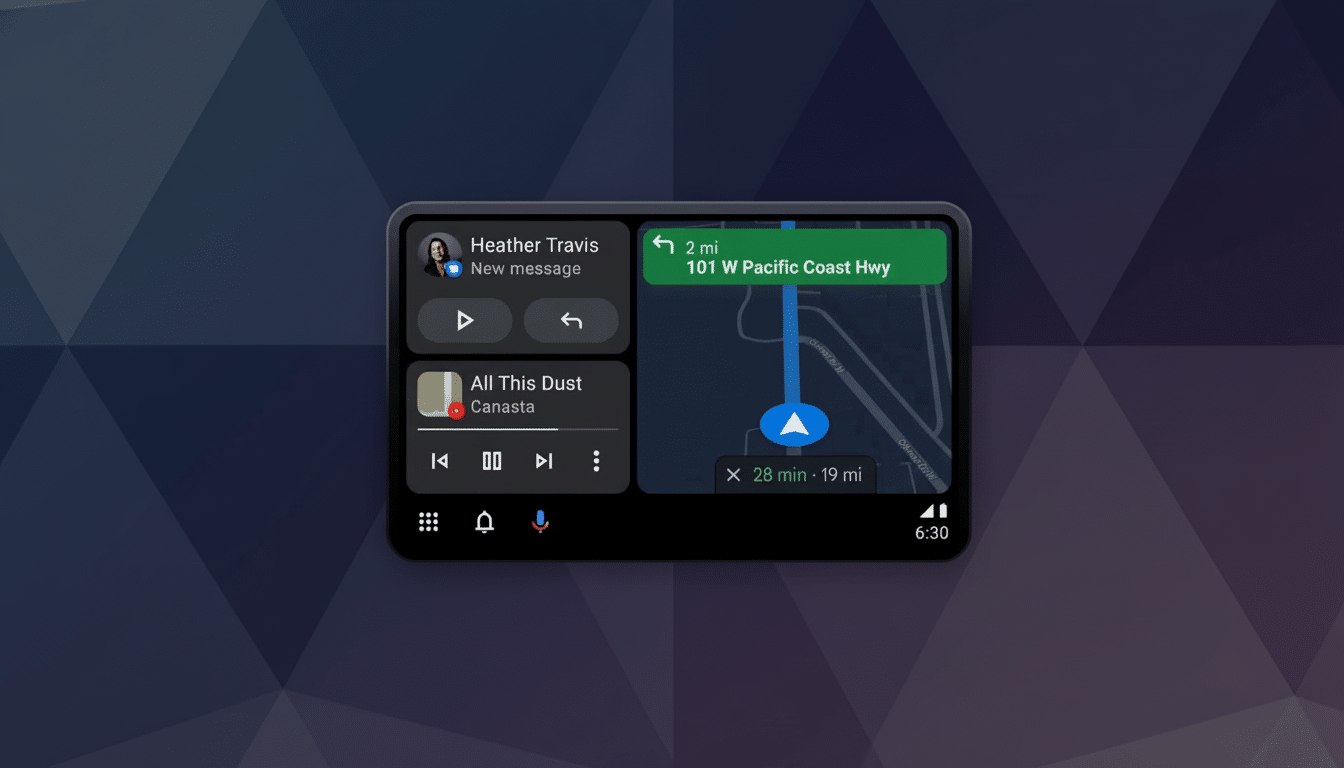
What Google Promised For The Car With Gemini On Android Auto
At launch, Google framed Gemini on Android Auto as a smarter in-car helper spanning navigation requests, messaging, media control, and contextual suggestions. The company said availability would expand globally in 45 languages. On paper, that’s a major leap from classic voice commands to an assistant that can better understand intent and summarize information while keeping eyes on the road.
In practice, access appears to hinge on a mix of app versions, account eligibility, language support, and a server-side enablement flag. Even when all of those seem aligned, drivers say the Gemini handoff simply doesn’t happen. That kind of behind-the-scenes gating is common for Google rollouts, but it’s rarely this opaque—or this visible—when the feature is central to the product experience.
Users Say They Meet The Requirements For Gemini In Android Auto
Reports on Reddit, Google’s support community, and comments under Google’s own demo videos all tell a similar story. Pixel and Galaxy owners in the US, Europe, and Australia describe up-to-date phones, current Android Auto and Google app builds, and Gemini selected as the default assistant. Yet, when they connect to their vehicles, Assistant still answers.
Some users note sporadic success after clearing caches or reinstalling Android Auto, but most see no change. Others say they briefly saw Gemini-branded prompts once, then reverted to Assistant on the next drive—classic signs of a server-side toggle being tested and withdrawn. Without official guidance, the community has resorted to guesswork about compatible languages, account types, and regional restrictions.
Why The Gemini Rollout May Be Slow On Android Auto
Two forces likely explain the brake-tapping. First, safety. In cars, even minor assistant errors carry real risk. NHTSA’s driver-distraction guidance has pushed infotainment platforms toward conservative design, and generative AI adds variability that must be tightly bounded. Gradual enablement lets Google tune prompts, guardrails, and fallback behavior before opening the floodgates.
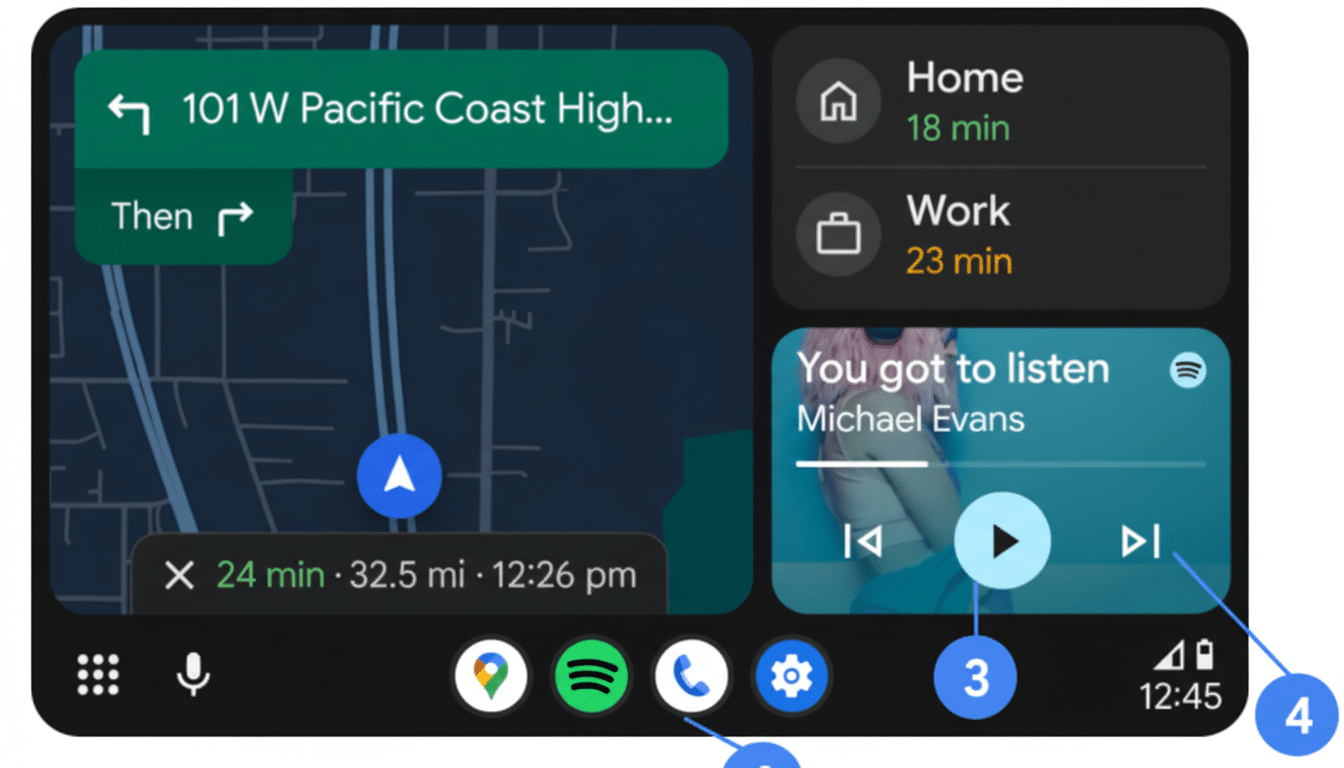
Second, scale and compliance. Android powers the majority of smartphones globally, and S&P Global Mobility has reported that well over 90% of new vehicles support smartphone projection like Android Auto. Turning on a new AI front end across that installed base is not just a code push; it hinges on language quality, regional privacy and consent flows, and server capacity to handle spikes while keeping latency low enough for voice interactions.
There’s also the messy middle of migration. Replacing Assistant with Gemini across surfaces means account- and device-level switches must stay in sync. If the phone is on Gemini but the car environment isn’t flagged in, users see inconsistent behavior. That mismatch is precisely what drivers are reporting.
How To Improve Your Odds Today Of Getting Gemini In The Car
While there’s no guaranteed shortcut, a few checks can rule out local blockers. Update Android Auto, Google Play services, the Google app, and the Assistant/Gemini components on your phone. In the Google app, confirm Gemini is set as the default assistant and that your chosen language is among those supported. Personal Google Accounts typically get new features before some managed Workspace accounts, so testing with a personal profile can help isolate issues.
If you still land on Assistant, you’re likely gated by a server-side rollout. In that case, tinkering won’t force-enable Gemini. Keep an eye on release notes in the Google app and Android Auto listings and on posts from Google’s support channels, which often acknowledge phased activations without shipping a new client update.
What Needs To Happen Next For A Wider Gemini Android Auto Launch
Clarity would go a long way. A simple status post from Google outlining current regions, languages, and account eligibility—and what remains in testing—would reset expectations. Given the safety stakes and the sheer variety of vehicles and head units, a cautious cadence makes sense. But when drivers are stuck in limbo, silence reads as indifference.
Until Google flips the switch more broadly, the takeaway is straightforward: you aren’t alone, you probably aren’t missing a step, and this is almost certainly a server-side pace issue rather than a problem with your car or phone. The finish line for Gemini in Android Auto may be in sight, but for now, many drivers are still waiting at the on-ramp.

