


Washington is preparing a new line of defense in the tech rivalry with Beijing: a federal prohibition on Chinese-made robots. A bipartisan push led by Senator Tom Cotton and Senate Majority Leader Chuck Schumer would bar U.S. agencies from purchasing or operating Chinese robots and unmanned ground vehicles, according to reporting from Reuters, reflecting rising anxiety over data security, supply chains, and strategic dependence.
The proposal, expected to be introduced as the American Security Robotics Act, mirrors earlier efforts to curb federal reliance on Chinese telecom gear and drones. A companion bill is planned in the House, backed by Representative Elise Stefanik, signaling rare cross-aisle alignment on a fast-evolving security risk.
- What the proposed ban covers in federal robotics
- Why lawmakers target Chinese robotics for security
- Industry landscape and market share in robotics
- Potential impact on agencies and vendors nationwide
- Precedents and parallels from adjacent federal tech bans
- What comes next in Congress for the robotics proposal

What the proposed ban covers in federal robotics
Draft outlines described by lawmakers indicate the measure would apply to federal procurement and use of robots and unmanned ground vehicles linked to Chinese companies or subject to Chinese jurisdiction. While details will matter, observers expect language similar to past “covered equipment” bans: direct purchases would be prohibited, and contractors could be blocked from supplying systems that embed restricted Chinese hardware or software.
In practice, that could reach everything from quadruped robots used for inspections to bomb-disposal platforms, warehouse autonomous mobile robots in government facilities, and research lab systems bought with federal funds. The scope may also touch maintenance services, firmware updates, and cloud telemetry, not just physical devices.
Why lawmakers target Chinese robotics for security
Robots are rich sensors on wheels or legs. They map buildings, capture high-resolution imagery, and collect inertial and environmental data that can be potent if exfiltrated. Security analysts at the Center for Security and Emerging Technology have repeatedly warned that remotely managed devices can create persistent access for foreign adversaries, especially when their software stack or telemetry routes are opaque.
Lawmakers point to China’s National Intelligence Law, which can compel companies to assist state intelligence work, as a structural risk. That argument underpinned previous U.S. actions against telecom equipment and popular drones. The same logic now extends to ground robots as their prices drop and their roles expand from lab demos to routine federal tasks.
Industry landscape and market share in robotics
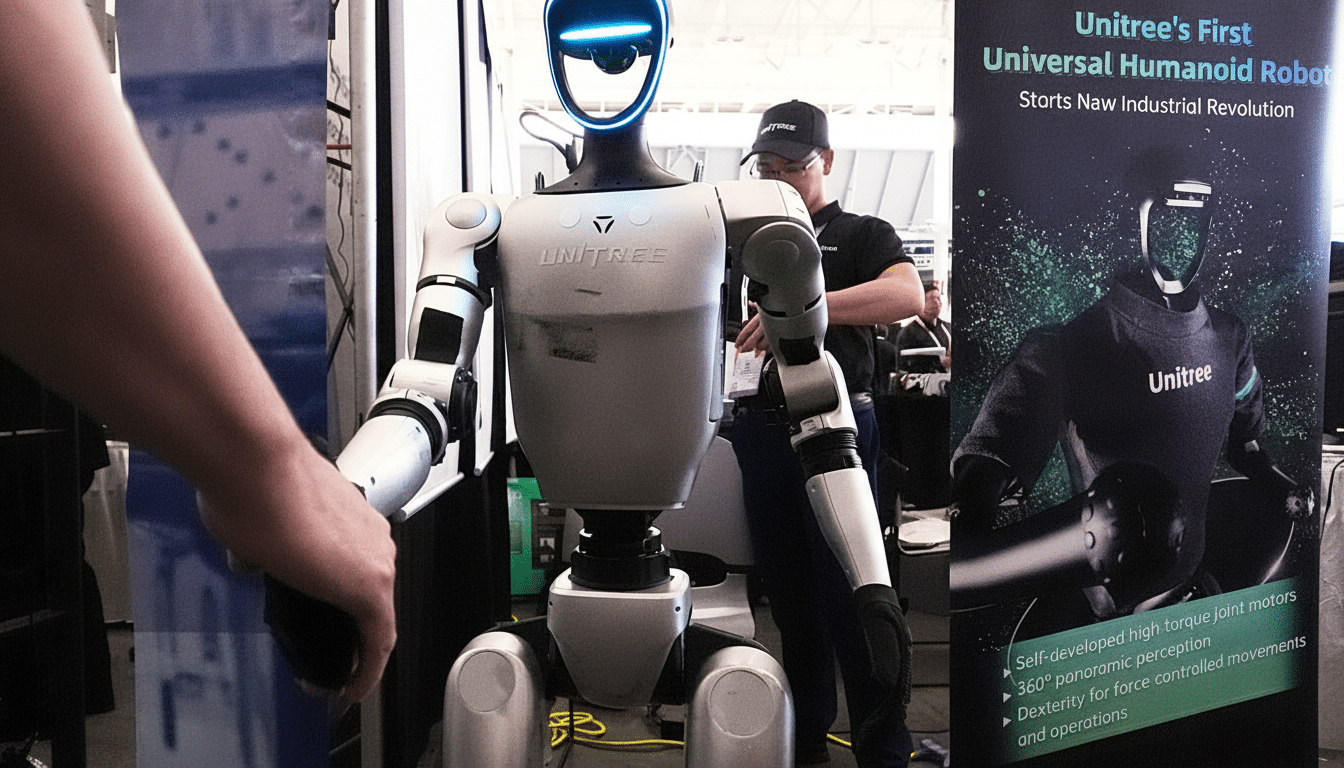
China dominates global robot deployment. The International Federation of Robotics reports China accounted for roughly 52% of new industrial robot installations in a recent year, underscoring the scale and maturity of its ecosystem. Chinese firms such as Unitree and DeepRobotics have popularized low-cost quadrupeds used by universities and startups worldwide, while AgileX, Geek+, and ForwardX export ground and warehouse robots at volumes that pressure global pricing.
That cost advantage is precisely what worries U.S. officials. As Senator Schumer has argued, flooding the market can entrench dependencies that are hard to unwind, particularly when life-cycle support, spare parts, and cloud-linked features are bundled. Federal buyers, faced with tight budgets, may otherwise opt for cheaper imports over more expensive domestic or allied alternatives.
Potential impact on agencies and vendors nationwide
A ban would ripple through federal procurement quickly. Agencies using commercial service robots for logistics or facility patrols could need to vet fleets and phase out restricted models. Defense and homeland security programs that rely on unmanned ground systems for perimeter security, EOD missions, or remote sensing would have to confirm origin and supply chains down to subassemblies—sensors, radios, compute modules, and batteries.
Prime contractors and integrators may face compliance regimes similar to Section 889 telecom restrictions: attestations, bill-of-materials disclosures, and software provenance checks. The Government Accountability Office has previously flagged gaps in supply chain risk management for connected devices; this bill would likely accelerate harmonized testing and certification led by NIST and the Defense Innovation Unit.
Precedents and parallels from adjacent federal tech bans
Federal policy has already tightened around adjacent technologies. The Defense Department has restricted Chinese-made small drones, and the Federal Communications Commission’s Covered List bars authorization of certain Chinese telecom gear. Those moves triggered a rush by agencies and vendors to source alternatives, spurring new U.S. entrants and allied suppliers. A robotics ban would follow that template—messy at first, but market-shaping.
Crucially, lawmakers appear focused on forward-looking risk reduction. It is not yet clear how prevalent Chinese-made ground robots are in federal inventories; many military and public safety units currently deploy U.S. and European platforms for mission-critical tasks. The intent is to prevent lock-in before low-cost imports scale across research labs, warehouses, and facility operations.
What comes next in Congress for the robotics proposal
The bill will draw scrutiny over definitions—what constitutes a “Chinese robot,” how to treat joint ventures, and whether software-only components fall under the ban. Expect debates over waivers for niche capabilities, timelines for replacement, and funding to offset transition costs for agencies with large fleets.
If enacted, the measure would cement robotics alongside telecom and drones as a protected technology layer in federal operations. For U.S. and allied robot makers, it could open procurement doors. For agencies, it will mean more paperwork now—and, advocates argue, fewer national security headaches later.

