


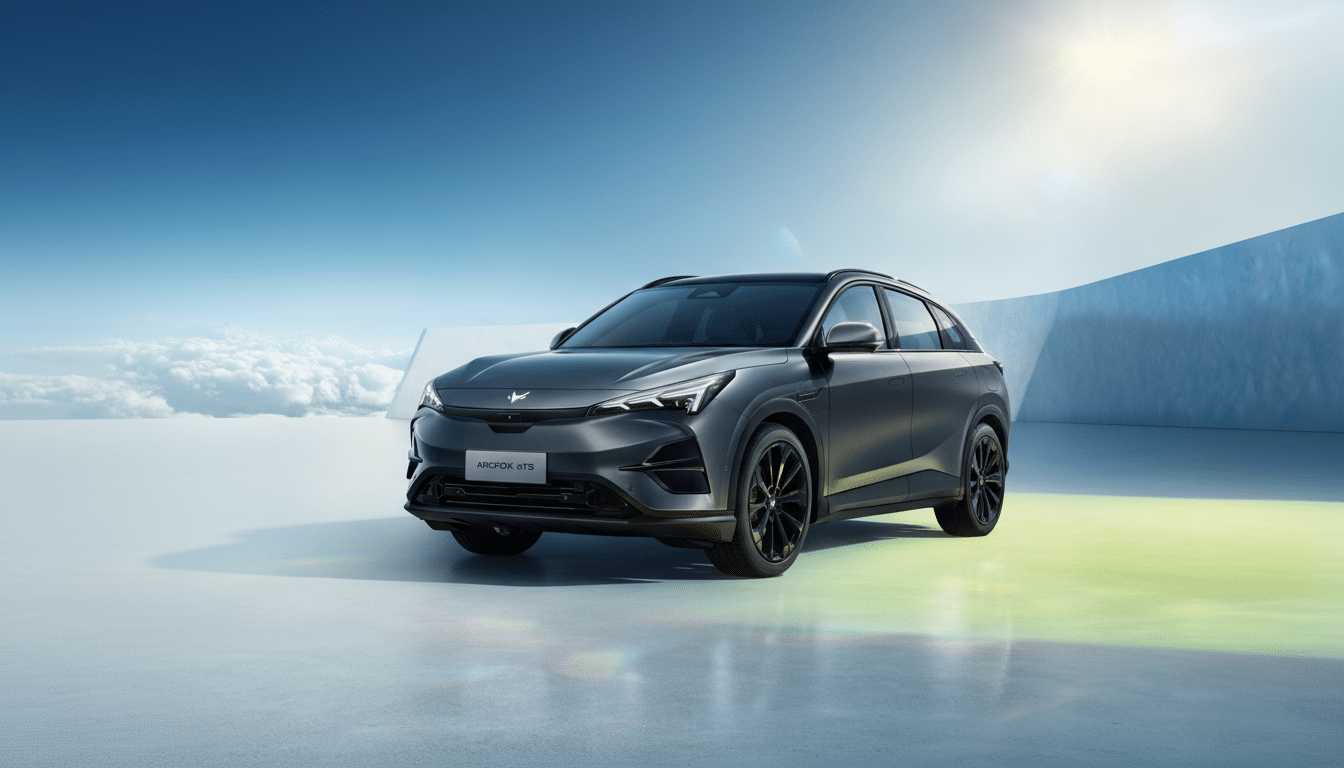
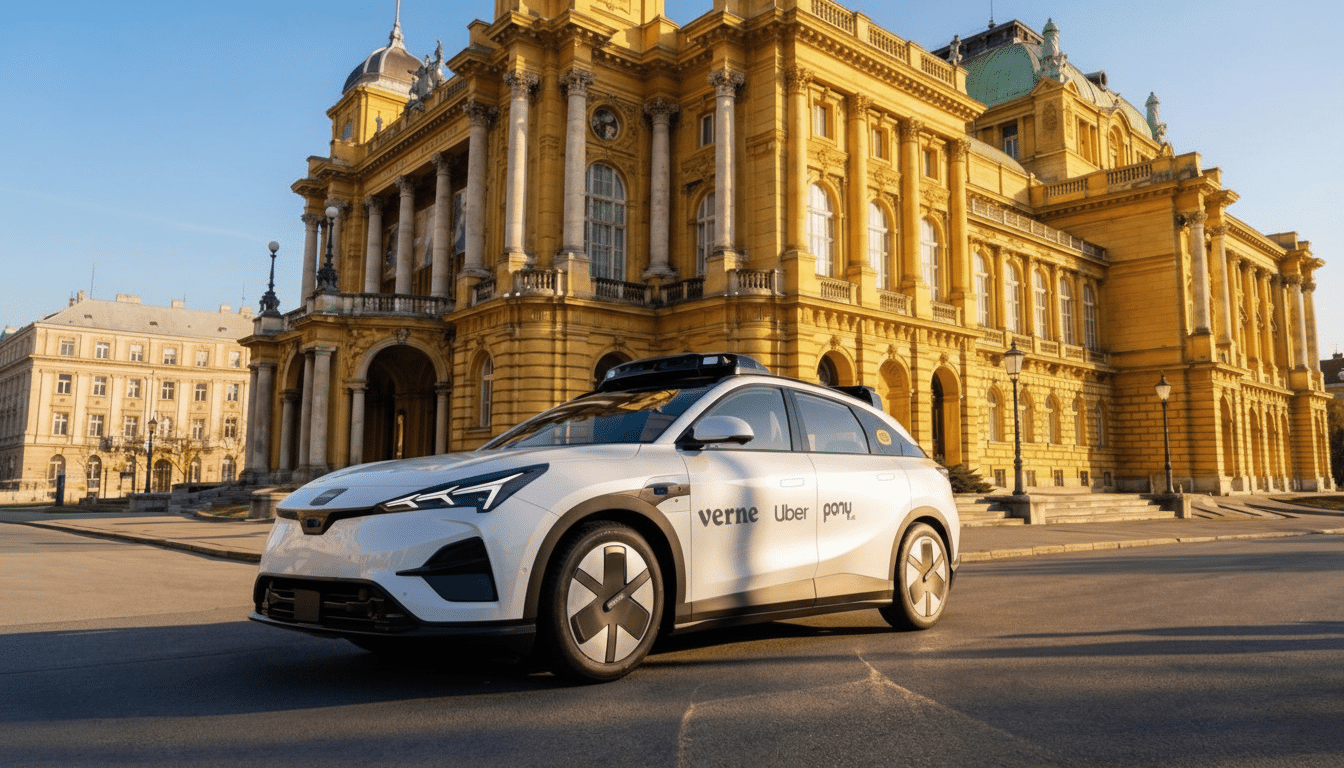
A little-known Croatian startup is stepping onto the robotaxi stage with heavyweight backing. Uber plans to support Verne, the autonomous mobility venture incubated by Rimac Group, in launching a commercial service in Europe starting in Zagreb. The effort pairs Verne’s fleet operations with Pony.ai’s self-driving system and the Arcfox Alpha T5 robotaxi developed with Chinese automaker BAIC, with rides available in the Uber app as well as Verne’s own.
Testing on public roads in Zagreb is already underway, and Uber signaled an investment in Verne alongside strategic support for expansion. Verne will own and operate the vehicles; Pony.ai brings the autonomy stack; Uber supplies the demand engine. It’s a pragmatic, three-part alliance aimed at accelerating Europe’s first meaningful robotaxi rollout beyond contained pilots.
Who Is Verne and Why Uber Cares About It
Verne grew out of Project 3 Mobility, a unit inside Croatia’s Rimac Group, the high-performance EV company founded by Mate Rimac. While best known for the Nevera hypercar, Rimac has long argued that urban mobility will shift to autonomous, purpose-built vehicles—and that scaling operations and service quality would matter more than building yet another human-driven EV.
In 2024, Verne emerged from stealth with €100 million in funding and a plan to produce compact, two-seat robotaxis optimized for short urban trips. The company has built and tested dozens of verification prototypes and is setting up a factory in Lučko near Zagreb to support manufacturing and fleet upkeep. Instead of reinventing autonomy, Verne is concentrating on vehicle design for shared use, the rider app, and the operational backbone—charging, cleaning, and maintenance—needed to hit high utilization targets.
For Uber, the appeal is straightforward: plug a ready-made autonomous fleet into its marketplace without owning the hardware or autonomy stack. The company has already experimented with autonomous integrations, including a partnership to offer driverless rides from Waymo in parts of Phoenix. Verne gives Uber a credible route into continental Europe, where incumbent robotaxi players have limited presence.
A Three-Sided Bet on Scale for European Robotaxis
The initial fleet will use Pony.ai’s autonomous driving system in BAIC’s Arcfox Alpha T5, a robotaxi configuration tailored for Level 4 service. Verne, as the operator, will manage the vehicles day to day and handle compliance, depot workflows, and service levels. Uber will match demand to supply and integrate safety, routing, and pricing into the familiar ride-hailing experience.
This division of labor is becoming the dominant playbook. Waymo builds and operates its own fleets in the U.S.; other entrants are mixing autonomy suppliers with local operators and marketplace partners. Europe’s fragmented regulatory landscape rewards modularity: operators versed in city-by-city rules can move faster than monolithic, vertically integrated models trying to scale across borders all at once.
McKinsey estimates that autonomous driving could unlock $300 billion to $400 billion in value by 2035, much of it in shared, on-demand services. The winners are likely to marry high safety performance with ruthless unit economics—vehicles that can stay on the road for long blocks, minimal downtime, and strong dispatch efficiency. Verne’s focus on compact EVs, centralized depots, and tight ODD (operational design domain) control is squarely aimed at that equation.
Why Start in Zagreb for Europe’s First Robotaxis
Zagreb offers a controlled proving ground with a dense, mixed-traffic core and roughly 800,000 residents, plus straightforward access to Verne’s engineering base and manufacturing footprint. Proximity matters for iterating the edge cases that dominate urban autonomy—unprotected turns, cyclists, and complex intersections—while keeping operational costs in check.
Europe’s policy climate is also warming. The EU’s CCAM partnership is seeding cross-border pilots; UNECE regulations such as R157 created early pathways for automated lane-keeping on highways; and national frameworks in Germany and France allow defined Level 4 operations. The UK’s Automated Vehicles Act established a legal pathway for commercial deployments. Croatia can leverage EU-aligned standards while tailoring city-level permissions to local conditions, enabling Verne to move from testing to limited commercial service and then expand ODDs as performance data accumulates.
The Competitive Window in Europe for Robotaxis
Unlike the U.S., where Waymo has logged millions of driverless miles and operates paid rides in multiple metro areas, Europe has lacked a clear front-runner. High-profile setbacks—like the suspension of certain U.S. robotaxi operations following safety incidents—have also cooled investor exuberance and raised the bar for transparency and validation testing.
That opens a lane for a locally anchored player with a patient, city-by-city approach. If Verne can demonstrate strong safety performance in Zagreb and translate that into approvals in other European cities, Uber can instantly route demand through its marketplace, compressing the go-to-market timeline. Pony.ai brings maturity from large-scale pilots in China, where it has tested robotaxis in Guangzhou, Beijing, and Shenzhen, experience that could help in navigating dense urban patterns.
What to Watch Next as Verne and Uber Launch
Key milestones will include the shift from supervised testing to driverless operations, the scope of the initial ODD, and early service metrics such as ride completion rate, incident reporting, and average wait times. Pricing will be another tell: if autonomous rides undercut private-hire baselines while maintaining strong reliability, repeat usage will follow.
Verne says it aims to scale to thousands of vehicles over the next few years. The near-term path runs through Zagreb, but the bigger play is a repeatable template for European cities—standardized depot operations, local regulatory engagement, and seamless integration with Uber’s rider base. If that puzzle comes together, a Croatian upstart could become one of Europe’s most consequential names in autonomy.

