


There’s a quiet revolution happening in travel: more visitors are learning the basics of local languages before they land, and it’s transforming routine itineraries into genuine cultural exchanges. Even a handful of phrases can change the dynamic of a meal, a market stop, or a museum visit—turning transactions into conversations and creating the kind of serendipity guidebooks can’t script.
Industry data suggests the timing is right. As global tourism rebounds, the United Nations World Tourism Organization reports that international travel has surged close to pre-pandemic levels, bringing renewed attention to how travelers can be respectful, informed guests. Language sits at the center of that equation, not as a marathon study plan but as a set of purposeful skills that unlock context, trust, and nuance.

Crucially, language isn’t about flawless grammar. It’s about signaling that you’re here to engage. A simple greeting in the local tongue—hello, please, thank you—often earns warmer responses and opens doors that remain shut to monolingual visitors.
Why Speaking The Language Changes Your Trip
Researchers have long shown that people respond more positively when addressed in their native language. CSA Research’s “Can’t Read, Won’t Buy” series found that 76% of consumers prefer products and information in their own language, a trust effect that extends well beyond shopping. In travel, that trust shows up as better recommendations, clearer directions, and invitations that rarely reach travelers who only point and mime.
Language also reframes what you notice. You start catching the names of seasonal dishes on chalkboard menus in Madrid or recognizing honorifics on street signs in Seoul. Those details deepen cultural context, helping you understand not just what to see, but why it matters to the people who live there.
There’s a safety dividend, too. Being able to ask for help, read a platform announcement, or relay an allergy increases confidence and reduces stress—small wins that often add up to big memories.
How Much You Need To Learn Before Departure
You don’t need fluency to travel well. The Council of Europe’s CEFR framework defines A1–A2 as “survival” and “Waystage” levels—precisely what most trips require. In practice, aim for 50 to 100 travel-ready expressions: greetings, numbers, directions, food and lodging phrases, times and dates, plus two or three polite “lifesavers” (excuse me, could you repeat that more slowly, I’m learning).
The American Council on the Teaching of Foreign Languages notes that “novice” speakers can handle predictable situations with memorized phrases. That’s your sweet spot: quick interactions at a café counter, a train station, or a market stall, where a confident opener in the local language makes the rest easier—even if you transition into English afterward.
If you have more time, add a dozen verbs in the present tense (to want, to have, to go, to like, to need), key question words (who, what, where, when, why, how), and pronunciation rules for tricky sounds. This small upgrade dramatically expands what you can understand and say.
Proven Methods That Fit A Busy Itinerary
Microlearning works. Psychologist-led meta-analyses, including work by Nicholas Cepeda and colleagues on spaced repetition, show that short, distributed practice beats cramming. Think 10–15 minutes daily rather than a single weekend sprint.
Use a blended toolkit. Apps such as Babbel, Pimsleur, Mango Languages, and Memrise focus on practical phrases and pronunciation; language exchange platforms like italki and HelloTalk connect you with native speakers for low-stakes practice; podcasts and local radio tune your ear to rhythm and intonation. Download offline lessons before flights to keep momentum when Wi-Fi disappears.
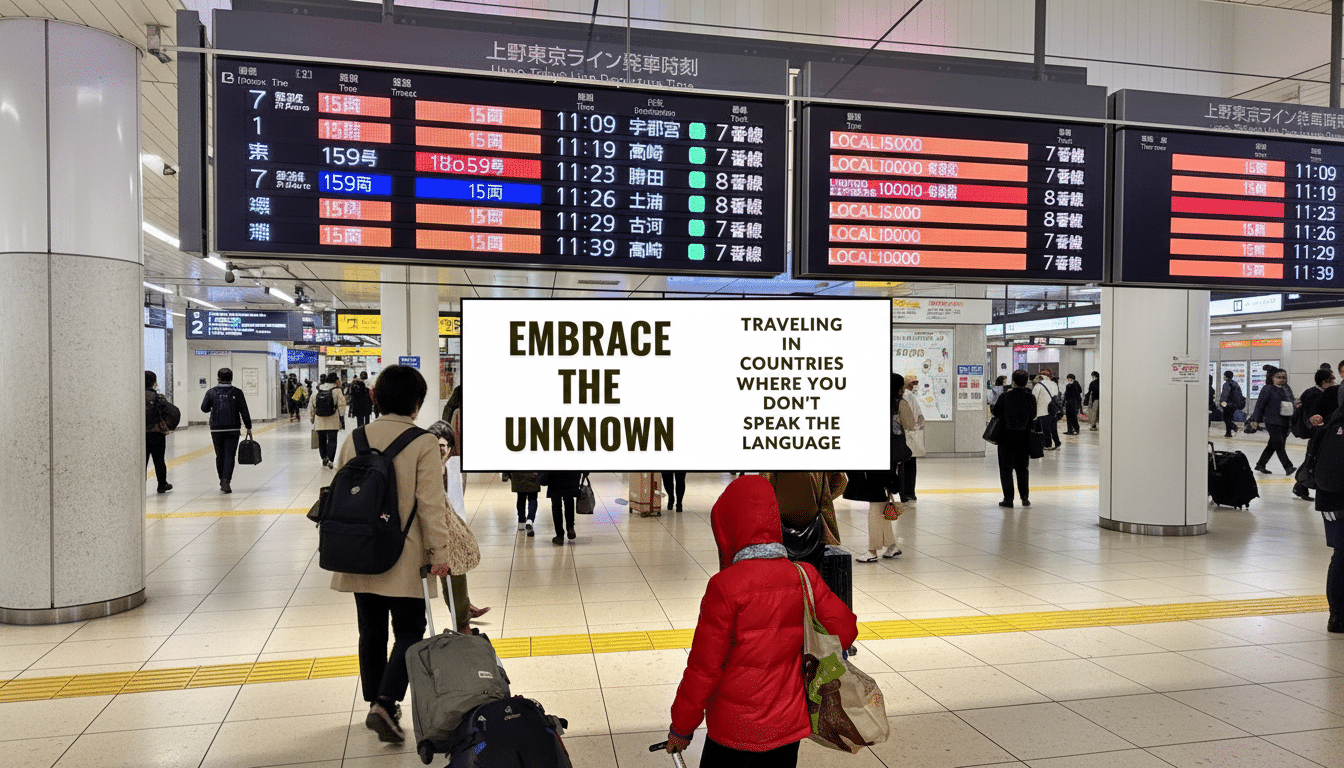
Speak early, speak often. Read menus aloud, record voice notes, and mimic short clips from local news or YouTube creators. The goal isn’t perfection; it’s building the reflex to open in the local language first, then switch if needed.
Etiquette And Safety Phrases That Matter
Learn the local greeting culture. In France, start every interaction with “Bonjour” before a question; in Japan, a simple “Sumimasen” softens requests and clears space in crowded areas. Many Romance languages use formal and informal “you”—default to formal with strangers to show respect.
Master key logistics: numbers, left/right/straight, near/far, today/tomorrow, and platform/gate/stop. Add a short script for checking into hotels, ordering food, and buying tickets. For health and safety, memorize any allergy or medical needs and know how to say “I need help” and “Call emergency services.”
Cultural cues matter as much as words. In many places, acknowledging staff on entry and exit, avoiding overly direct requests, or using titles like “Señor/Señora” or “Herr/Frau” communicates courtesy that locals notice instantly.
A 30-Day Starter Plan For Real Conversations
Days 1–7: Build a core kit—greetings, numbers, please/thank you, yes/no, I’d like, where is, how much, excuse me. Learn pronunciation rules and practice them aloud daily.
Days 8–20: Add travel dialogues—ordering food, buying tickets, asking directions, checking in. Shadow native audio for 5 minutes a day. Schedule two 20-minute exchanges with a tutor or community partner focused on set scenarios.
Days 21–30: Personalize. Learn words tied to your itinerary—specific dishes, neighborhoods, landmarks, and activities. Rehearse one-minute “micro-monologues” about who you are and what you’re looking for. Record and compare to native models; adjust pace and stress.
On the ground, open every interaction in the local language. If you get stuck, smile, switch languages, and keep going. Locals rarely judge earnest effort; more often, they reward it with better tips, truer recommendations, and the kind of hospitality money can’t buy.
The payoff is disproportionate to the time you invest. With a few dozen phrases and a willingness to try, you move from seeing a place to understanding it—one exchange, one shared joke, one unexpected invitation at a time.

