


Businesses today rely heavily on the internet, cloud apps, and working from home. People who work for you don’t just sit in offices anymore. Some people work from home, some travel, and some use cloud platforms all day. This change has made company networks more complicated than they were before.
Most businesses used traditional firewalls to keep their systems safe in the past. Usually, these firewalls were put up at the main entrance to the office. This method worked well back then. But now, things are different. Data, users, and threats are all over the place. This is why a lot of businesses are slowly moving away from old-fashioned firewalls and using newer security models.
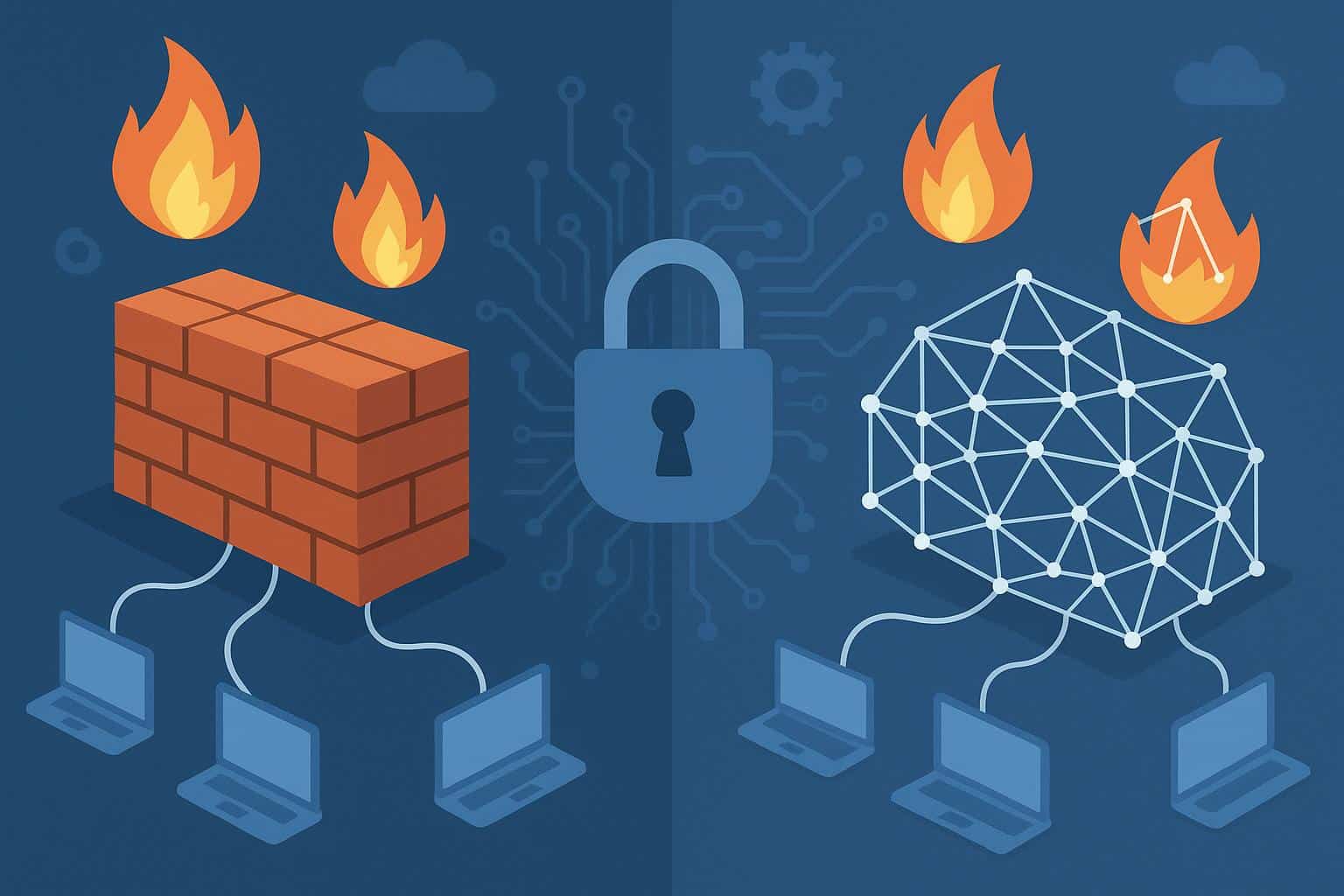
The Hybrid Mesh Firewall model is one of these new ways to do things. Here are the main reasons why businesses are changing.
Old-Fashioned Firewalls Don’t Work Anymore
A traditional firewall is like a security guard at one gate. They keep an eye on who comes and goes. This setup assumes that everything inside the office network is safe and that everything outside of it is dangerous.
But this is not true today. People use their own devices, cloud tools, and connections from afar. Data travels between home networks, clouds, and offices. One firewall at the office gate can’t see or protect all of these paths.
Traditional firewalls often miss threats that come from cloud apps, remote users, or internal misuse because they can’t see them very well.
More Safety For Cloud And Remote Work
Most businesses now use cloud services for their software, email, and storage. At the same time, working from home has become very common. People from all over the world and in different cities log in.
A hybrid mesh firewall lets you put security closer to users and apps. Security rules are used on all cloud platforms, branch offices, and remote devices, not just in one place.
This helps businesses keep their data safe, no matter where it is used. It also makes sure that remote workers have the same level of security as office workers.
Everywhere, Security Policies Stay The Same
One big problem with old firewall setups is that they don’t always work the same way. The rules for firewalls may be different in different offices. Different cloud environments may have different security settings. This leaves holes that attackers can use.
Companies can use the same security rules everywhere with a hybrid mesh firewall. No matter where the traffic comes from office, cloud, or remote network—it follows the same security rules.
This makes it easier to keep things safe and cuts down on mistakes that happen when you set things up by hand.
Better Control And Visibility
Cyber threats today are smart. They blend in with regular traffic and move quietly across networks. Firewalls that have been around for a long time often can’t keep track of this kind of movement.
Hybrid mesh firewalls make things easier to see. Security teams can see how data moves between users, apps, and systems, even if they are not in the same place.
Responding To New Threats Faster
Cyber threats change very quickly. Every week, new ways to attack show up. Updating a traditional firewall can take a long time and be done by hand.
Hybrid mesh firewalls are made to get updates and threat information faster. You can change security rules in one place and have them apply to all places almost right away.
This helps businesses protect themselves from new threats without having to wait long.
More Help For Zero Trust Security
A lot of businesses are now using the Zero Trust security model. This model says that no one or device is trusted by default, even if they are on the network.
This idea wasn’t made for traditional firewalls. They put too much faith in traffic inside.
Zero Trust principles work well with hybrid mesh firewalls. They check users, devices, and access requests all the time. This makes it less likely that hackers will get inside and steal credentials.
Easier Management For IT Teams
IT teams can get stressed out when they have to manage multiple traditional firewalls in different places. You need to pay attention to and keep an eye on each device separately.
Most of the time, a central dashboard is used to manage hybrid mesh firewall systems. This makes it much easier to keep an eye on things, make changes, and fix problems.
IT teams can spend less time fixing daily firewall problems and more time making security better.
In Conclusion
Cyber threats have changed, just like how businesses work. Firewalls from the past were made for a time when everything stayed inside the office. Clouds, homes, and mobile devices all have networks these days.
This is why businesses are switching to hybrid mesh firewall models. They are easier to see, protect, grow, and manage. Most importantly, they keep businesses safe in a world where work and data are no longer tied to one place.
As digital spaces keep getting bigger, using old-fashioned firewall methods is no longer an option. It is becoming necessary.
