


Technology typically takes several years to develop and become widely used in everyday life, as we have observed over the past 10 years. In 2026, we are seeing a range of devices that may at one point have felt impossible to develop, but are now becoming more effective in everyday life. Whether it is wearable assistance, smarter ways to commute, or even how to play slots online at BOYLE Casino, over the next decade, our everyday lives could be shaped by various tools that can simplify routines and, in some cases, work life. Some of these innovative technologies are already available on the market, but in very refined models, while others seem incredibly unlikely to be released in the upcoming couple of years.
AI Wearable Assistants
Wearable devices that go beyond wristbands and traditional smartwatches are beginning to appear, promising consistent artificial intelligence services. These could act as personal assistants that understand context, schedule reminders, process voice commands, and provide information without needing to pick up a phone. Rumoured devices, including models combining audio AI with gesture control, aim to deliver this kind of seamless support as early as the mid-to-late 2020s.
Everyday Augmented Reality Glasses
Augmented reality glasses have taken a while to reach the stages they are currently at in 2026, only recently becoming a part of some people’s everyday lives. At the end of 2025, Meta and Ray-Ban teamed up to produce glasses that have allowed for live translations and even record a first-person perspective of the wearer. Meanwhile, other major technology companies, such as Google and Apple, are working on similar smart glasses, which could eventually make us less dependent on phones and traditional screens in our daily lives.
Smart Home AI Controllers
Smart homes are evolving from systems that simply respond to commands to ones that anticipate needs. Modern developments in edge AI and connected sensors mean that future hubs could manage lighting, climate control, security, and energy usage based on learned patterns rather than manual inputs. These autonomous systems are increasingly common in demonstrations and early consumer systems, hinting at a future where homes think for themselves.
Health Monitoring Devices
New health tech is extending beyond fitness trackers to continuous monitoring of vital signs such as blood glucose and heart rhythms without invasive procedures. Research into bioelectronic sensors and auricular devices shows that wearables could soon offer clinical-grade tracking, alerting users and healthcare providers to changes in real time. This trend reflects wider interest in personalised health through non-invasive gadgets.
Personal Companion Robots
Robotics is crossing from novelty into useful domestic help. At events such as CES 2026, humanoid and mobile robots were shown performing tasks such as laundry folding and household organisation, alongside general-purpose machines designed to respond to voice and visual commands. As physical AI improves, these robots could become more commonplace for those who want assistance with daily tasks at home.
Smart Clothing
Smart clothing and footwear are moving beyond niche fitness gadgets towards everyday use. By embedding sensors into fabrics and textiles, these garments can monitor posture, temperature, and movement. In 2025 and 2026, manufacturers began integrating these technologies to enhance data collection for health and performance. As the technology becomes more affordable, smart clothing could become a regular part of people’s wardrobes.
Urban Transport Devices
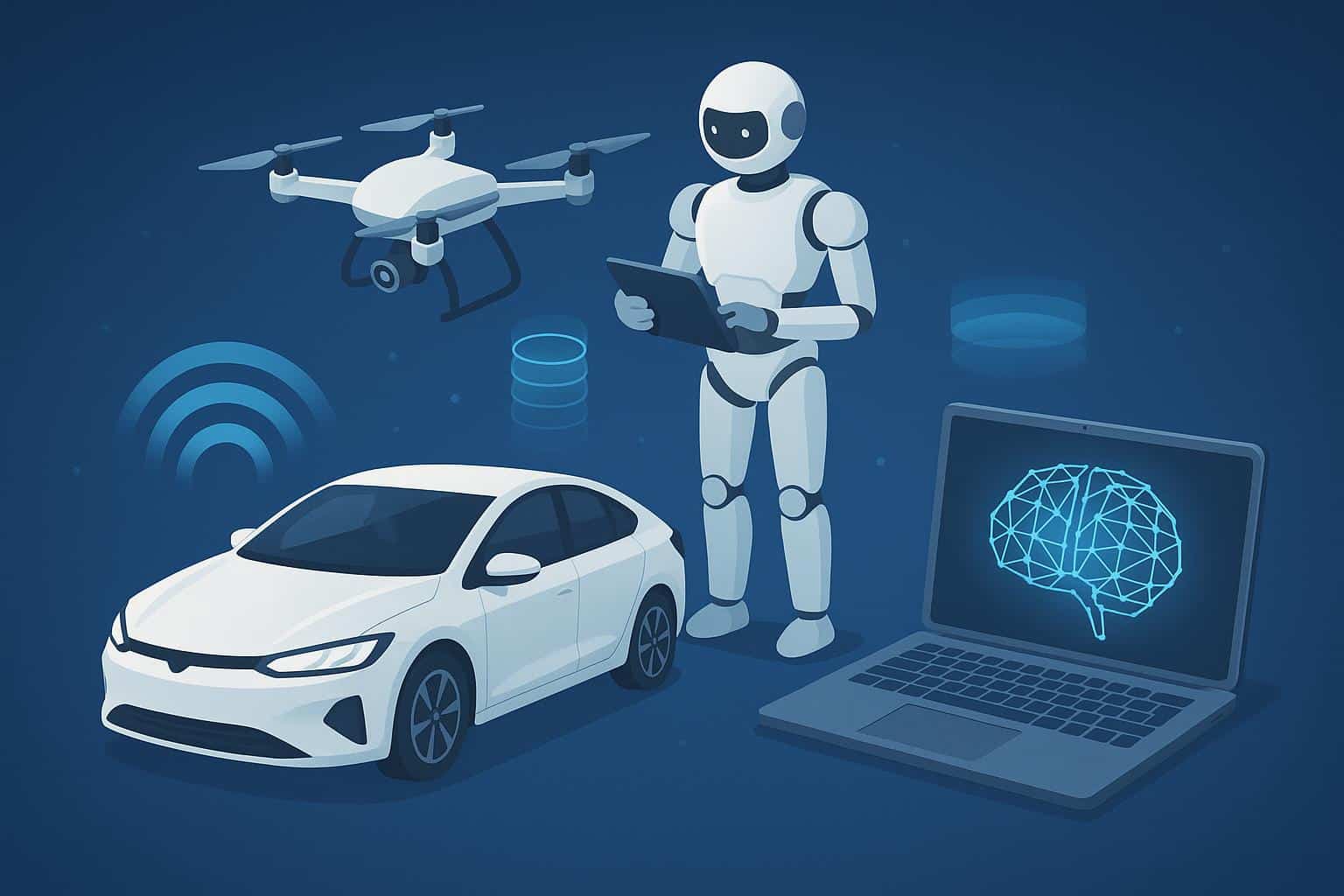
Self-driving and autonomous vehicles continue to advance, with major companies integrating advanced driver assist systems and testing fully autonomous transport solutions. While fully driverless cars are still in development, semi-autonomous features and robotaxi designs are being trialled in controlled environments, and could become more widespread in urban spaces over the next decade, transforming daily commuting and logistics.
Mixed Reality Workstations
Mixed reality workstations combined a physical environment with digital elements in an attempt to improve productivity and even collaboration. New spatial computing systems have allowed the development of the likes of Apple’s Vision Pro, meaning workspaces can project virtual screens and tools that can be used in a 3D world. As hardware and software improve, these workstations could replace conventional monitors and keyboards for many people, especially in creative and professional contexts.
Personal Data Vaults
As data privacy concerns grow, specialised devices designed to store and manage personal information locally are attracting attention. These “data vaults” aim to give users control over their digital identity and limit what cloud services and AI systems can access. The trend toward edge computing and privacy-first AI suggests that hardware focused on secure, user-controlled data could become more popular.
Non-Invasive Brain-Computer Interface Devices
Brain-computer interfaces are gaining interest from companies and researchers because they promise new ways to interact with technology using thought. While fully implanted systems remain specialised and experimental, non-invasive headsets and wearable neural devices are under development. These may initially assist with accessibility and hands-free control of devices, and could become more mainstream as the field matures through the late 2020s.

