


If you got done with Spotify Wrapped and it just said you’re 73 years old, take a deep breath. You did not accidentally sign up for time travel, and Spotify has not started leaking your birth certificate. The app’s new buzzy Listening Age is a playful data story spun from the release years of your most played tracks, charted against a well-known quirk of human memory. It’s designed to stimulate conversation, not verify your driver’s license.
Here’s what is actually at work behind the curtain — and why so many people have now involuntarily turned out to be “older” or “younger” than they had thought.
- What Listening Age Really Measures in Spotify Wrapped
- How Spotify Calculates the Math Behind Your Number
- The psychology behind Spotify’s Listening Age guess
- Why Your Score Can Lean Older or Younger on Wrapped
- Is Listening Age True or Just for Fun on Spotify Wrapped?
- Can You Nudge Your Listening Age for Next Year’s Wrapped?
- Where This Feature Fits in Today’s Music Streaming Wars
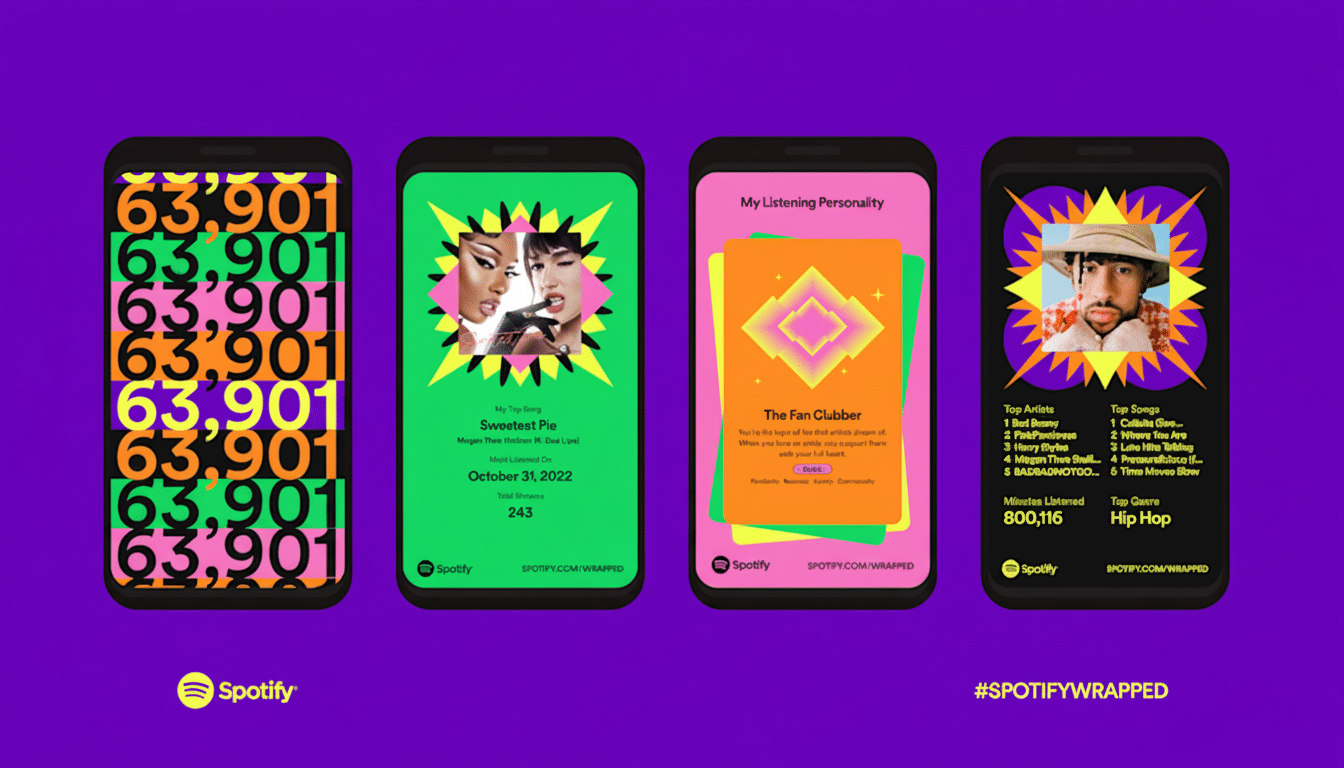
What Listening Age Really Measures in Spotify Wrapped
Listening Age refers to when Spotify believes your taste in music skews compared with real people in your age group. It’s not your own age, legal or demographically assumed. It’s a storytelling label built on release dates in your personal listening history, put up against those out of line with your peers.
How Spotify Calculates the Math Behind Your Number
Spotify takes your plays from the early part of the year through late fall into account and tallies the original release year of every single song. Then it identifies the five-year period that you are more likely than anyone else your age to have struck. That cluster serves as an anchor for a “you were probably 16–21 then” assumption — those are formative music years for a lot of listeners. From there, Spotify back-solves for a possible birth window and turns it into a “Listening Age.”
Example: If your peak cluster lands in, say, 2003–07, Spotify decides you were a late teen at the time and suggests that you are currently in your late 30s or early 40s. If most of your plays focus on the 1960s, you’re likely to produce something around a score of 70–80. Flip it to 2018–22, and you’re going to be a lot younger.
The psychology behind Spotify’s Listening Age guess
The feature relies on the “reminiscence bump,” a concept in cognitive psychology that adults tend to remember a disproportionate amount from adolescence and early adulthood. Backed by decades of research in journals like Memory & Cognition and supported by the American Psychological Association that link strong emotional memory to identity formation (which peaks around ages 16–21), they’re distinct targets for favorite songs to make their impressions.
Why Your Score Can Lean Older or Younger on Wrapped
Several factors can nudge your Listening Age in either direction:
- Catalog power: Few, if any, current artists dominate the streaming era as older ones do. According to industry reports by Luminate, catalog (tracks older than 18 months) has consistently represented about 70% of U.S. on-demand audio consumption, so here’s the downside: It’s easy for snaps and pops and undoctored analog to weigh heavily on earlier eras, even if you make sure you’re at least sampling new releases.
- Algorithm influence: Lean on artist radios, nostalgia playlists, and soundtrack compilations, and your feed might cluster in the classic ages — one binge of Motown or Britpop or bloghouse can slide your five-year window.
- Metadata oddities: Remasters, deluxe editions, and live albums can include the original year or show the reissue date instead. That can push your cluster forward or backward.
- Shared speakers and odd use cases: Family sessions, party playlists, kids’ music, or even sleep sounds can also quietly pad one era or genre and skew the pattern.
Is Listening Age True or Just for Fun on Spotify Wrapped?
Spotify presents Listening Age as a whimsical conjecture, more so than a scientific profile. The math is real, but the conclusion is meant to be at least a little cheeky. Wrapped has always combined analytics with attitude to encourage sharing — and it’s effective: Features like “Sound Town” in previous years helped turn feed-friendly prompts into viral moments.
Remember, it’s a compare-you-to-others-in-your-age-range metric, so you could even have a heavy 2010s listening year and come out with an “older” number if your peers lean more recent. It’s about relative tilt as opposed to a life history.
Can You Nudge Your Listening Age for Next Year’s Wrapped?
If you’d like next year’s list to skew younger, sink more time into new releases and emerging artists. Tactical plays: prioritize New Music Friday, save tracks from Release Radar, and follow editorial sets like Fresh Finds. If you’re wondering if you can “age up,” do the opposite: sink further into critically approved titles — curating classics, decade playlists, a wing in the Rock and Roll Hall of Fame.
Either way, you’re training your own dataset. The thing you stream most — over months, not just a weekend — gives form to the five-year period of time that determines your result.
Where This Feature Fits in Today’s Music Streaming Wars
Wrapped-style recaps are the new competitive moat. According to IFPI, streaming contributes roughly 67 percent of the global recorded music revenue at present, and services are fighting to ensure you don’t stop using them by adding sticky shareable features. Competitors like YouTube Music and Amazon Music provide similar year-end rundowns, but Spotify’s twist on this genre — transforming taste into a catchy “age” sent around social media — is engineered for social lift.
So, if your card has 73 on it, take it in the spirit of congratulations for your curatorial instincts and not as a critique of your candles. It’s an album that reflects the periods of time you love the most — evidence that in streaming’s infinite present, time still means something when it comes to how we listen.
