


Steven Spielberg says Barack Obama’s recent comments about extraterrestrial life are a boon for his new film Disclosure Day, calling the moment “so great” for a story that leans into public curiosity and official secrecy around unidentified anomalous phenomena. Speaking on stage at SXSW, the director linked the former president’s musings to the movie’s core premise and to a cultural conversation he’s helped shape for decades.
Obama’s Remarks Reignite the UAP Conversation
Obama, in a rapid-fire exchange on Brian Tyler Cohen’s No Lie podcast, signaled that intelligent life beyond Earth is plausible while noting he has seen no direct proof and dismissing the idea of aliens being warehoused at Area 51. He later clarified on Instagram that, given the vastness of the universe, life elsewhere is statistically likely, but he doubted any confirmed visitations and said he encountered no verified evidence while in office.

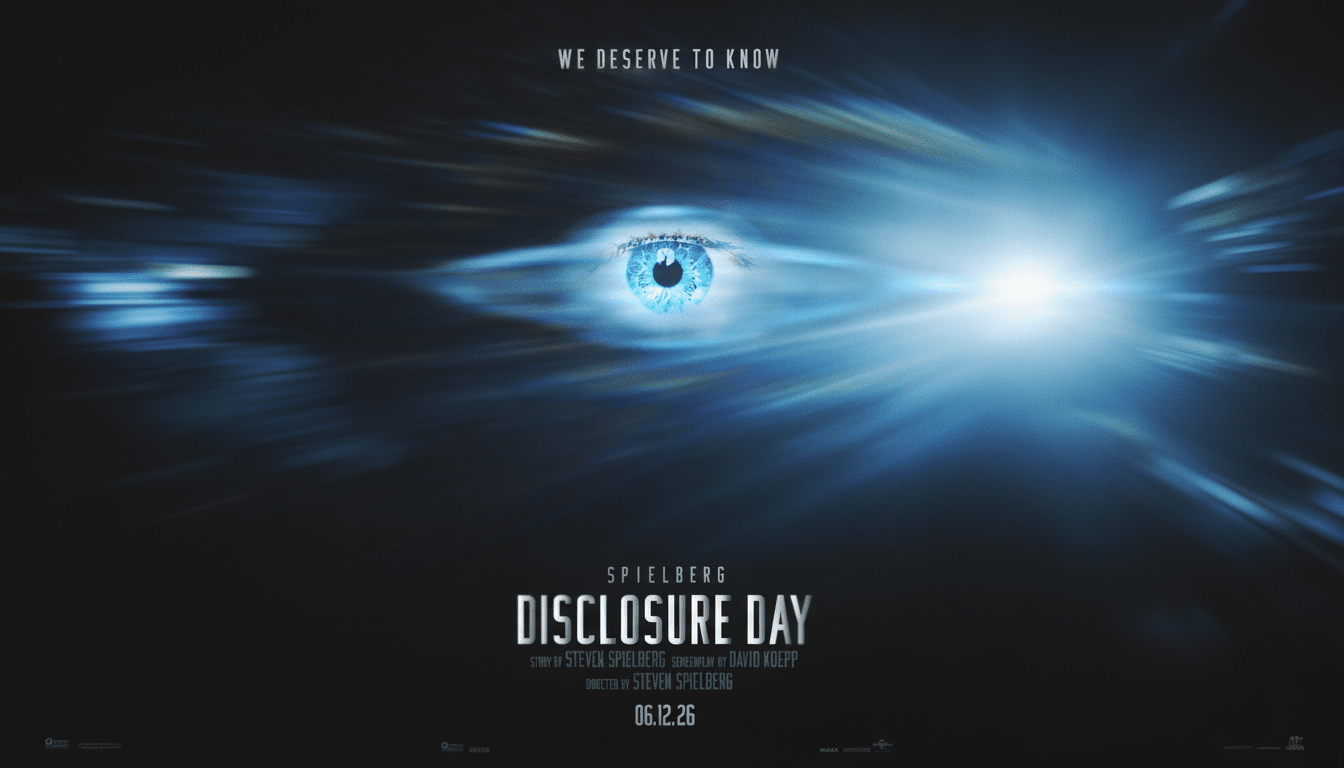
For Spielberg, that blend of wonder and restraint is precisely the tone he wants audiences to bring into Disclosure Day, which follows a cybersecurity administrator (played by Josh O’Connor) who risks everything to expose a sweeping secret: humanity may not be alone. He told moderator Sean Fennessey that Obama’s remarks push the topic into the mainstream without tipping into sensationalism.
Why Spielberg Sees a Tailwind for Disclosure Day
Disclosure Day marks Spielberg’s return to alien narratives after E.T. the Extra-Terrestrial and Close Encounters of the Third Kind, projects that helped define the modern language of “first contact.” He said he has long believed life likely exists elsewhere in the cosmos, even as he jokingly lamented that he’s never had so much as a modest sighting himself, despite friends who swear they have.
That stance mirrors today’s public mood: curious, open, and thirsty for credible information. Spielberg noted that audiences respond not only to spectacle, but to stories that wrestle with institutions, transparency, and the ethics of revelation — themes his new film foregrounds.
From Pentagon Programs to Changing Public Belief
The filmmaker said his interest was rekindled after a New York Times investigation by Helene Cooper, Ralph Blumenthal, and Leslie Kean exposed a Defense Department effort to analyze unusual aerial encounters. Since then, the Pentagon has authenticated several Navy videos as showing UAP, NASA has convened an independent study team to standardize research, and congressional hearings have aired testimony from former officials who argue for more disclosure.
Public opinion has shifted accordingly. Pew Research Center has reported that a solid majority of Americans believe intelligent life exists beyond Earth, and a Gallup survey found about 33% of U.S. adults think some UFOs could be alien spacecraft. Those baselines create fertile ground for a film that treats the subject with both imagination and rigor.
Cinema’s Enduring Fascination With Contact
Spielberg’s earlier work helped replace Cold War anxiety with empathy and awe, making the unknown feel intimate rather than purely threatening. Disclosure Day appears poised to extend that lineage, swapping 20th-century suburbia for a contemporary information battlefield where leaks, algorithms, and national security collide.
He emphasized that belief in cosmic life does not require abandoning skepticism. The film, he suggested, respects science and evidence while acknowledging how mystery can galvanize us — and how secrecy can erode trust.
A Marketing Lift Without the Hype or Gimmicks
An ex-president weighing in on aliens is the kind of earned media most campaigns can’t buy. Moments like the Pentagon’s release of Navy cockpit videos have triggered sharp spikes in Google search interest for “UFO” and “UAP,” and Obama’s remarks tap the same well of curiosity. For a film built around disclosure and the public’s right to know, that conversation becomes organic promotion.
Still, Spielberg’s comments made clear he isn’t chasing virality for its own sake. The goal is to invite audiences into a thoughtful debate: What would responsible transparency look like if definitive evidence emerged, and who gets to decide when the world is ready to learn it?
What Comes Next for Disclosure Day’s Release
With enthusiasm from SXSW and a subject squarely in the cultural crosshairs, Disclosure Day enters its rollout with tailwinds. The film’s promise lies in bridging two truths that Obama and Spielberg both seem to share: the universe is almost certainly teeming with life, and extraordinary claims still require extraordinary proof. That tension — between wonder and evidence — is exactly where great science fiction thrives.

