


Sony is betting big on modular home audio with a Bravia theater lineup built to grow over time. The idea is simple but savvy: buy a capable soundbar first, then add a subwoofer, rear speakers, and even a matching TV when you’re ready. The new family centers on the Bravia Theater Bar 7, Bravia Theater Sub 9 and Sub 8, Bravia Theater Rear 9 speakers, and the midrange Bravia 3 II TV—each designed to click into a single, scalable ecosystem.
What’s New in the Bravia Theater Audio Lineup
The Bravia Theater Bar 7 is Sony’s upper midrange soundbar and the anchor for gradual upgrades. It packs nine drivers, including upfiring units for height effects and side-firing elements for a wider soundstage, and supports Dolby Atmos, DTS:X, and Sony’s 360 Spatial Sound Mapping room processing. Sony positions it as a standalone starter that still sounds “complete” without a bundled subwoofer.
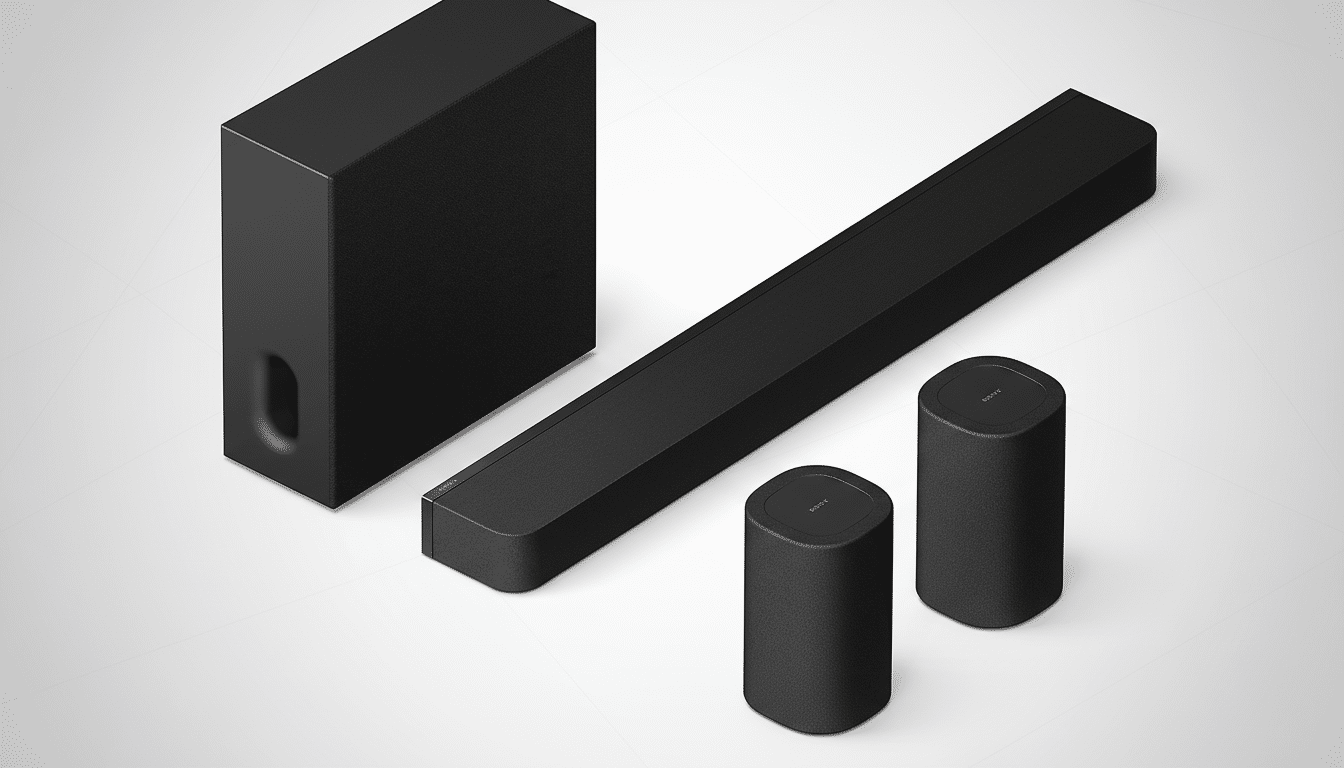
The flagship Bravia Theater Sub 9 uses two opposing 200mm woofers in a vibration-canceling configuration to deliver deep bass without rattling the cabinet. A more compact Bravia Theater Sub 8 with a single 200mm driver offers a smaller footprint. Both support dual-sub setups for smoother low-frequency response across the room.
For wraparound immersion, the Bravia Theater Rear 9 speakers add dedicated upfiring drivers, allowing the system to push height cues behind the listener and reduce reliance on virtualization. On the video side, the Bravia 3 II TV brings Sony’s XR Processor and XR Triluminos Pro color, four HDMI 2.1 inputs, 4K at 120Hz, Dolby Vision, and built-in Google TV with Gemini capabilities.
How the Modular Bravia Theater Upgrades Work
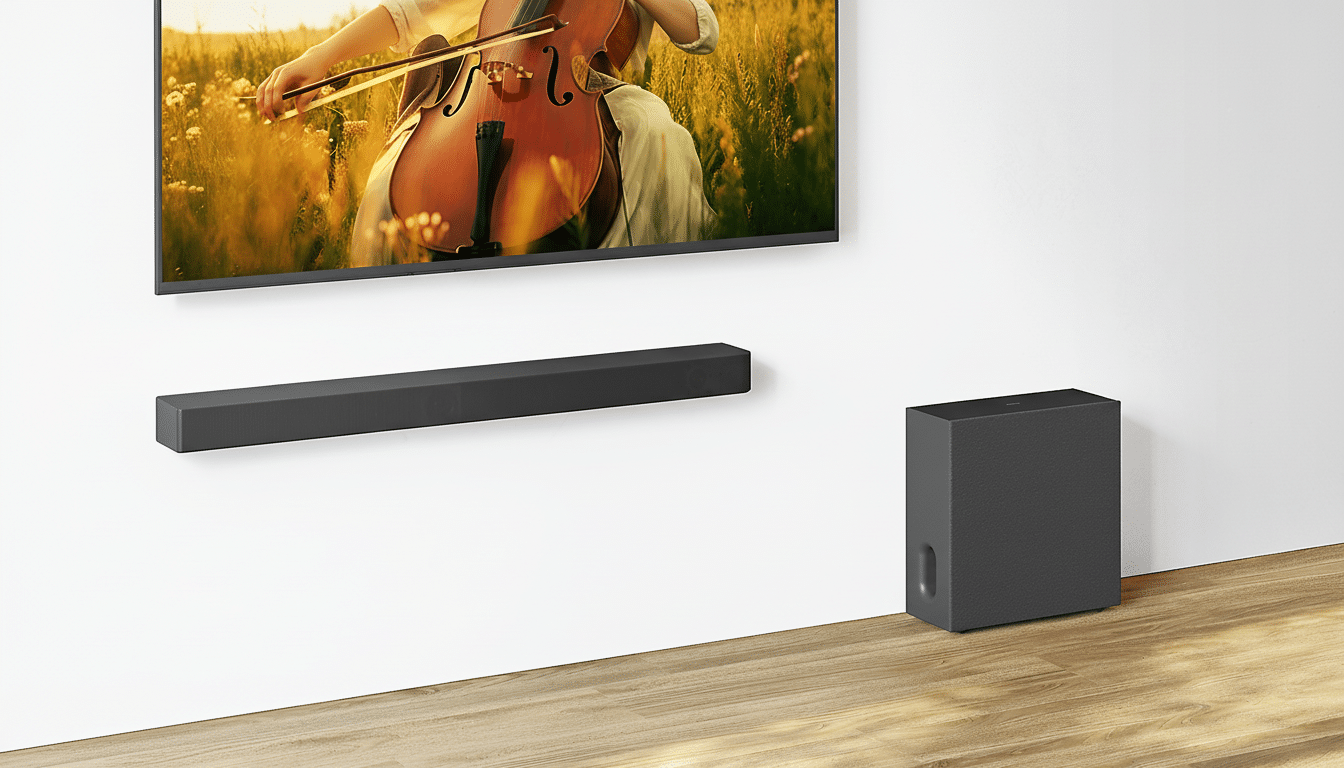
Start with the Bar 7: you get a clean, living-room-friendly soundstage with upward and sideward audio steering and automatic room calibration. For many apartments or bedrooms, that’s enough—especially if you mostly stream Atmos shows from services like Netflix or Prime Video.
Add a subwoofer next to unlock the biggest perceptual leap. The Sub 8 suits smaller rooms or shared walls, while the Sub 9 adds headroom and depth for larger spaces. Dual-sub mode smooths boominess and dead spots; Audio Engineering Society research has long shown that two subs can even out bass across seats by reducing room-induced peaks and nulls.
Round it out with the Rear 9 pair to push effects behind you and tighten object placement. Action scenes gain convincing back-to-front motion, and dialogue clarity often improves because the bar can lean less on virtual surround tricks and more on its center channel. If you watch Disney+ titles in IMAX Enhanced with DTS:X, the system can render those mixes with more discrete impact than soundbar-only setups.
Finally, pair everything with the Bravia 3 II TV when you upgrade your screen. With four HDMI 2.1 ports, you can run a console at 4K/120 through the TV while sending lossless audio back to the soundbar over eARC. The integrated Google TV with Gemini supports conversational search and recommendations, making it easier to find Atmos or DTS:X content you can actually hear in full.
The Technology Under the Bravia Theater Hood
360 Spatial Sound Mapping is the secret sauce that lets Sony bridge the gap between “virtual” and “real” surround. Using mic-based calibration, it analyzes your room’s reflections and applies phase and timing adjustments to create phantom speakers in the spaces between physical drivers. You hear a wider, taller soundstage without extra boxes—then, when you add the Rear 9s or a sub, the algorithm shifts duties to the new hardware for more precise localization and cleaner bass.
Support for both Dolby Atmos and DTS:X matters because streaming services split on formats. Dolby Atmos dominates originals on platforms like Netflix and Max, while DTS:X powers IMAX Enhanced releases on Disney+. Sony’s bars decode both, and with IMAX Enhanced content capable of up to a 12-channel presentation, the system is built to scale beyond typical 5.1 layouts.
Why a Modular Home Theater System Makes Sense Now
Home theater buying has shifted from one-and-done receivers to incremental upgrades. Market analysts at firms such as Futuresource have noted sustained demand for soundbars because they solve the “biggest upgrade per dollar” problem without rewiring a room. Sony’s approach embraces that reality: you can make a measurable improvement in stages and avoid committing to a full stack on day one.
It also leverages ecosystem benefits. Bravia TVs and Sony audio gear typically support HDMI-CEC for one-remote control, eARC for lossless audio return, and unified app-based setup. That reduces friction—often the reason people stop at a soundbar and never add surrounds.
Prices, Availability, and Example Bravia Theater Builds
Sony lists the Bravia Theater Bar 7 at $870, the Bravia Theater Sub 9 at $900, the Bravia Theater Rear 9 pair at $750, and the Bravia 3 II TV from $600 for 43 inches up to $3,100 for 100 inches. Presales begin this spring.
Example upgrade paths:
- Bar 7 alone for $870
- Add Sub 8 or Sub 9 for a stronger 2.1-style system at roughly $1,600–$1,770
- Go full surround with Rear 9s for about $2,350–$2,520
- Pursue reference-level bass with dual Sub 9s around $3,420
The point is choice: you spread costs, fine-tune for your room, and still end up with a coherent, high-performance theater anchored by one ecosystem.

