


Working on a ship’s deck presents unique challenges that land-based workers never encounter. The combination of water, weather, and constant motion creates an environment where a simple misstep can lead to serious injury. Understanding how to prevent slips, trips, and falls is essential for every maritime worker’s safety.
The deck of a vessel is inherently hazardous. Salt spray creates slick surfaces, weather conditions change rapidly, and the ship’s movement adds an unpredictable element to every step. These factors combine to make deck work one of the most dangerous aspects of maritime employment. However, most accidents are preventable with proper awareness and precautions.
Understanding the Risks
Wet surfaces are the leading cause of deck accidents. Whether from ocean spray, rain, or cleaning operations, moisture makes walking surfaces treacherous. Metal decks become particularly dangerous when wet, transforming into skating rinks that challenge even the most experienced crew members. Add oil or grease to the equation, and you have a recipe for disaster.
Uneven surfaces and unexpected obstacles create additional hazards. Coiled lines, deck fittings, hatch covers, and cargo equipment can appear suddenly in a worker’s path. During rough seas, these stationary objects become moving targets as the deck pitches and rolls beneath your feet. Poor visibility during night watches or bad weather compounds these dangers significantly.
Proper Footwear Makes the Difference
Your choice of footwear is your first line of defense against deck accidents. Steel-toed boots with non-slip soles designed specifically for maritime work are essential. These boots should have deep treads that channel water away from the sole and provide maximum grip on wet surfaces. Replace worn footwear immediately, as smooth soles offer virtually no protection against slipping.
Boots must fit properly and provide ankle support. Loose footwear can catch on deck fittings or cause you to stumble. High-top boots offer better ankle stability, which is crucial when working on a moving deck. Keep your boots clean and free from oil or grease buildup, as contaminated soles defeat their slip-resistant properties.
Maintaining a Safe Deck Environment
Regular deck maintenance prevents many accidents before they happen. Immediately clean up spills of oil, grease, or any other substance. Apply non-slip coatings to high-traffic areas and ensure they remain in good condition. Install and maintain proper drainage systems so water doesn’t pool on walking surfaces.
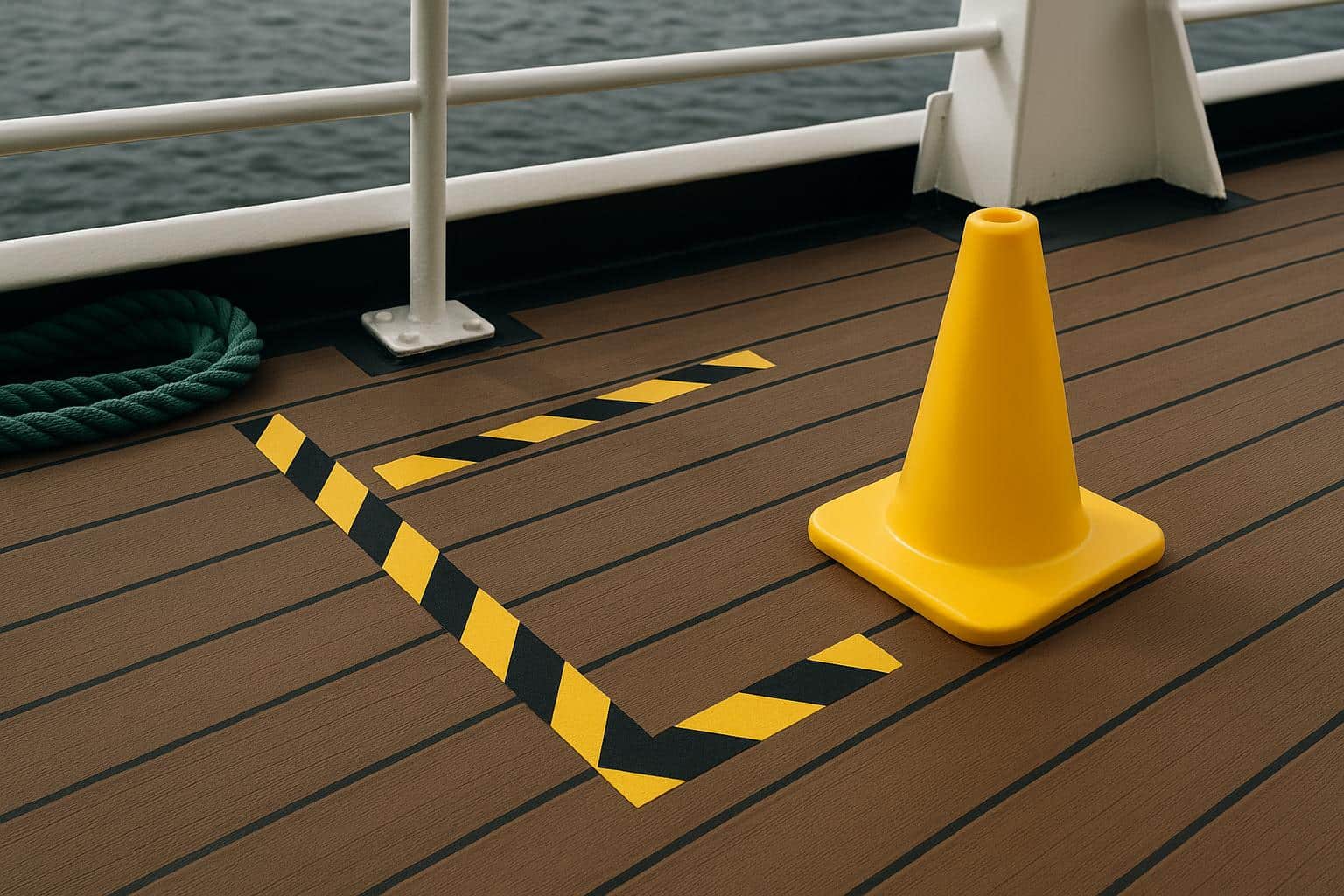
Keep the deck clear of unnecessary equipment and materials. Secure all lines, tools, and cargo properly. Mark permanent deck fittings with high-visibility paint so they’re easily seen. Adequate lighting is crucial, especially for night operations. Dark corners and shadowy areas hide hazards that can cause serious falls.
Safe Movement Techniques
How you move across the deck matters as much as where you step. Always maintain three points of contact when possible, especially on stairs, ladders, or during rough weather. Take smaller steps to maintain better balance and control. Never run on deck unless responding to an emergency, and even then, exercise extreme caution.
Watch where you’re going rather than looking at your phone or paperwork while walking. Anticipate the ship’s movement and adjust your gait accordingly. During heavy seas, time your movements with the ship’s roll. Use handrails whenever they’re available, and don’t carry loads that prevent you from grabbing support if needed.
Weather Considerations
Different weather conditions require different approaches to deck safety. Rain not only makes surfaces slippery but can also reduce visibility. Ice and snow present extreme hazards that require additional precautions like traction aids on boots. High winds can throw you off balance or cause unsecured objects to become projectiles.
Before heading on deck during severe weather, assess whether the task is truly necessary or if it can wait for better conditions. If you must work in bad weather, move deliberately and maintain constant awareness of your surroundings. Wear appropriate safety gear including harnesses when conditions warrant.
Training and Communication
Proper training ensures every crew member understands deck safety protocols. Regular safety meetings should address recent incidents and near-misses. New crew members need thorough orientation to the vessel’s specific hazards. Experienced workers should never become complacent about safety procedures.
Communication plays a vital role in accident prevention. Report hazards immediately so they can be addressed. If you witness unsafe conditions or practices, speak up. Creating a culture where safety concerns are welcomed and acted upon benefits everyone aboard.
When Accidents Happen
Despite best efforts, accidents still occur. When they do, proper documentation is crucial. Report injuries immediately and seek appropriate medical attention. Take photos of the accident scene if possible, including the hazard that caused the fall. Witness statements can be valuable if questions arise later about how the accident occurred.
Maritime workers injured in deck accidents may have legal protections under maritime law. Consulting with a Jones Act attorney can help you understand your rights and options for compensation. These specialized attorneys understand the unique aspects of maritime injury cases and can guide you through the complex legal waters that follow a serious accident.
Working safely on deck requires constant vigilance, proper equipment, and respect for the hazards that come with maritime work. By following established safety protocols and maintaining awareness of your environment, you can significantly reduce your risk of becoming another accident statistic.
