


A new bipartisan push on Capitol Hill aims to bar sports betting and casino-style games on prediction platforms Kalshi and Polymarket, escalating a fast-evolving policy fight over where financial “event contracts” end and gambling begins. The proposal, introduced by Senator Adam Schiff of California and Senator John Curtis of Utah, would carve sports outcomes out of federally regulated prediction markets while leaving state-licensed sportsbooks such as FanDuel and DraftKings untouched.
What The Bill Would Do To Sports Prediction Markets
The measure seeks to amend federal commodities law so that contracts settling on sports results or casino-style outcomes cannot be listed, cleared, or traded on platforms overseen by the Commodity Futures Trading Commission. In practical terms, it would shut the door on real-money markets tied to professional and collegiate games on Kalshi and halt similar offerings that users access via Polymarket, which has operated in a gray zone for U.S. customers.

Supporters frame the move as a jurisdictional cleanup: prediction markets fall under federal commodities oversight, while sportsbooks are a state matter. By codifying a ban on sports event contracts in the federal regime, sponsors argue, consumers would not be able to access sportsbook-style wagers through commodities markets that were never meant to host traditional gambling products.
Why Prediction Markets Are In The Crosshairs
Prediction markets package wagers as tradable “event contracts” that pay out if an event occurs. Kalshi is a CFTC-regulated exchange, while Polymarket, a crypto-native platform, has faced prior CFTC enforcement and varying access for U.S. users. Because the CFTC is the federal arbiter of event contracts, Congress can directly set boundaries for what may be listed.
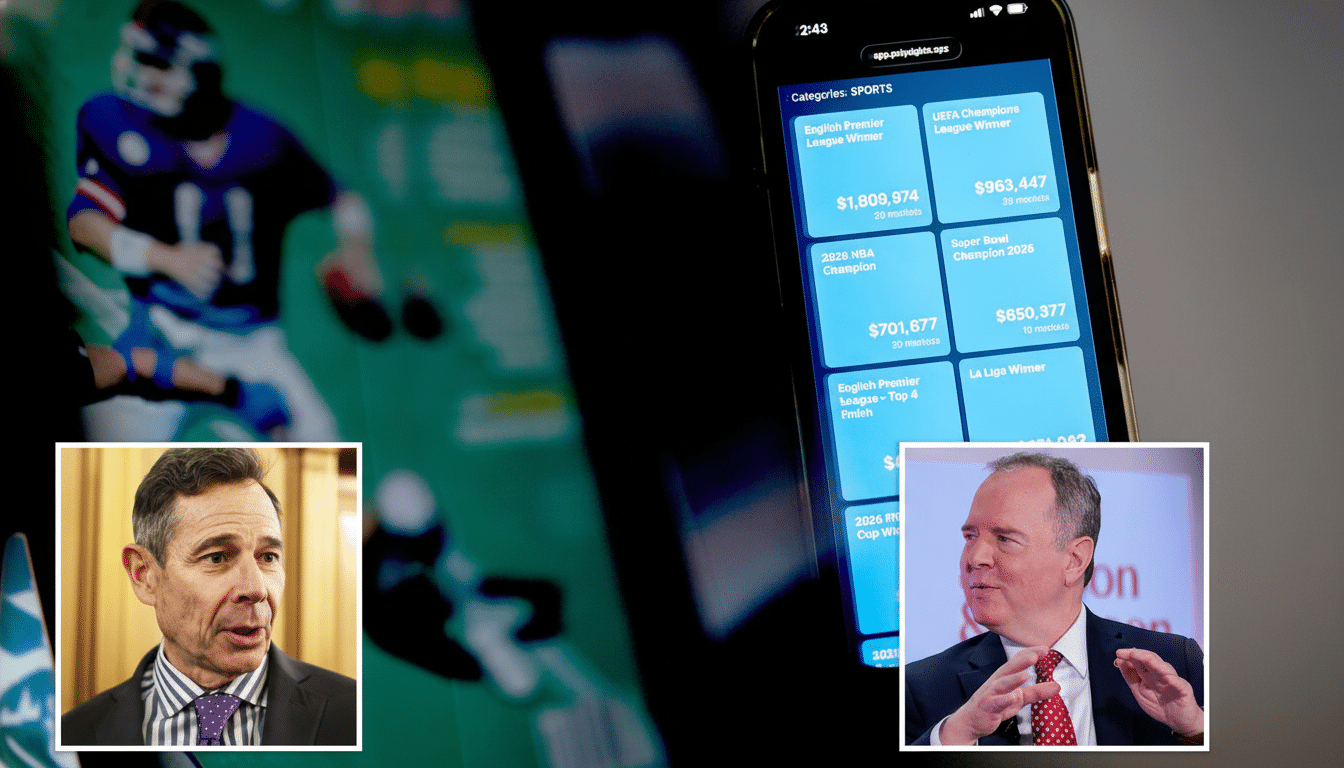
Backers of the bill say those distinctions are academic to the ordinary user. They point to explosive growth in sports-related activity on prediction platforms: Kalshi has publicly cited more than $1 billion in trading around the most recent Super Bowl, a surge it described as roughly 2,700% higher than the year before. To sponsors, that looks less like risk-hedging and more like retail gambling routed through a commodities wrapper.
The Scale Of U.S. Sports Betting Since Legalization
Since the Supreme Court’s Murphy v. NCAA decision opened the door to state legalization, legal sports betting has become mainstream. The American Gaming Association tabulated that total handle in the regulated U.S. market jumped from roughly $4.9 billion in 2017 to more than $121.1 billion in 2023, with sportsbooks now integrated into broadcasts, team partnerships, and stadium activations across the country.
That ubiquity is one reason lawmakers are worried about federal workarounds. If a commodity exchange can list contracts on whether a team covers the spread, the line between a hedging instrument and a sportsbook bet effectively disappears—especially for younger users drawn by low-friction apps and financialized gameplay.
Addiction And Consumer Protection Concerns
Public health researchers have registered warning signs. A study by the University of California San Diego’s Qualcomm Institute and School of Medicine, which analyzed online search behavior, found that the introduction of online sportsbooks coincided with a 61% increase in searches related to gambling addiction support, with interest continuing to climb thereafter. Advocates say that putting sportsbook-style products on federally regulated exchanges could normalize constant, always-on wagering for demographics that states have tried to protect through licensing, advertising, and deposit limits.
Lawmakers from states with restrictive gambling laws argue the federal framework should not undercut local standards. They contend that if prediction exchanges are a backdoor to sports betting in places that have opted out—or that have stricter consumer safeguards—federal policy needs to be updated.
Industry Pushback And The Evolving Legal Backdrop
Kalshi pushed back, characterizing the effort as an attempt by entrenched casino and sportsbook interests to stifle competition rather than protect consumers. Polymarket did not respond to a request for comment.
The proposal lands amid broader regulatory friction. The CFTC in recent years has tightened scrutiny of event contracts, notably blocking election betting proposals on concerns they constitute gaming. Kalshi faces additional headwinds at the state level, including a temporary halt by Nevada regulators and a criminal case in Arizona that has complicated its national rollout.
Supporters of prediction markets argue that event contracts can improve forecasting and price discovery. Critics counter that sports markets in particular are indistinguishable from gambling, lack clear hedging utility, and heighten problem-gambling risks when they are embedded in financial platforms with sophisticated trading tools.
What Comes Next For Kalshi, Polymarket, And The CFTC
The bill will move through committee review, where definitions will matter. How Congress delineates “sports prediction contracts” and what it labels as “casino-style” will determine whether niche offerings—such as prop-like markets or gamified mini-games—fall inside the ban. The CFTC’s stance will be pivotal, as will input from state regulators and problem-gambling experts.
If enacted, platforms could be forced to geofence or withdraw sports products, retool risk controls, and tighten compliance to avoid civil penalties. More broadly, the measure would cement a bright line in U.S. law: sports betting stays in the state-regulated sportsbook lane, while federally supervised prediction markets stick to non-sports event contracts—or exit the space altogether.

