Sanofi has agreed to acquire Insmed for $175 a share in cash, a proposed transaction carrying an approximate $41 billion equity value that would add two marketed respiratory medicines and an unapproved late-stage inhaled therapy to the French drugmaker’s portfolio. The companies said their boards approved the merger agreement on Nov. 24, with closing expected in the first half of 2027 if shareholders and regulators sign off.
The size of the commitment makes the distinction between an agreement and a completed takeover important. Sanofi has secured committed financing and plans to fund the purchase with debt and cash on hand, according to its transaction announcement. But Insmed shareholder approval, U.S. and certain non-U.S. regulatory clearances, and customary closing conditions remain outstanding. The $41 billion figure is the stated equity value, rather than a measure of enterprise value or an indication that the assets have already been absorbed into Sanofi’s operations.

Three assets, three different stages of maturity
Insmed brings Sanofi a portfolio spanning an oral medicine, an inhaled antibacterial treatment and an investigational inhaled candidate. Brinsupri, or brensocatib, is an oral treatment for non-cystic fibrosis bronchiectasis that Sanofi says launched in the United States in August 2025. Arikayce, an amikacin liposome inhalation suspension, is a marketed inhaled antibacterial medicine. Treprostinil palmitil inhalation powder, known as TPIP, is in Phase 3 development and has not been approved for any indication.
That mix gives Sanofi revenue-producing products while placing part of the valuation on a development program whose commercial future is unresolved. Sanofi said TPIP could become a growth driver after 2030, but that outcome depends on clinical development, regulatory decisions and commercialization. BioPharma Dive’s coverage of the agreement similarly characterized TPIP as a pipeline asset, not an approved product.
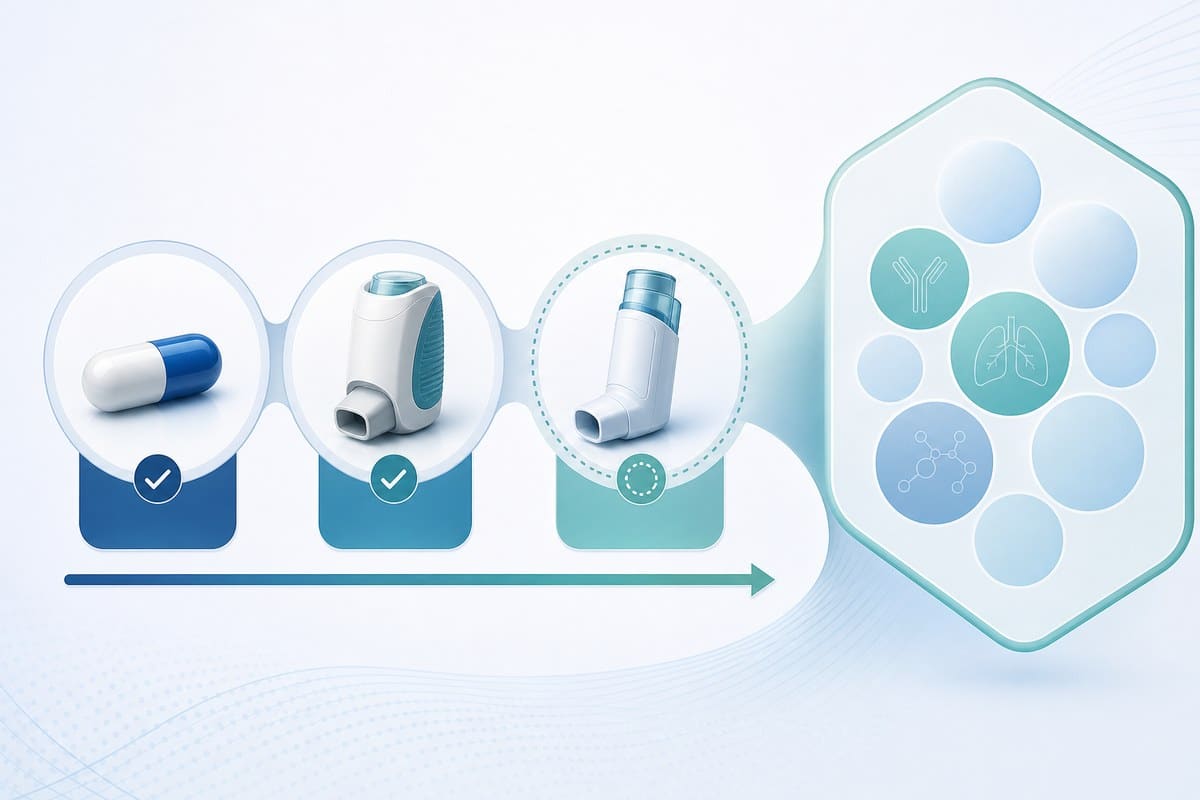
The commonly used description of the transaction as an inhaled-respiratory deal is therefore incomplete. Arikayce and TPIP are inhaled therapies, but Brinsupri is oral and is a major part of the immediate commercial rationale. For a buyer, the structure reduces reliance on a single type of asset: marketed medicines can supply current sales, while the Phase 3 program supplies potential future expansion. It also means Sanofi is taking on both commercial execution risk and clinical-development risk.
Sales figures support the strategy, but one key number conflicts
Sanofi said Brinsupri produced $1.09 billion in revenue from its U.S. launch through Sept. 30, 2026. It also said Arikayce generated $433.8 million in 2025 revenue, up 19% from the prior year. Those figures should not be added together as a single annual run rate: the Brinsupri measure covers a launch-to-date period through September 2026, while the Arikayce number covers the 2025 calendar year.
There is also an unresolved discrepancy in the reported Brinsupri tally. GEN reported that Insmed’s first-nine-month Brinsupri revenue was $917.1 million, rather than the $1.09 billion cited by Sanofi for the period through Sept. 30. The difference is $172.9 million. Neither the company announcement nor the trade report established whether different accounting definitions, reporting periods or revenue bases explain the gap. Until the companies reconcile it, the figures are best treated as separate reported measures rather than interchangeable evidence of sales.
Sanofi has said the acquired portfolio could exceed $10 billion in peak annual sales, a forecast that combines existing products with pipeline potential. That target is a company projection, not a valuation derived from currently reported sales. It also underscores how much of the economics rests on future uptake, broader geographic commercialization and the clinical and regulatory progress of TPIP.
Financing and the earnings timetable
Sanofi expects the transaction to become accretive to its business earnings per share by the end of 2028. The timetable leaves roughly a year and a half after the anticipated first-half 2027 closing for financing costs, integration expenses and product growth to be outweighed in the company’s adjusted earnings measure. The announcement does not make that earnings outcome a condition of the merger, and it remains management guidance rather than an independently established result.
Debt financing will be a consequential element of the calculation because Sanofi is using borrowing alongside cash on hand for a $41 billion equity purchase. The company said it had committed financing, which reduces funding uncertainty before closing, but the eventual earnings contribution will still depend on the cost of debt, the timing of closing and the performance of the acquired medicines.
The deal also fits a wider effort by Sanofi to build growth platforms beyond its flagship Dupixent franchise. Fierce Pharma reported that executives and analysts viewed the Insmed portfolio in the context of longer-term pressure on Dupixent as patent exclusivity wanes. That is a strategic rationale, not a guarantee that the acquisition will offset any future revenue erosion.
What must happen before closing
The merger agreement now moves into a conventional but material approval process. Insmed investors must vote on the transaction, and regulators in the United States and certain other jurisdictions must clear it. A signed agreement and board approvals establish the contractual framework; they do not transfer ownership of Insmed or remove the possibility of regulatory demands, delays or a failure to satisfy closing conditions.
Sanofi identified Nov. 18 as the unaffected Insmed closing-share-price reference date before media reports of a possible deal, and announced the agreement six days later. If the transaction closes on schedule, Sanofi would gain its first full operational control of the assets in the first half of 2027. Until then, the key measures for investors are the approval process, clarity on Brinsupri’s reported sales base, the cost of financing and progress in TPIP’s Phase 3 program.