CrowdStrike has agreed to acquire Zscaler in an all-stock transaction valued at approximately $43.9 billion in enterprise value, a proposed combination that would pair CrowdStrike’s endpoint and cloud-workload security products with Zscaler’s zero-trust network-security platform. The companies announced the definitive agreement Nov. 23, setting up one of the cybersecurity sector’s most consequential pending consolidations.
The transaction is not complete. It requires approval from Zscaler shareholders, regulatory clearances and other customary closing conditions, and the companies expect it to close in the second half of CrowdStrike’s fiscal 2028. Until then, CrowdStrike and Zscaler will continue to operate independently, according to CrowdStrike’s transaction announcement.

Stock terms set the value and ownership split
Zscaler shareholders would receive 1.135 shares of CrowdStrike common stock for each Zscaler share they own. The companies said that exchange ratio implied a value of about $260.41 a share for Zscaler and a premium of roughly 34% to Zscaler’s Nov. 20 closing price.
Those figures are reference points, not a fixed cash payout. The stated $43.9 billion enterprise value was calculated using CrowdStrike’s Nov. 20 closing share price, meaning the ultimate market value received by Zscaler holders will move with CrowdStrike stock until the deal closes. Existing CrowdStrike investors are expected to own about 84.1% of the combined company, while current Zscaler investors would own about 15.9%.
Both boards unanimously approved the agreement. Jay Chaudhry, Zscaler’s chief executive and founder, and affiliated holders representing about 34% of Zscaler’s outstanding shares have entered voting agreements backing the deal. If the acquisition closes, Chaudhry is expected to remain head of the Zscaler business and join CrowdStrike’s board.
The structure gives CrowdStrike shareholders the larger continuing stake while allowing Zscaler investors to participate in any gains or losses produced by integration. It also makes the exchange ratio, rather than a cash financing package, the central economic term for the target’s shareholders.
Why CrowdStrike wants Zscaler
CrowdStrike is best known for Falcon, its cloud-based platform for endpoint protection and related security functions, including coverage of cloud workloads, identity and threat detection. Zscaler sells cloud-delivered security that sits between users, applications and networks, using a zero-trust approach designed to verify connections rather than automatically trust users or devices because they are inside a corporate network.
The strategic proposition is to combine information and control across those layers: what is occurring on a device or workload, who is requesting access, and whether a user, application or automated agent should be allowed to connect to a resource. CrowdStrike says the combination could create a unified control plane for deploying and governing artificial-intelligence applications and agents. That is a company objective, not a completed product integration.
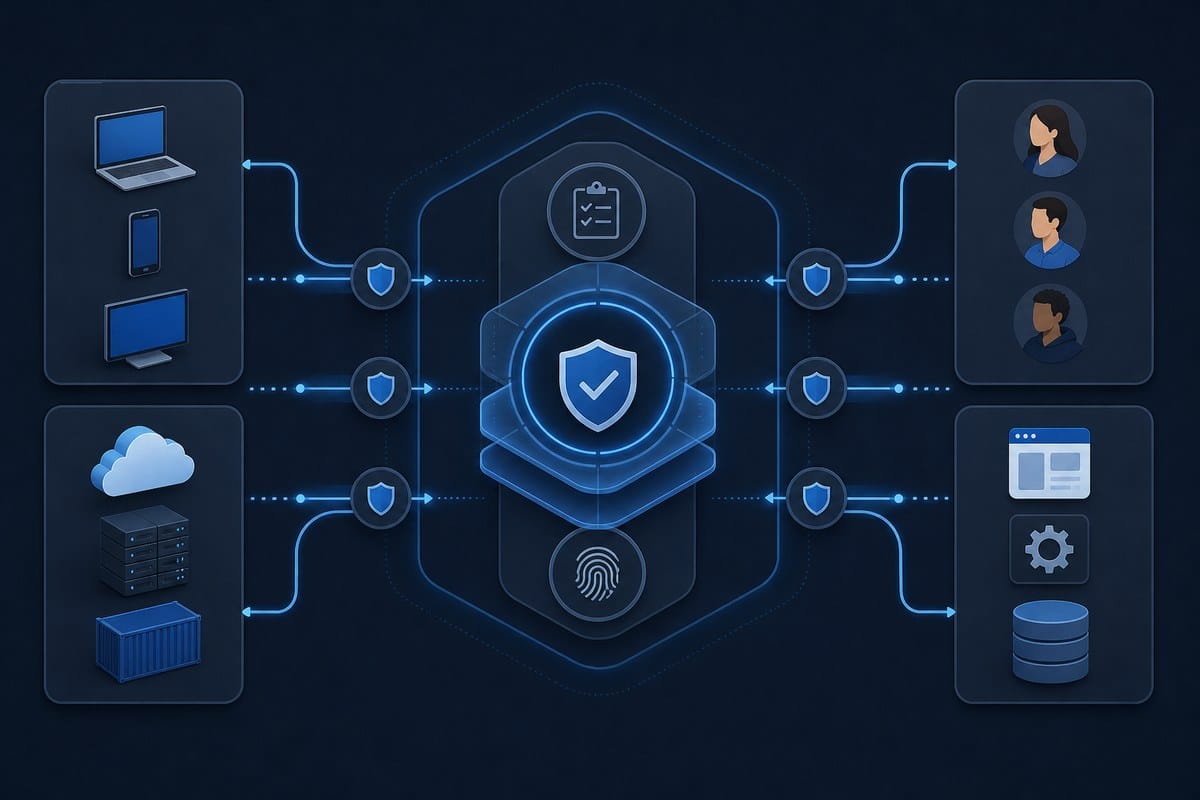
Independent market commentary has focused on the broader platform effect. CNBC reported that JPMorgan analysts viewed the addition of Zscaler as a way to widen CrowdStrike’s platform and strengthen its positioning for AI-sovereignty-related demand. The analysts’ view is distinct from the companies’ formal deal terms and financial forecasts.
A $1.5 billion synergy target carries different deadlines
CrowdStrike’s financial case rests heavily on cross-selling and integration benefits that remain forward-looking. The company expects the combined business to have more than $10 billion in annual recurring revenue at closing and says Zscaler would add more than $185 billion to its estimated total addressable market in calendar 2029.
Management is projecting about $1 billion in annualized run-rate revenue synergies by the end of the first 30 months after closing. It is also projecting $500 million in annualized run-rate cost synergies within 18 to 24 months of closing. Together, those targets total $1.5 billion in annualized run-rate benefits, but they have different sources and realization periods: the larger figure depends on added revenue, while the other depends on reducing overlapping costs and improving operating leverage.
CrowdStrike said the deal should be significantly and immediately accretive to free cash flow per share before synergies. It also expects accretion to revenue growth, non-GAAP operating margin and free-cash-flow margin after synergies in the first full fiscal year following a close. These are management estimates rather than assurances, and the timetable places the first full-year tests well after regulatory review and legal completion.
The figures help explain why the proposed transaction is bigger than a product adjacency. To meet the revenue target, CrowdStrike would need to sell a broader suite across two established customer bases; to meet the cost target, it would need to integrate operations without undermining the sales and engineering capacity supporting those products.
Market reaction underscores the execution question
CrowdStrike shares fell about 9% on the announcement day while Zscaler shares rose nearly 18%, according to CNBC. The report did not establish a single cause for CrowdStrike’s move. Other coverage recorded different percentages in premarket trading, including a more than 8% decline for CrowdStrike and a more than 13% increase for Zscaler reported by the Hindustan Times. The differing figures reflect distinct trading sessions and timestamps and should not be treated as one definitive intraday result.
The approval path remains substantial despite the voting commitments. Zscaler shareholder consent is still required, as are regulatory approvals. Transaction materials are expected to be filed with the Securities and Exchange Commission, including a proposed registration statement on Form S-4 containing a proxy statement and prospectus.
For now, the binding elements are the exchange ratio, governance plan and conditions to close. The promised expansion in market opportunity, revenue synergies, cost savings and margin gains will be measured only after the companies have secured approvals and begun operating as one business.