


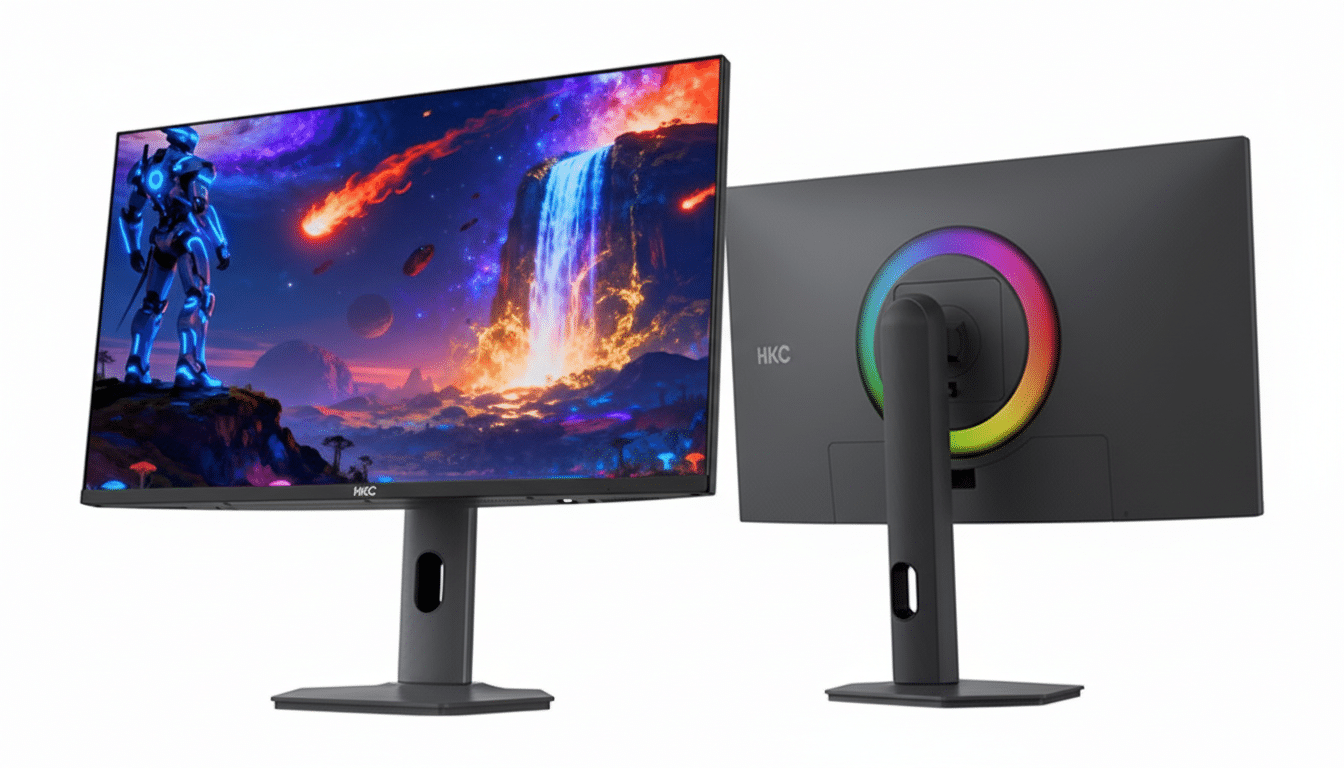
OLED has long set the bar for desktop HDR, but a new RGB MiniLED contender is muscling in. Display maker HKC unveiled the 31.5-inch M10 Ultra, billed as the world’s first RGB MiniLED monitor, with a staggering 4,788 independently controlled dimming zones designed to rival OLED’s per-pixel precision.
As first reported by TechPowerUp, the company is using tri-color MiniLEDs rather than the familiar white MiniLED backlight used in most premium LCDs. That design lets the backlight modulate red, green, and blue channels independently, promising tighter control over blooming and color fidelity in specular highlights.
What RGB MiniLED Actually Changes in Backlight Control
Conventional MiniLED monitors deploy hundreds to a few thousand “white” LED zones behind the LCD panel. RGB MiniLED replaces those with clusters that separately dim each primary color. TFTCentral notes that while HKC’s 4,788 figure reflects tri-color control points, the effective luminance partitioning is closer to roughly 1,600 conventional white-zone equivalents—but with significantly finer per-channel control that can suppress halos and preserve color saturation around bright objects on dark backgrounds.
Zone density matters because it determines how precisely the backlight can match on-screen content. On a 31.5-inch 4K panel—about 140 PPI—the M10 Ultra’s thousands of zones won’t match OLED’s per-pixel dimming across 8.3 million pixels, but they represent a step-change over mainstream MiniLEDs. For context, many high-end MiniLED monitors ship with 576 to 1,152 zones; even specialized models top out near 2,000. HKC’s claimed figure, even with the RGB caveat, pushes the category forward.
HDR Firepower With High Refresh Rate Options
HKC says the M10 Ultra carries VESA DisplayHDR 1400 certification, translating to serious punch: up to a reported 1,600 nits peak and around 1,000 nits full-screen. That’s well beyond typical OLED monitor performance, where full-screen brightness often sits in the low hundreds due to panel limitations and aggressive ABL. In bright rooms or HDR workflows with large-area highlights, this headroom is a tangible advantage.
Gamers get a 4K resolution at 165Hz, with an optional 1080p mode at up to 330Hz for esports. The trade-off is pixel density: stretching 1080p over 31.5 inches looks visibly softer than native 4K. Gray-to-gray response is rated at 2ms—quick enough for most players, though not as instantaneous as OLED’s sub-millisecond transitions, which can still minimize smearing in ultra-fast motion.
OLED Versus RGB MiniLED: The Real Trade-Offs
OLED retains unassailable strengths: true blacks via per-pixel emissive control, virtually instantaneous response, and immaculate near-black shadow detail. For dark-room cinematic viewing or motion-critical competitive play, those advantages remain compelling.
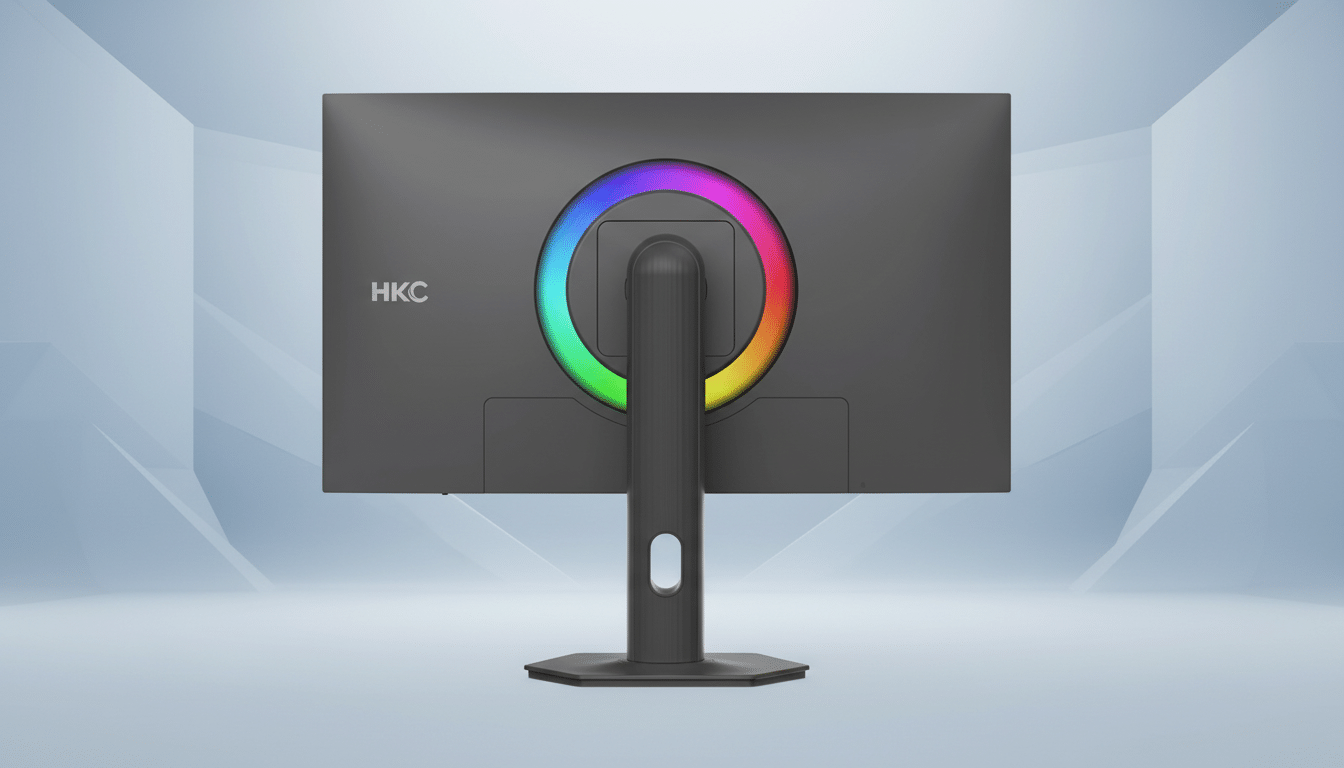
RGB MiniLED fights back with sustained brightness, color volume at high luminance, and practical durability for static desktop use. There’s no panel burn-in risk and far higher full-field brightness for extended productivity sessions or HDR mastering that pushes large bright areas. If HKC’s local-dimming algorithms are well tuned, the RGB approach can also narrow the contrast gap by reducing halo artifacts that traditionally betray LCD backlights in starfields or subtitle scenes.
Numbers in Context and Why It Matters for Buyers
Consider the competitive landscape: Asus’s ROG Swift PG32UQX brought 1,152 zones to a 32-inch 4K monitor; Samsung’s Odyssey Neo line typically hovers around 1,000–1,200 zones; Apple’s Pro Display XDR uses 576. By claiming 4,788 RGB zones, HKC is signaling a generational leap in local-dimming granularity—even if the effective luminance segmentation aligns closer to ~1,600 white zones as TFTCentral frames it.
HKC also teased a white MiniLED monitor concept with up to 15,000 zones, underscoring how aggressively the industry is trying to close the perceived gap with OLED. More zones typically mean tighter light control but also higher cost, more complex drivers, and power considerations. RGB MiniLED adds another variable: tri-channel modulation that could pay dividends in color accuracy and halo suppression if the processing is sophisticated.
Pricing and retail timing were not detailed during the demonstration. Still, if the M10 Ultra arrives near its claimed specifications, it will pressure premium OLED monitors in the same price band—especially for users who prize long-duration brightness, mixed-use desktops, and HDR punch in well-lit spaces. For the first time in a while, OLED might have real competition on a gaming desk rather than just in a living room TV.
Bottom line: OLED still rules on pure contrast and response, but RGB MiniLED is evolving fast. With thousands of tri-color zones, DisplayHDR 1400 brightness, and high refresh options, HKC’s M10 Ultra makes a serious case that LCD-based monitors can deliver OLED-like depth without the compromises that keep some users on the fence.
