A reported valve closure on the pipeline serving Libya’s Sharara oil field is raising renewed concerns over the security of the country’s western crude network, which connects a major producing asset to the Zawiya export and refining complex. Daily News Egypt reported Nov. 23 that the National Oil Corporation, or NOC, attributed a shutdown to an unidentified “outlaw group” and put the resulting loss at about 350,000 barrels a day.
The immediate production figure has not been independently verified in the available public accounts, and the underlying NOC statement was not linked in the report. Still, the episode fits a documented pattern of disruptions on the Sharara-Zawiya route. The UN Support Mission in Libya has warned that prolonged interruption of the line could damage the country’s principal income source while threatening fuel supplies, electricity generation and other essential services.
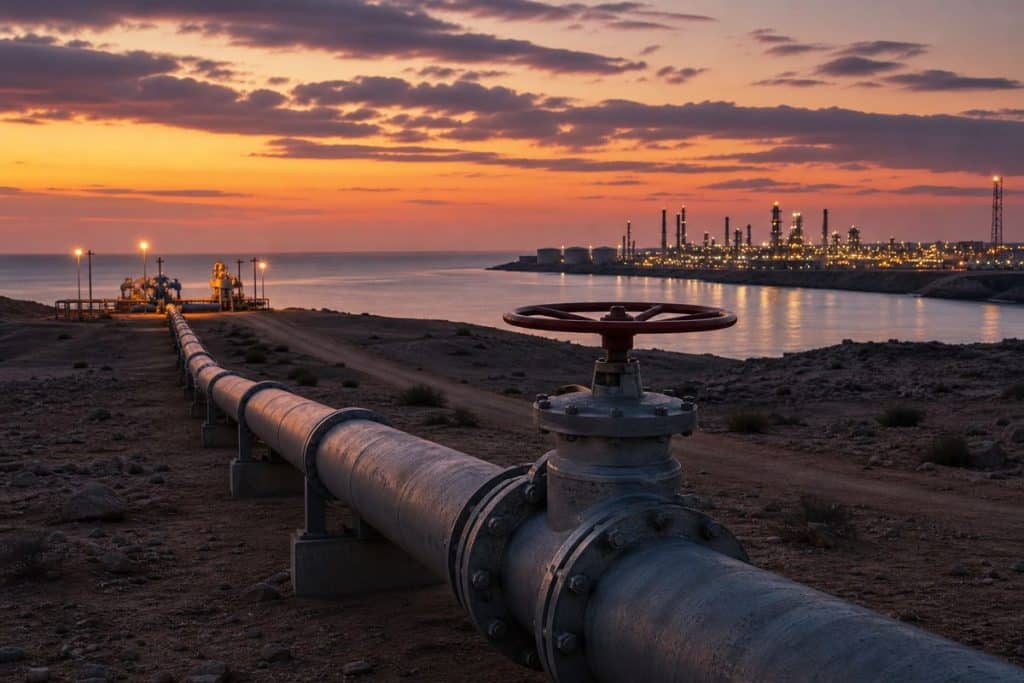
Reported loss exceeds a field-capacity reference
Daily News Egypt’s account said NOC had urged the Petroleum Facilities Guard and other state bodies to reopen two lines, protect oil facilities and pursue those responsible. It said NOC had not specified when production would resume and had not declared force majeure as of the report’s publication.
The reported 350,000-barrel-a-day loss should be treated as an NOC-attributed estimate rather than a confirmed measurement. It is also slightly above the roughly 340,000 barrels a day that Anadolu Agency cited as Sharara’s production capacity in its September report on an earlier closure. The available accounts do not explain the difference, whether the November estimate captures connected production beyond the field’s nominal capacity, or whether it refers to a different operational measure.
The Egyptian publication calculated that 350,000 barrels at Brent near $92 a barrel equaled approximately $32 million a day. That is a simple gross-barrel-value calculation—350,000 multiplied by $92 is $32.2 million—not a verified measure of lost Libyan state revenue, producer cash flow or export sales. It excludes factors including the actual volume unable to reach market, crude pricing, quality differentials, operating costs, contractual allocations and any catch-up output after a restart.
A recurring vulnerability around Zawiya
Sharara is operated by Akakus Oil Operations and is commonly described as Libya’s largest oil field. Its strategic importance rests not only on output but also on its link to the west-coast Zawiya system, where crude can be exported and supplied to a refinery serving the domestic market. A pipeline blockage can therefore create pressure at several points at once: field production, transport, export availability and refinery feedstock.
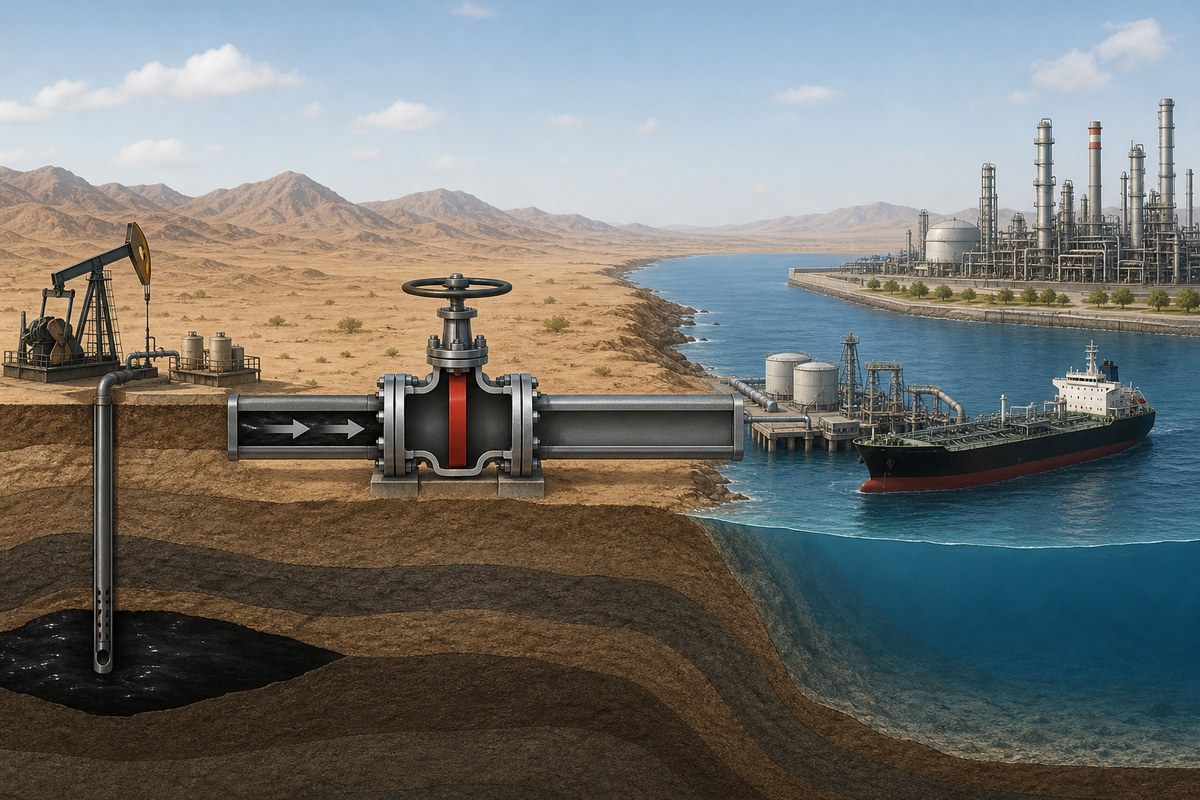
UNSMIL’s statement focused on those broader stakes. The mission called on relevant authorities and security actors to restore crude flow and safeguard the Zawiya refinery and related installations. Its warning that an extended interruption could increase fuel-import needs underscores a structural problem for Libya: a disruption to an export pipeline can also affect availability of refined fuel and power-generation inputs at home.
The public record establishes that there had already been serious trouble on the same network in September. Anadolu reported on Sept. 22 that NOC said an unidentified armed group had shut Valve No. 7 on the crude pipeline connecting Sharara and Zawiya Port, sharply reducing output. NOC warned at that time that it could declare force majeure if the closure persisted; the report did not say that force majeure had been declared.
Anadolu also reported that members of the Petroleum Facilities Guard had closed the Hamada-Zawiya pipeline on Sept. 15, stopping operations at the Hamada and Al-Tahara fields and at Station NC5. That incident should not be conflated with the alleged Sharara valve closure. The available reports do not identify the actors in the November case, establish that they were connected to the guard, or show that the same group was involved in September.
What remains unresolved
The November report described the event as the second blockade of Libya’s crude network in less than a month. Yet the available material cannot determine whether it represented a distinct new shutdown, a continuation of an earlier disruption, or a recurrence after flows had resumed. A directly accessible NOC statement setting out the date of the closure, the precise pipeline segments affected and current field output was not available alongside the report.
That distinction is material for traders, refiners and Libyan authorities. A brief valve closure may defer barrels that can later be recovered; a sustained interruption would place more lasting pressure on exports, refinery operations and public finances. For now, the strongest independently supported conclusion is that the Sharara-Zawiya route has suffered repeated security-related interruptions, while the scale and duration of the reported November loss remain dependent on NOC’s account as relayed by Daily News Egypt.