


The next version of RCS is official, and it could change how texting feels on your phone. The GSMA has finalized RCS Universal Profile 4.0, a specification that paves the way for native, chat-initiated video calls, richer text formatting, smarter media sharing, and notable upgrades for business messaging — all within the default messaging app you already use.
What’s New In RCS 4.0: Video Calling, Media, And Formatting Upgrades
The headline feature is messaging-initiated video calling. Instead of switching to a separate app, users could tap a button inside a chat thread and launch a video session that keeps context with the conversation. The spec supports group scenarios, including the ability to join a call after it has started — a quality-of-life upgrade that mirrors what consumers expect from modern chat platforms.
- What’s New In RCS 4.0: Video Calling, Media, And Formatting Upgrades
- Why Built-In Video Matters For Default Messaging Apps
- Security And Interoperability Questions
- Upgrades To Media Handling And Rich Text Formatting In RCS 4.0
- Business Messaging Levels Up With Richer Cards And Video
- Rollout Reality Check For Carriers, OEMs, And Messaging Apps

RCS 4.0 also brings rich text formatting to messages, enabling bold, italics, and other emphasis styles directly in chat. On the media front, the profile introduces better content negotiation so devices can automatically select formats and quality both sides support, reducing the compression headaches that plague MMS and improving consistency across networks.
Why Built-In Video Matters For Default Messaging Apps
Escalating a conversation from text to video without leaving the thread is more than a convenience — it’s a way for RCS to close a long-standing gap with popular over-the-top apps. Services like FaceTime and WhatsApp have normalized seamless handoffs; RCS 4.0 gives default messaging clients the same muscle, wrapped in a carrier- and OEM-supported standard.
Momentum is on RCS’s side. Google has said RCS now reaches over 1 billion monthly active users in its Messages app, and more OEMs and carriers rely on cloud-hosted RCS platforms to accelerate rollouts. With that footprint, even incremental UX wins — like frictionless video from a chat — can shift behavior quickly once implemented.
Security And Interoperability Questions
The profile’s finalization signals what’s possible, not what every app will ship on day one. As with previous RCS milestones, implementation details are left to messaging clients, device makers, and carriers. That includes the underlying technology for video sessions — whether they lean on IMS/VoLTE, WebRTC, or hybrid approaches — and how those calls interoperate across networks and devices.
Encryption remains a key area to watch. End-to-end encryption for RCS messaging today is implementation-specific and not universally defined by the GSMA profile. Extending strong encryption to video calls would be a logical next step, but it will depend on clients and network partners aligning on a common approach.
Upgrades To Media Handling And Rich Text Formatting In RCS 4.0
Richer formatting brings everyday chats closer to what people expect from workplace tools and social apps. Being able to emphasize key points or structure longer messages should help in both personal and professional exchanges, especially as more users conduct business over messaging.
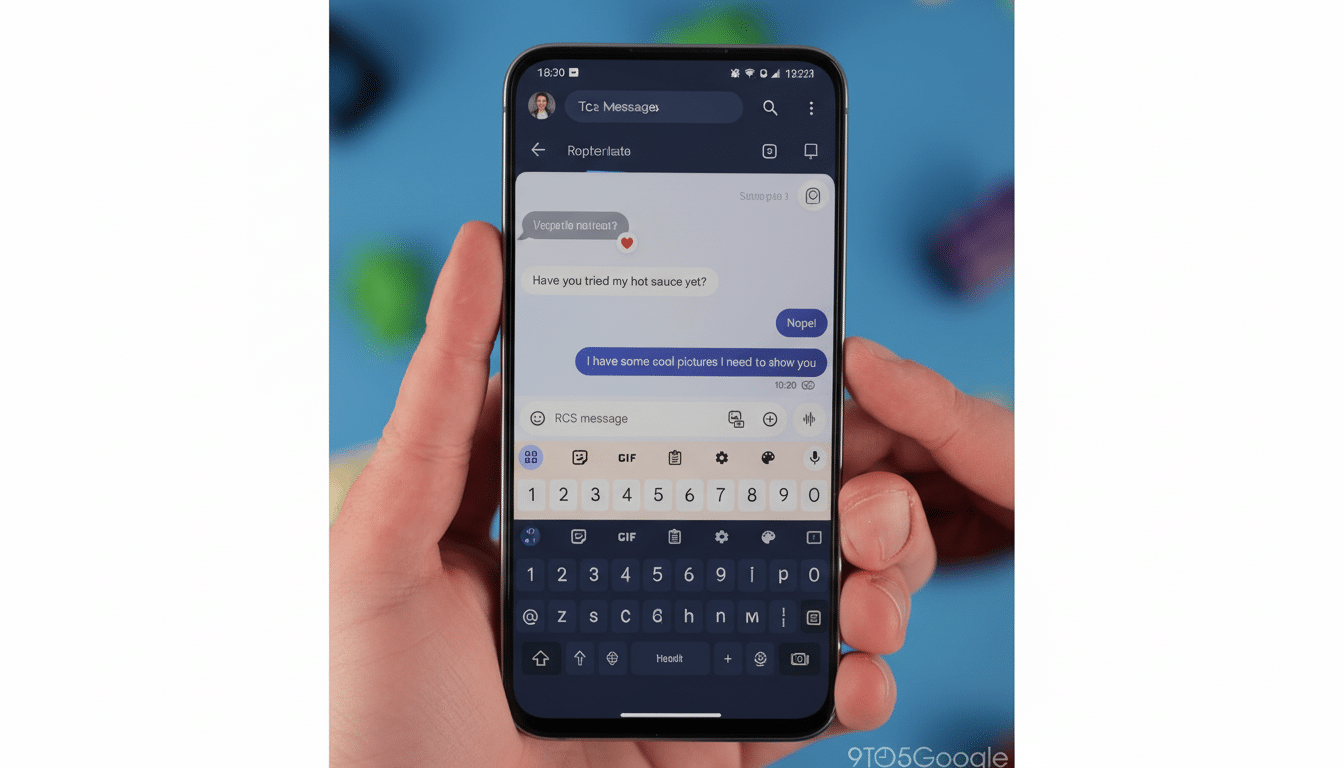
The improved media pipeline is equally important. By negotiating the best mutual format and quality automatically, RCS 4.0 aims to cut down on blurry videos and mismatched codecs. In practice, that means clearer clips and photos that retain detail — and fewer “send again” messages — particularly across mixed device ecosystems.
Business Messaging Levels Up With Richer Cards And Video
For enterprises, RCS 4.0 bolsters interactive experiences. The profile supports streaming video in rich cards, deeper controls over how links open, and more sophisticated call-to-action flows. Analysts at firms such as Juniper Research and Mobilesquared have highlighted RCS as a growth area for customer engagement, and these features give brands more headroom to move beyond SMS-era limitations without forcing users into separate apps.
Expect retailers, airlines, and banks — sectors that already lean on verified sender IDs and rich cards — to experiment first. A travel update that escalates from a chat into a video walkthrough of gate changes is no longer a stretch with the new profile.
Rollout Reality Check For Carriers, OEMs, And Messaging Apps
Finalizing a standard is the starting gun, not the finish line. App developers, phone makers, and carriers must adopt the profile, certify compatibility, and, in many cases, update network gear. Cloud RCS platforms can speed that process, but timelines will vary by region and operator.
Another variable is platform alignment. Android’s default client is poised to move quickly, while Apple has pledged to support RCS in its Messages app, a shift that could expand the audience for these upgrades. Broad, consistent adoption — especially for video and encryption — will determine whether RCS 4.0 feels like a true leap or a slow, uneven climb.
Bottom line: with RCS 4.0, the standard behind your default texting app is maturing into something that looks and feels like the best of modern chat. When your next group thread can jump into a video call without missing a beat, you’ll know the profile’s promise has landed.

