


Capcom’s new sci-fi shooter Pragmata is the rare action game that marries robots, real-time hacking, and hard-hitting gunplay with a surprisingly gentle “uncle” vibe. It’s not just another dour escort adventure. Instead, it leans into quick-witted banter, small acts of care, and a partnership that feels playful even when the bullets fly.
A Shooter Built On Precision And Multitasking
On paper, Pragmata reads like a classic Capcom third-person shooter: tight over-the-shoulder aiming, enemies with clear weak points, and fights that reward spatial awareness. In motion, it adds a tactical layer that meaningfully changes your decision-making. Diana, the child companion perched on protagonist Hugh’s shoulder, projects a square-based hacking grid onto enemies on demand. While you sprint, dodge, and line up shots, you’re also rapidly solving a button-driven micro-puzzle that can expose vulnerabilities, lock systems, or stagger targets.
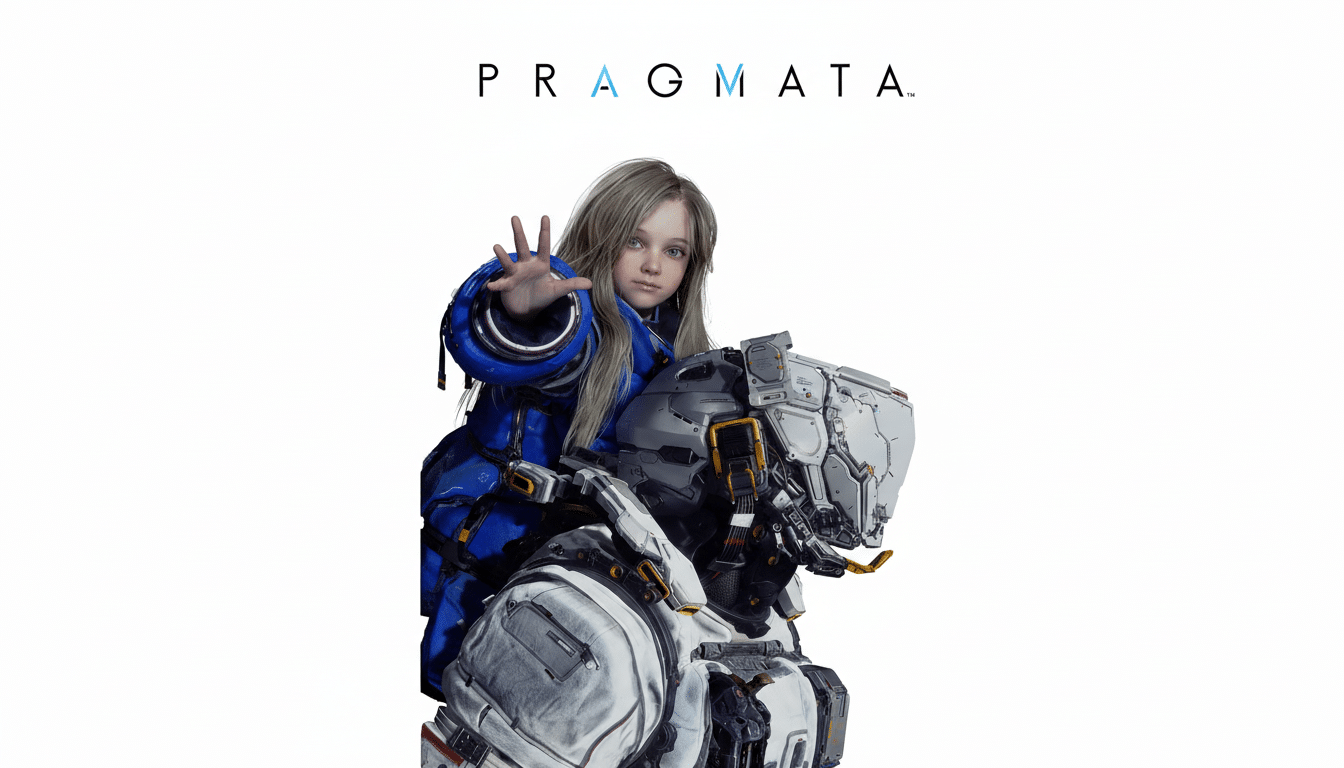
That dual-loop—marksmanship plus live hacking—creates constant cognitive juggling. It’s a design choice that evokes the heightened focus of games like Resident Evil 4’s modern reimagining, but with an extra dimension of risk-reward. Commit to a hack, and you might buy a critical opening. Flub it, and you’ve ceded ground to advancing machines. It’s readable, snappy, and, crucially, integrated into the core combat rhythm rather than siloed as a cutaway mini-game.
Uncle Energy Instead Of Typical Dad Game Gloom
Where many contemporary epics lean on heavy-handed paternal arcs, Pragmata feels lighter on its feet. Hugh doesn’t lecture Diana so much as riff with her, explaining a world she’s never known and indulging her curiosity without turning dour. It’s “sweet uncle energy” in practice—protective when it matters, otherwise content to let a kid be a kid. The result shifts the emotional register: the stakes stay high, but the tone breathes.
The bond is expressed through systems, not just cutscenes. You can find trinkets in the world and gift them to Diana back at base, prompting small, charming payoffs. This is closer to the affection mechanics seen in character-forward RPGs than the scolding gravitas that defined the last decade’s “dad games.” It gives the story texture without dragging the pace.
Robots Guns And A Space Station Times Square
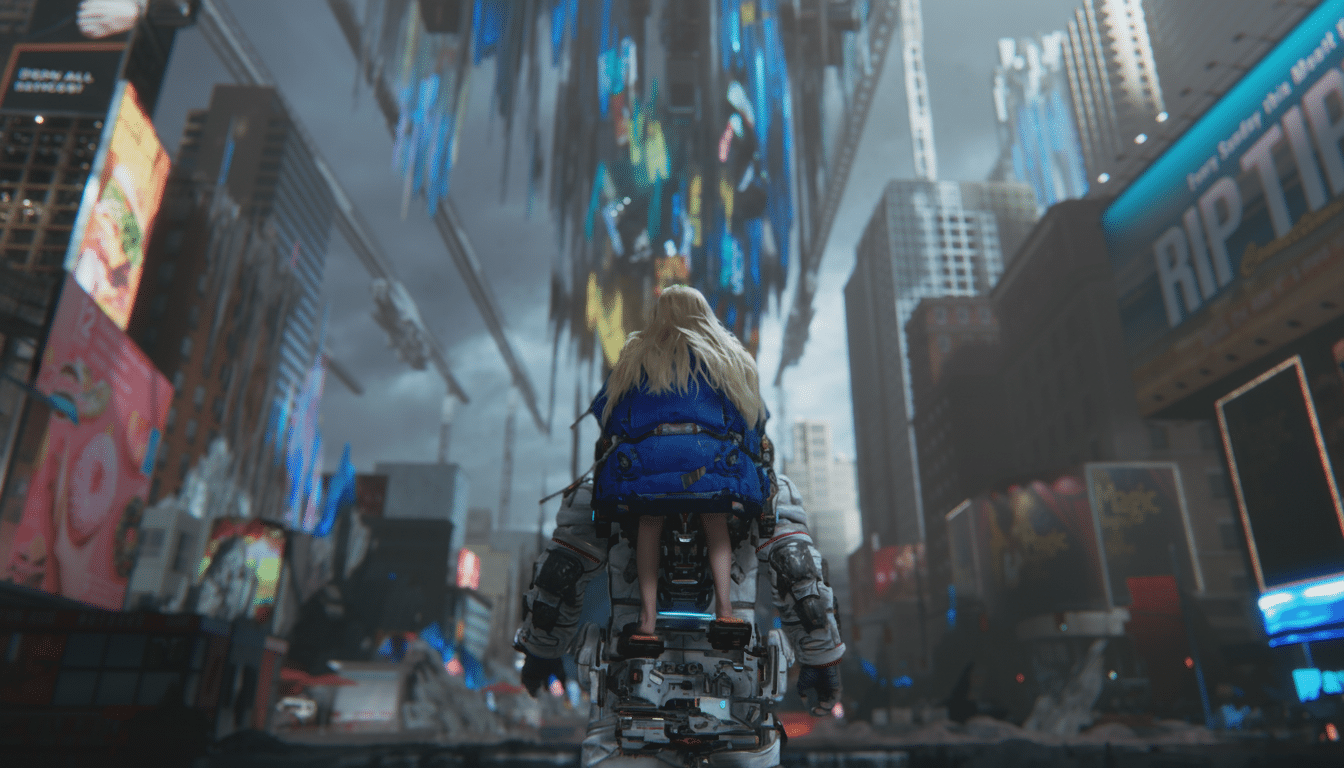
Pragmata’s setting is a playground for visual and mechanical contrasts: a sterile orbital facility layered with a 3D-printed facsimile of New York’s Times Square. Billboards and storefronts wink at Capcom history—spot the nods to Ghouls ’n Ghosts—while half-finished geometry flickers at the edges, reminding you this is a constructed memory of Earth rather than the real thing. Against that uncanny backdrop, robotic foes shamble, surge, and morph in ways that make target prioritization matter.
Dismemberment-like feedback—shearing plates to reveal sparking internals, popping exposed cores after a clean hack—reinforces that you’re fighting machines, not sponges. It’s readable game design with a satisfying cause-and-effect loop: prepare, pry open, puncture.
A Thoughtful Hub And A Proven Progression Loop
Between sorties, a central hub ties the experience together. It includes a firing range for testing builds, upgrade stations for Hugh and his arsenal, and a genial utility bot named Cabin that keeps the space functional. Multiple currencies funnel into meaningful upgrades—core survivability on one track, weapon behaviors on another—encouraging experimentation rather than single-path min-maxing.
If this cadence feels confident, it’s because Capcom has refined it across a decade of hits. The publisher’s action catalog—from recent Resident Evil entries to Devil May Cry 5—regularly lands in the 80s and 90s on Metacritic, and Capcom Investor Relations reports Resident Evil lifetime sales above 150 million units and Monster Hunter above 100 million. That institutional muscle for tuning difficulty curves and upgrade economies shows in Pragmata’s early hours.
Hacking Accessibility And Combat Clarity
The live-hack mechanic invites important accessibility and balance questions. Does the grid offer aim assist or slowdown for players who need it? Can inputs be remapped to accommodate different comfort levels? Smart options here would broaden the audience without diluting the core challenge. Given Capcom’s recent strides with scalable difficulty and UI readability, there’s reason to expect thoughtful toggles and tutorials.
Clarity remains the combat’s secret sauce. Enemy silhouettes, telegraphed attack tells, and bright visual language around hacked weak points keep firefights legible even when the screen crowds up. When a system pushes rapid decisions, clean feedback loops are non-negotiable—Pragmata seems to know it.
Where It Lands In The Modern Action Landscape
Third-person shooters have grown increasingly hybrid—part puzzle, part tactics, part spectacle. Pragmata leans into that trend with conviction. The robots and guns are the hook; the hacking layer is the differentiator; the uncle energy is the brand. It’s a triangle of design, mechanic, and tone that gives the game a distinct identity in a crowded field.
Pragmata is slated for PC, PS5, Xbox Series consoles, and Nintendo Switch 2, with a cross-platform demo offering a tangible feel for its rhythm. If the full campaign sustains the clever combat loop and keeps Hugh and Diana’s relationship sweet without turning saccharine, Capcom may have its next crowd-pleasing sci-fi staple.

