


Pharmacokinetic services help drug developers understand how a candidate behaves in the body by measuring absorption, distribution, metabolism, and excretion over time. This information is essential for deciding whether a molecule has the exposure profile needed to move forward. A solid pharmacokinetic program does more than generate concentration data; it supports dose selection, identifies formulation issues, highlights clearance risks, and informs safety strategy. In modern drug discovery, these services are used across small molecules, biologics, and specialty modalities to connect laboratory findings with development decisions. A practical review of pharmacokinetic services therefore focuses on the methods used to collect reliable data, the benefits these studies bring to development programs, and the ways PK insights guide preclinical and clinical planning.
Key Methods Used in Pharmacokinetic Services
In Vivo Pharmacokinetic Studies and Data Collection Approaches
In vivo pharmacokinetic studies evaluate how a test article moves through a biological system after administration by relevant routes such as intravenous, oral, subcutaneous, or inhaled delivery. These studies typically involve structured blood, plasma, serum, urine, tissue, or cerebrospinal fluid sampling at defined time points to capture concentration changes over time. Bioanalytical assays, often based on LC-MS/MS or ligand-binding methods, quantify analyte levels with the sensitivity needed for PK profiling. Good study design includes suitable species selection, dose justification, sampling schedules, and analyte stability controls. Together, these approaches generate the raw exposure data needed to assess systemic availability, tissue penetration, half-life, clearance patterns, and route-dependent performance during drug candidate evaluation.
- Key Methods Used in Pharmacokinetic Services
- In Vivo Pharmacokinetic Studies and Data Collection Approaches
- PK Parameters, Modeling, and Data Interpretation Methods
- Benefits of Pharmacokinetic Services for Drug Development Programs
- Improving Drug Exposure, Safety, and Dosage Decisions
- Supporting Faster and More Efficient Development Strategies
- Common Uses of Pharmacokinetic Services Across Research Stages
- Applications in Preclinical Drug Evaluation and Optimization
- Role of PK Studies in Translational Research and Clinical Planning
- Conclusion
PK Parameters, Modeling, and Data Interpretation Methods
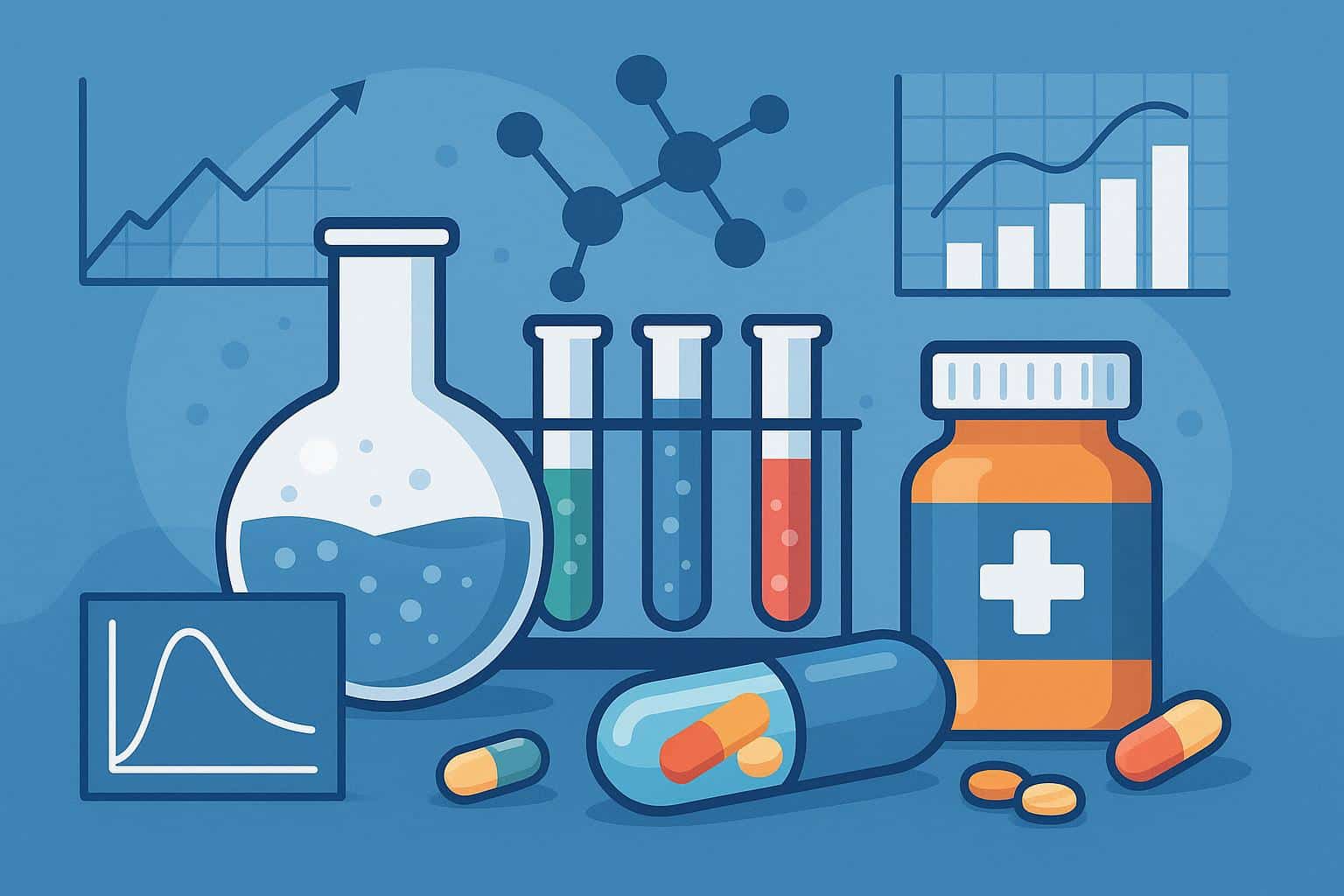
Pharmacokinetic services convert concentration-time data into interpretable parameters that describe drug behavior quantitatively. Common PK endpoints include Cmax, Tmax, area under the curve, half-life, clearance, volume of distribution, and bioavailability. Noncompartmental analysis is widely used for straightforward estimation of these values, while compartmental and population PK models provide deeper insight into distribution kinetics, variability, and dose-exposure relationships. Modeling can also support allometric scaling, exposure projections, and simulation of alternative dosing regimens before additional studies begin. Careful interpretation links PK findings to pharmacology, toxicology, and formulation performance rather than treating numbers in isolation. This integration helps teams determine whether observed exposure is sufficient, sustainable, and aligned with the intended therapeutic strategy.
Benefits of Pharmacokinetic Services for Drug Development Programs
Improving Drug Exposure, Safety, and Dosage Decisions
One of the clearest benefits of pharmacokinetic services is better decision-making around exposure, safety margins, and dose selection. PK data shows whether a candidate reaches therapeutic levels, how long those levels persist, and whether accumulation may create tolerability concerns. This enables developers to refine dose amount, dosing interval, and route of administration before committing to costly later-stage work. Exposure data also helps identify food effects, nonlinear kinetics, or rapid clearance that could limit real-world utility. When PK is reviewed alongside pharmacodynamic and toxicology findings, teams can establish more credible therapeutic windows and starting doses. That reduces avoidable study risk and improves confidence that development choices are grounded in measurable drug behavior.
Supporting Faster and More Efficient Development Strategies
Pharmacokinetic services support efficiency by helping teams eliminate weak candidates early and focus resources on molecules with workable exposure profiles. Early PK screening can reveal poor oral absorption, excessive first-pass metabolism, short half-life, or formulation limitations before these issues create larger delays. That evidence guides medicinal chemistry optimization, formulation redesign, and study prioritization with greater precision. PK modeling also reduces unnecessary experimental cycles by allowing simulations of likely outcomes under different dose levels or schedules. As a result, development programs can move with clearer go or no-go criteria and better alignment across discovery, bioanalysis, toxicology, and clinical planning groups. The overall effect is a more disciplined path from candidate selection to first-in-human readiness.
Common Uses of Pharmacokinetic Services Across Research Stages
Applications in Preclinical Drug Evaluation and Optimization
In preclinical research, pharmacokinetic services are used to compare lead compounds, rank candidates, and optimize molecular properties before formal development begins. PK studies reveal whether chemical modifications improve exposure, reduce clearance, or extend half-life in meaningful ways. They also help evaluate formulation strategies intended to enhance solubility, stability, or oral uptake. By pairing PK with efficacy data in disease models, researchers can connect exposure levels to biological response and choose compounds with stronger translational potential. These services are also valuable for investigating tissue distribution, brain penetration, and metabolite profiles when target biology requires it. In practice, preclinical PK serves as a screening and optimization tool that keeps candidate selection evidence-based rather than assumption-driven.
Role of PK Studies in Translational Research and Clinical Planning
As programs advance, pharmacokinetic services become central to translational planning and clinical strategy. PK data from preclinical species supports exposure projections, first-in-human dose rationale, and selection of sampling windows for early clinical studies. Integrated modeling can help estimate expected human half-life, dose proportionality, and accumulation patterns, allowing more informed protocol design. PK findings also support decisions about formulation bridging, food-effect assessment, and special population planning where exposure differences may matter. In translational research, the goal is to link nonclinical exposure-response knowledge with practical clinical execution. Well-conducted PK studies therefore reduce uncertainty at the handoff between discovery and development, making early clinical evaluation more focused, interpretable, and scientifically justified.

Conclusion
Pharmacokinetic services are a core part of modern drug development because they show how a candidate performs in the body and whether that profile supports continued investment. Through in vivo studies, bioanalytical measurement, parameter analysis, and predictive modeling, these services turn concentration data into development guidance. Their value is practical: they improve dose selection, clarify safety margins, strengthen candidate ranking, and support more efficient program planning. They are also used broadly, from early lead optimization to translational research and clinical preparation. For teams evaluating drug candidates, a strong pharmacokinetic strategy provides direct answers about exposure, durability, and feasibility. That makes pharmacokinetic services not just a technical function, but a decision-making framework for smarter development.

