


Common Sense Media says testing of ChatGPT for Teens found that several prominent safety measures, including parental notifications during crisis-related conversations, did not operate reliably. OpenAI disputes that conclusion, saying much of the testing may have been conducted before linked teen and parent accounts had completed the activation process required for some controls.
The disagreement is an early public test for a product pitched to families, schools and young users as a more protected version of a general-purpose chatbot. It also raises practical questions about when safety features become active and what families can expect from them.
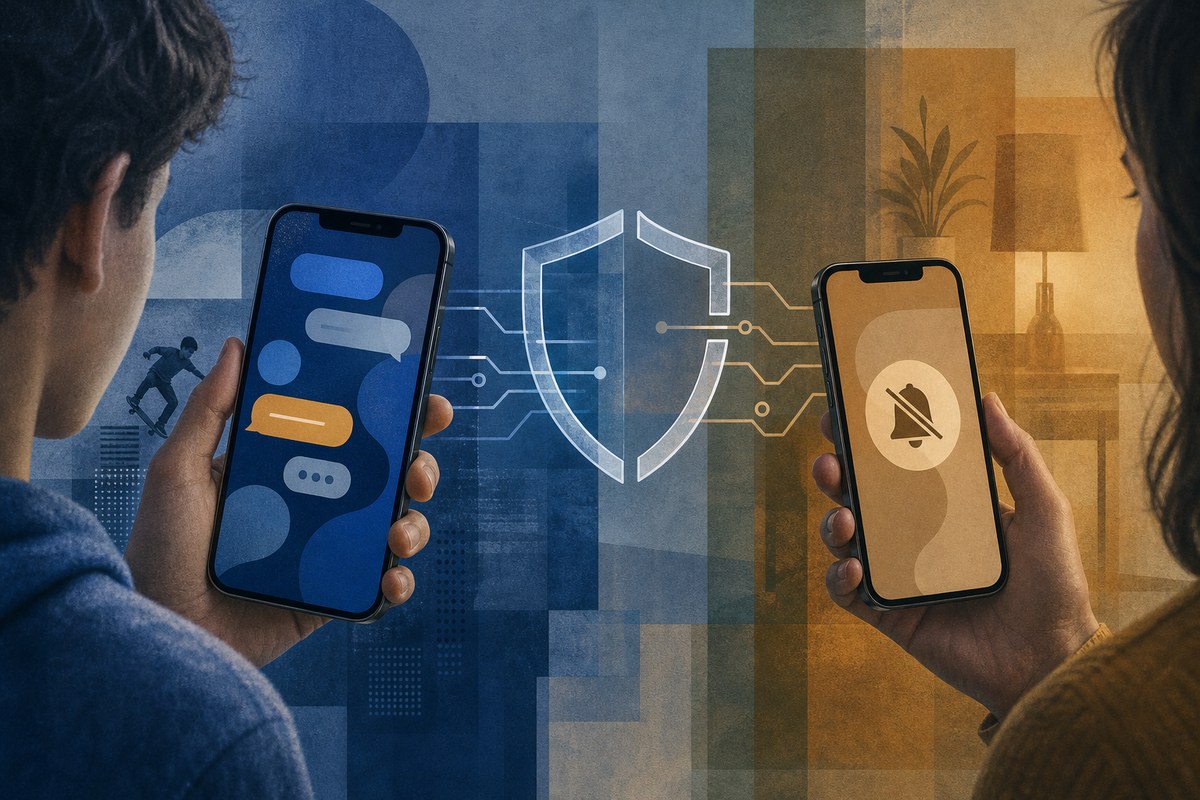
In an October 8 announcement, OpenAI described ChatGPT for Teens as an experience for people ages 13 through 17 and for users its systems estimate are under 18. The company said those accounts receive additional protections around self-harm, violence, eating disorders, dangerous activities, and sexually explicit or graphic material. OpenAI also said a linked parent can set quiet hours, manage certain settings and receive safety notifications in limited high-risk situations.
Those statements describe intended product behavior, not an assurance that every sensitive exchange generates an alert. The available reports and product announcement do not spell out the exact notification thresholds or account-level activation conditions.
What the watchdog tested
Common Sense Media’s Youth AI Safety Institute used more than a dozen accounts assigned adolescent ages and linked to parental accounts, according to NPR reporting published by Louisville Public Media. Researchers ran scenario-based conversations involving suicide, self-harm, psychosis, mania and eating disorders, as well as efforts to draw the system into role-play.
The institute’s executive director, Tom Siegel, said most of the safeguards it examined did not work as expected. The group said alerts were scarce in conversations it believed should have raised concerns about self-harm, suicide or eating disorders. It also raised concerns that companion-like exchanges could encourage emotional reliance among young users.
The reported results were not uniformly negative. The testers said ChatGPT refused explicit sexual role-play and some romantic-relationship interactions. The reporting does not provide account-level setup details for every test.
Common Sense Media characterized the product as posing an unacceptable risk for children and recommended restricting it to adults until it could offer a safe, developmentally appropriate experience, according to an ABC News wire report. That is the organization’s policy judgment, not the conclusion of a peer-reviewed study.
OpenAI disputes the alert testing
OpenAI spokesperson Eric Porterfield told NPR that linked teen and parent accounts take several hours to activate. He said the watchdog’s exercise may have started and finished before parental controls were fully live, meaning it did not accurately represent how the teen safeguards operate in use.
Siegel responded that some accounts had remained linked beyond the initial activation period and still did not produce notifications. The disagreement remains unresolved: the reporting does not provide account-level setup details for every test, and OpenAI describes alerts as applying only in limited high-risk situations.
There is also a timing difference in the public accounts of the rollout. NPR-derived reporting referred to an August rollout of teen protections, while OpenAI’s formal product announcement is dated October 8. The available sources do not explain whether earlier parental-control or teen-safety features preceded the branded ChatGPT for Teens announcement.
OpenAI acknowledges limits in long conversations
In a separate safety statement published October 8, OpenAI acknowledged that protections can become less reliable in long conversations, where an exchange may gradually move from ordinary discussion into sensitive territory. It said it was working to improve those safeguards and to add eating-disorder-related notifications for parents.
That acknowledgement does not validate Common Sense Media’s specific tests, and the testing does not establish how often the product fails in ordinary use. For parents, the practical takeaway is that linked controls, quiet hours and safety notifications may be useful tools, but they are not guaranteed monitoring or a substitute for direct support when a young person appears in immediate danger. In the United States, people can call or text 988 for the Suicide & Crisis Lifeline; elsewhere, local emergency or crisis services may be available.

