


Tommy Shelby rides again, and with him comes a sendoff that feels both inevitable and electric. Peaky Blinders The Immortal Man arrives as the long-promised coda to Steven Knight’s global phenomenon, and it does what the best finales do—honors the past without embalming it. Now streaming on Netflix, it closes the book with a cool, wounded grace that only Cillian Murphy could summon.
Murphy, fresh from a run of career highs, returns to Small Heath like a ghost who refuses to fade, and the film makes a persuasive case that Tommy’s legend isn’t merely lasting—it’s still evolving. This is a curtain call with blood on its hands, poetry in its veins, and the soundtrack cranked.
- A Finale Built on Legacy, Not on Nostalgia
- A Father and Son on a Violent Collision Course
- Cillian Murphy’s Quiet Fury Anchors the Film
- Style and Sound Turned Up to Eleven, with Purpose
- Familiar Faces and New Stakes Raise the Tension
- Why Tommy Shelby Endures as a Modern Crime Icon
- Verdict: A Ferocious, Graceful Farewell for Tommy Shelby
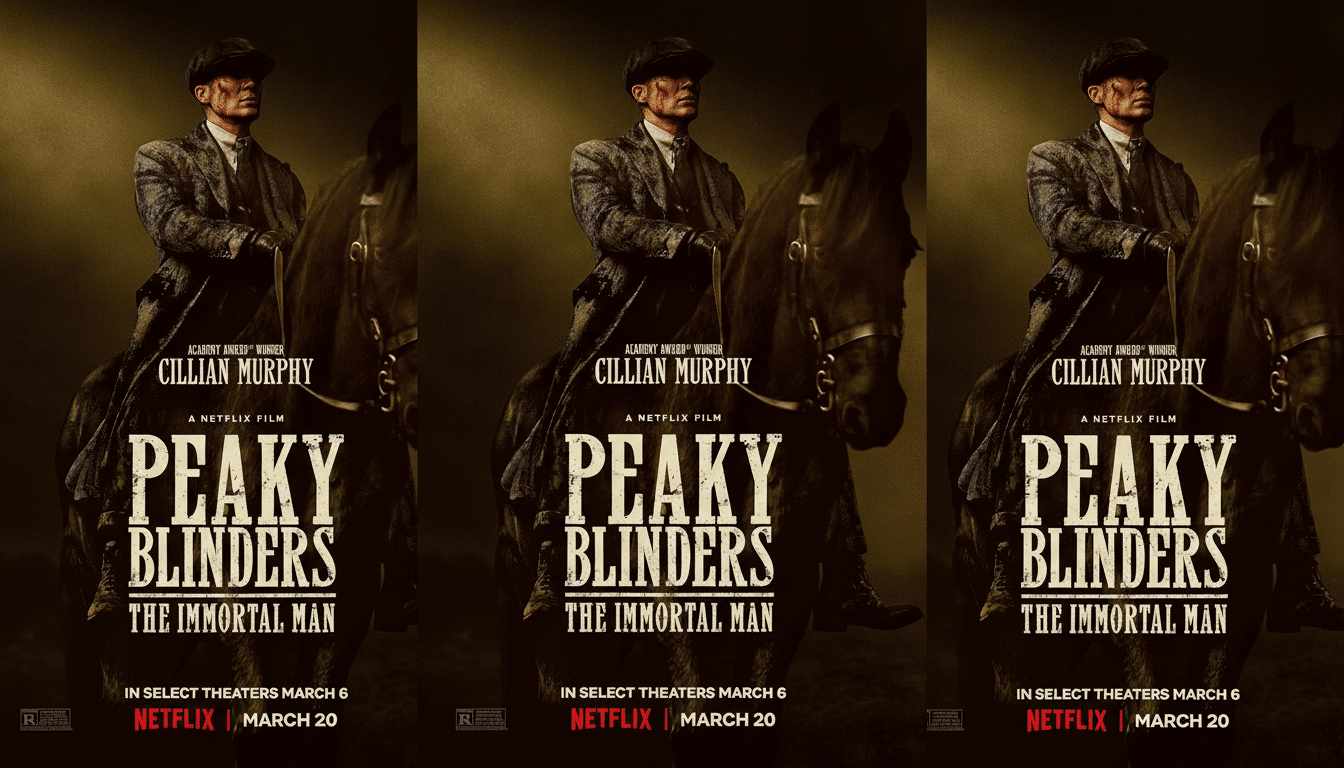
A Finale Built on Legacy, Not on Nostalgia
Director Tom Harper laces the film with resonances, not reruns: a final black horse through Birmingham; smoke curling like memory; an opening needle drop that tells you, immediately, you’re home. Cinematographers George Steel and Ben Wilson return to the show’s hallmark chiaroscuro, sculpting faces out of shadow, then letting the light betray them.
It’s reverent without becoming a museum piece. The Immortal Man understands that legacy isn’t a montage—it’s a reckoning.
A Father and Son on a Violent Collision Course
Barry Keoghan is ferocious as Erasmus “Duke” Shelby, a son determined to eclipse his father’s myth and blind to the cost. Tim Roth chills as John Beckett, an urbane British facilitator to Nazi ambition—specifically, a scheme to destabilize Britain by flooding it with forged currency. The plot knowingly echoes Operation Bernhard, the real World War II counterfeiting program, grounding the drama in unsettling history.
As Duke takes the poisoned chalice, Ada Thorne (Sophie Rundle, superb) becomes the family’s moral weather vane, pointing toward the storm. One grim, mud-caked brawl between father and son—pigs squealing around them—distills the series’ essence: kinship as battleground, pride as an unforgiving god.
Cillian Murphy’s Quiet Fury Anchors the Film
Murphy plays Tommy as a man retreating into isolation, tending land and ghosts, scribbling memoir pages even while en route to danger. It’s funny, in a gallows way, and poignant too—an outlaw trying to order chaos into sentences. When trouble comes to the Garrison, his mask slips just enough to remind a loudmouth who built the room. The explosion you expect arrives, but the film often chooses restraint: a blink, a breath, a look that says the math has already been done.
The camera loves him, but it’s the silence that crowns him. Few actors can telegraph calculus and regret in the same frame; Murphy does it repeatedly.
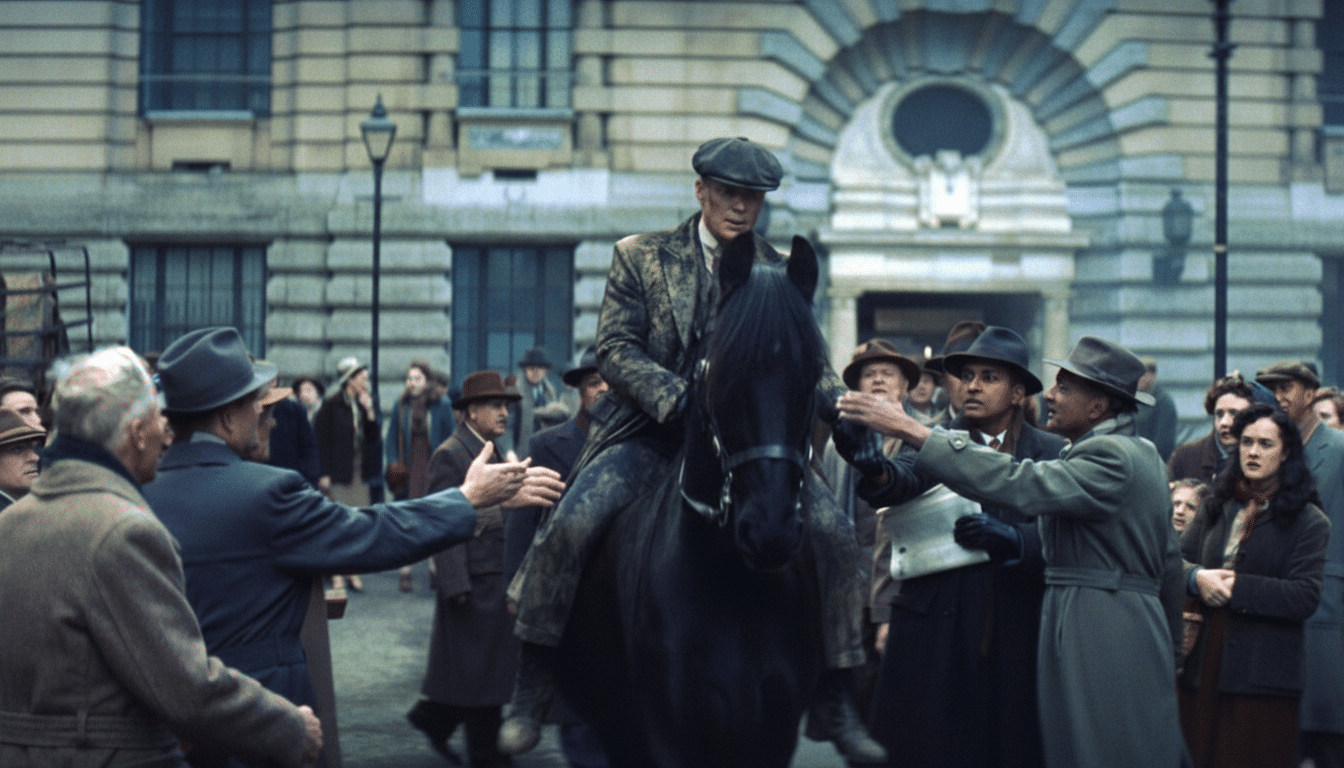
Style and Sound Turned Up to Eleven, with Purpose
The Peaky aesthetic—razor-clean tailoring, coal-dust skies, a world cut on a strop—remains intact. Harper’s pacing lets moments detonate and then breathe. The soundtrack stalks and strafes: Fontaines D.C. and mclusky needle the nerves; Nick Cave still sounds like prophecy. These aren’t just cues; they’re narrative accelerants, yoking Tommy’s interior roar to the external machinery of war and crime.
When the music drops out entirely, you notice. The film knows when to swagger and when to listen.
Familiar Faces and New Stakes Raise the Tension
Stephen Graham’s Hayden Stagg drifts back in with the gravitas of a man who’s survived too much to waste words, and Sophie Rundle brings Ada’s steel to the fore. There’s a pulpy twist involving Rebecca Ferguson that plays bigger than it reads, but it serves a purpose: showing how the past keeps breeding consequences in Shelbyland.
For series diehards, these returns feel like letters finally posted. For casual viewers, the film is generous with context—though it does carry major spoilers for the series’ most pivotal turns.
Why Tommy Shelby Endures as a Modern Crime Icon
Peaky Blinders has been a rare cultural twofer: critically decorated and massively popular. The show won the BAFTA for Best Drama Series, and across six seasons critics consistently scored it above 90% on major aggregators. BARB regularly ranked it among the BBC’s most-watched dramas, while Netflix’s global reach transformed a Birmingham crime saga into a worldwide vernacular—flat caps, cropped suits, and all.
That resonance isn’t fashion alone. The series anatomized power—industrial, political, criminal—through a working-class lens, and showed how war writes itself into families. The Immortal Man doubles down on those themes, arguing that immortality isn’t about never dying; it’s about leaving a design others can’t help but follow, or fight.
Verdict: A Ferocious, Graceful Farewell for Tommy Shelby
The Immortal Man isn’t a victory lap so much as a final negotiation between the man Tommy was, the legend he became, and the future he can no longer control. It’s gorgeous, ruthless, and, at times, unexpectedly tender. By the last frame, the series’ central promise feels kept: memory wins. Tommy’s reckoning becomes his bequest, and the name Shelby still carries weight like a loaded gun on a quiet table.

