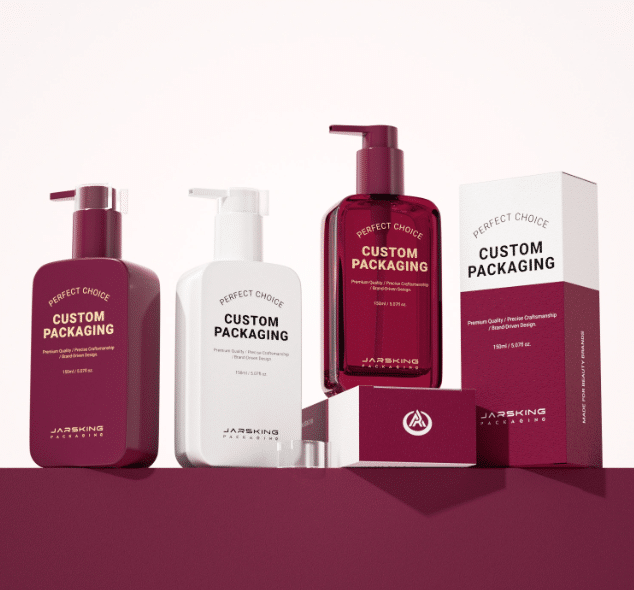
In beauty, packaging is routinely described as “the first touchpoint.” That’s true, but incomplete. The container doesn’t just introduce a product—it governs how the formula lives day to day: how much air it meets, how cleanly it dispenses, how accurately it doses, and whether it survives shipping without becoming a sticky customer-service problem.
For brands building a regimen (toner → treatment → cream → body care), packaging also acts like a silent interface. You can have a well-formulated routine, but if one component leaks, clogs, or feels flimsy, the entire set becomes harder to trust. That’s why certain packaging formats keep showing up in premium skincare: they solve predictable failure points—oxidation, contamination, inconsistent dosing, and messy handling—while still looking at home on a vanity and in a product photo.
- 1) Airless jars for creams: when “hygienic” is more than a buzzword
- Why the “replaceable inner core” detail matters
- What you should decide before choosing an airless jar
- 2) Fine-mist spray bottles: the dispenser is the product for toners and body mists
- Where this format is most useful (specific use cases)
- Editorial note: why PET often wins in this category
- 3) Glass lotion pump bottles: making everyday dosing feel deliberate
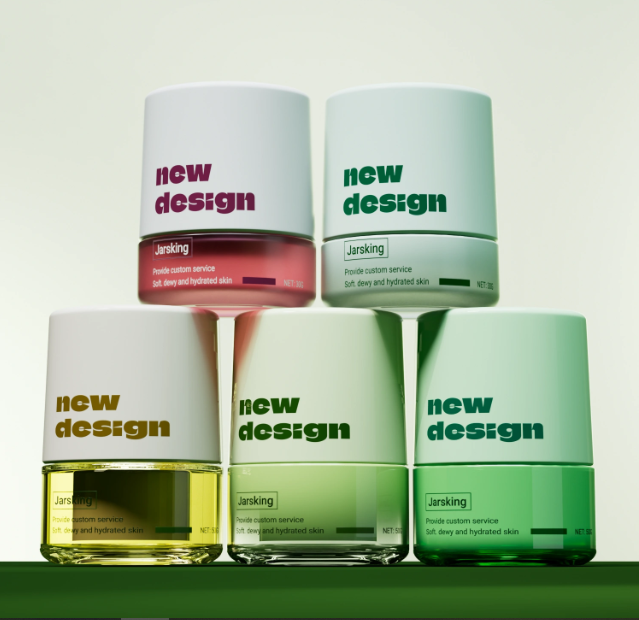
Below are three formats that are worth discussing in more specific terms: what they’re built for, what they reduce, and what you should decide before you commit to bulk. The links are included as references for the exact structures and specs being discussed
1) Airless jars for creams: when “hygienic” is more than a buzzword
Classic open-mouth jars are convenient, but they come with two obvious tradeoffs: frequent air exposure and repeated contact (fingers or spatulas that aren’t always clean). That matters most for creams and treatment balms that are designed to be used slowly over weeks—exactly the time window where oxidation, texture shifts, and microbial risk become a concern.
An airless jar format addresses these issues by separating use from exposure. Instead of repeatedly opening a wide mouth, the product dispenses through a pump mechanism. The biggest practical benefit isn’t just “cleaner”—it’s repeatable dosing and less leftover waste that tends to cling to the bottom edges of traditional jars.
A concrete example is the custom glass airless pump jar with a replaceable inner core. It’s offered in 30g and 50g—two sizes that match common face-cream and treatment positioning—and uses a hard glass outer jar with plastic components (cap, pump, and inner core).
Why the “replaceable inner core” detail matters
A lot of brands say “refillable,” but the consumer experience can fall apart if refilling is messy, or if the package stops looking premium after a few weeks. A replaceable inner core is a more controlled approach: the outer glass stays consistent (the part customers see and associate with quality), while the functional inner component can be replaced for hygiene, SKU refreshes, or refill-style programs.
This airless jar supports multiple finish directions—frosting, printing, transparent looks, electroplating, and other surface treatments—so the same structure can be adapted to different brand codes (dermo, luxury, playful color-pop). The page also notes injection-color customization for plastic parts, which matters if you’re trying to make the cap and collar part of the brand palette rather than a generic “black/white stock” look.
What you should decide before choosing an airless jar
Airless packaging is not automatically “better” for every cream. It’s best when:
- Your formula is sensitive to oxygen exposure over time (many active-focused creams fit here).
- You care about controlled dosage (anti-aging, brightening, barrier repair).
- You want the luxury of a jar but the cleanliness of a pump.
2) Fine-mist spray bottles: the dispenser is the product for toners and body mists
Toners and mists are often “habit products”—used quickly, repeatedly, and sometimes in public or on-the-go. That means the user’s relationship is not with the bottle design in a static way, but with the spray action. A mist that is uneven, wet, or inconsistent quietly changes how people use the product (fewer reapplications, less satisfaction, worse repurchase).
That’s why fine-mist packaging deserves the same attention brands give pumps and droppers. If a mist product is positioned as “refreshing,” “weightless,” or “spa-like,” the spray must support that claim.
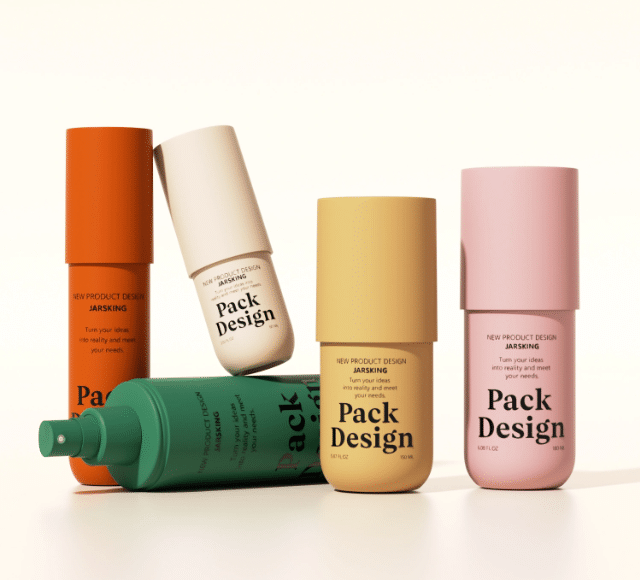
The reference format here is the PET fine mist spray bottle for cosmetic toner and body mist. The page frames it as part of a cohesive packaging system aimed at brands that need consistent branding across multiple SKUs and formats.
Where this format is most useful (specific use cases)
- Face mists that are used between steps (after cleansing, before serum).
- “Skin fragrance” hybrids (body mist positioned as skincare-adjacent).
- Travel or mini versions of a routine set where glass is too heavy or too risky.
- Limited drops where you want color consistency across cartons + bottles.
Editorial note: why PET often wins in this category
This isn’t about “cheap vs premium.” PET can be the sensible choice for spray formats because it reduces shipping weight and breakage risk—especially if a mist is used daily and likely to be tossed into a bag. In other words, PET is sometimes the “premium experience” choice because it reduces the friction points that customers actually notice.
3) Glass lotion pump bottles: making everyday dosing feel deliberate
Lotions are where packaging problems show up fast. Too much product comes out? The bottle neck gets messy and sticky. Too little? The user pumps repeatedly and feels annoyed. Leakage in transit? You get returns, replacements, and negative reviews. This is why pump bottles persist: they are the most straightforward “control system” for medium-viscosity products.
But premium brands often don’t want the pump bottle to look like a commodity. They want the ergonomic benefit while still delivering a shelf signal—something that looks designed, not generic.
That’s the appeal of a glass pump with a finish that carries the brand. The 150ml custom glass lotion pump bottle with gradient/frosted coating is positioned for luxury skincare lines needing both shelf impact and controlled dispensing.
What’s specific about this bottle (and why it matters)
- Capacity: 150ml—an everyday size that works for body lotion, hand wash, gentle cleanser, or “hero” emulsion products.
- Materials: glass bottle + plastic pump + plastic locking collar. That collar detail is unglamorous but meaningful: it’s an anti-leak feature that targets a real logistics pain point.
- Branding control: defined printing area for brand decoration—helpful when you need clean compliance layouts plus a premium front-panel design.
- Finish range: silk screen, frosting, electroplating, color coating, hot stamping, 3D printing—so you can build multiple SKUs without redesigning the container geometry.