


Ask longtime awards-watchers if the Oscars can end in a draw and you’ll get a definitive answer: yes. In fact, a recent ceremony delivered another surprise split in Best Live Action Short, reminding viewers that while ties are vanishingly rare at the Academy Awards, they are part of the institution’s history.
The Academy of Motion Picture Arts and Sciences has recorded only a handful of ties across nearly a century of ceremonies. That scarcity is exactly what makes the moments so memorable, from marquee acting races to niche craft and short film categories.
How Oscar Ties Happen Under Academy Voting Rules
According to the Academy’s published rules and its longtime balloting partner PricewaterhouseCoopers, winners are determined by the highest number of votes in the final round. If two nominees receive the exact same tally, both are declared winners. There is no runoff and no tiebreaker; each winner receives a full statuette.
Early in Oscar history, the Academy allowed a quirk: if a runner-up finished within a few votes of the leader, both could be awarded. That rule produced the first shared win before being retired; today, only an exact tie counts. Given the Academy now counts more than 10,000 members by its own reports, a dead heat is statistically unlikely—yet it still happens.
Every Known Oscars Tie At A Glance and History
- 5th Academy Awards Best Actor: Fredric March (Dr. Jekyll and Mr. Hyde) and Wallace Beery (The Champ). March actually received more votes, but an old rule granted Beery a co-win for finishing within the margin; the Academy later abolished that provision.
- 22nd Academy Awards Best Documentary Short Subject: A Chance to Live and So Much for So Little shared the honor, spotlighting how smaller-voter fields in short-film categories can produce razor-thin outcomes.
- 41st Academy Awards Best Actress: Katharine Hepburn (The Lion in Winter) and Barbra Streisand (Funny Girl) split one of the most closely watched races in Oscar history. The result remains a cultural touchstone, often cited as the definitive example of a top-category tie.
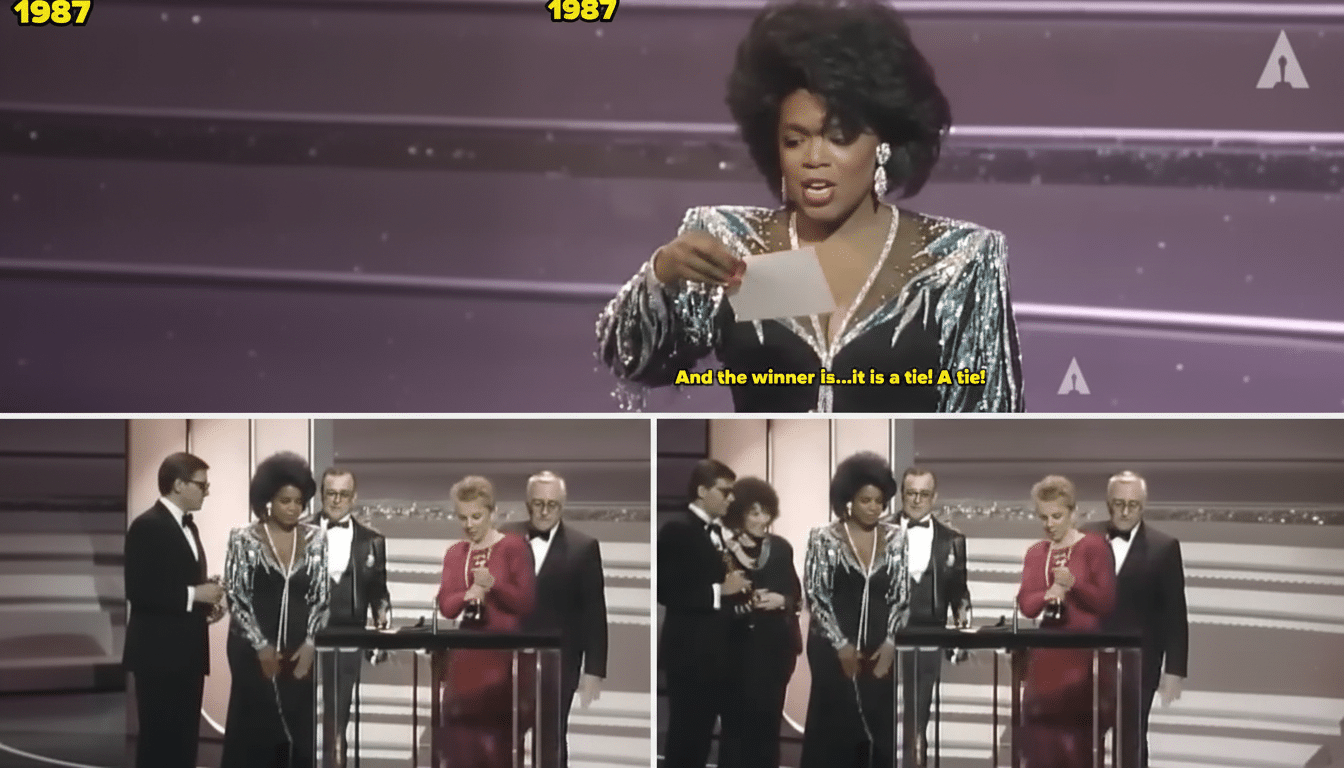
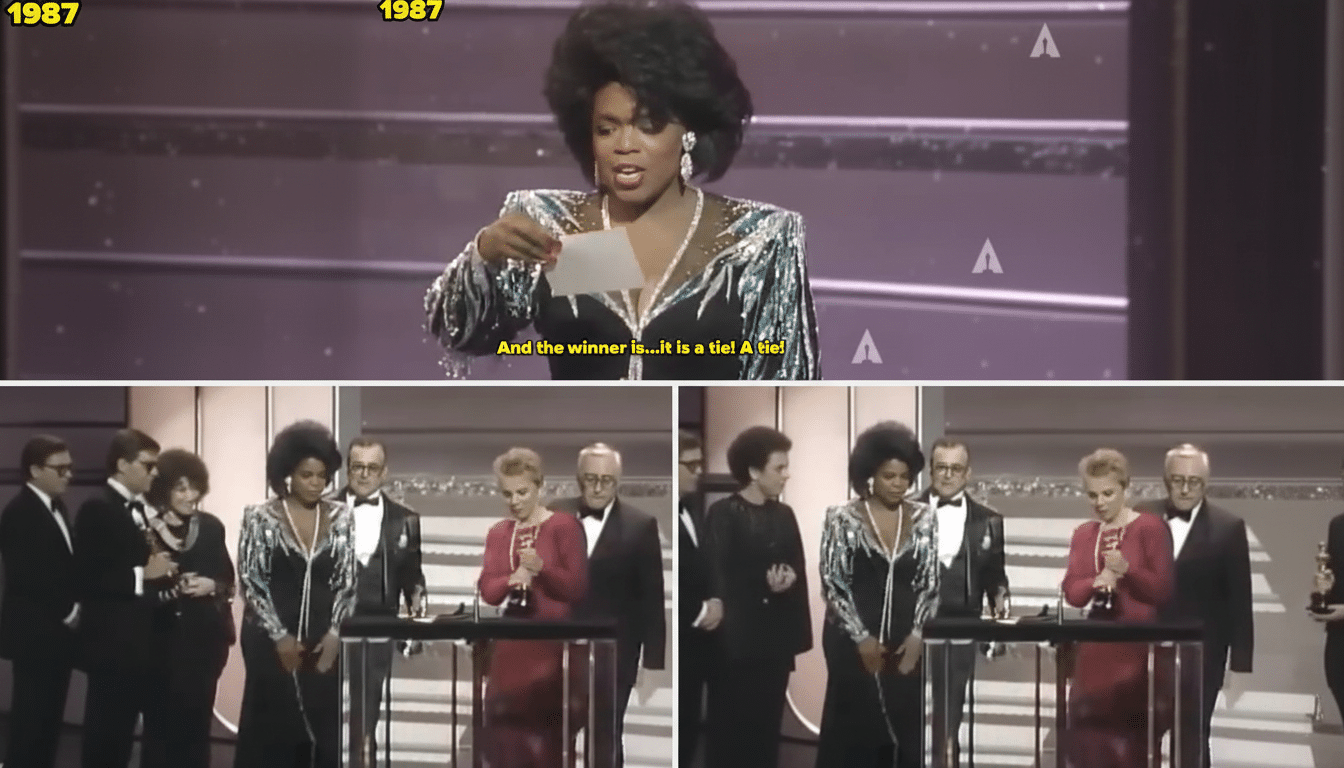
- 59th Academy Awards Best Documentary Feature: Artie Shaw: Time Is All You’ve Got and Down and Out in America both won, underscoring the documentary branch’s tendency toward competitive, values-driven voting.
- 67th Academy Awards Best Live Action Short Film: Franz Kafka’s It’s a Wonderful Life and Trevor tied, an outcome that later resonated in the category’s lore when another split emerged years on.
- 85th Academy Awards Best Sound Editing: Skyfall and Zero Dark Thirty finished level, a rare tie in a technical race that underscored how craft categories can inspire intense, evenly divided support.
Why Ties Are So Unusual at the Academy Awards
In the final round, most categories are voted on by the full membership, which makes exact parity hard to achieve. Even where eligibility rules restrict voting to members who have met viewing requirements, the pools are still large enough that simple plurality typically yields a clear winner. Historically, ties have clustered in categories with comparatively fewer eligible voters or unusually polarized fields.
Another wrinkle: Best Picture uses preferential balloting, designed to reward broad consensus. That system reduces the chance of a tie even further in the top race, while other categories rely on straightforward most-votes-wins tabulation.
What Happens When Winners Tie on Oscar Night
The Academy does not split trophies or ask winners to share custody. Duplicate Oscars are presented, both names are etched into the record, and the ceremony proceeds. PwC auditors confirm the result, the presenters read both names, and history is made. Past press materials emphasize that ties are treated as full, coequal victories—no asterisks attached.
That played out again most recently when The Swimmers and Two People Exchanging Saliva finished even in Best Live Action Short Film. The host winked at viewers about the havoc such a result wreaks on office pools, but for the filmmakers, it’s a clean win, etched forever alongside six prior ties in the Academy’s books.
The Bottom Line on Rare but Real Oscars Ties
Yes, the Oscars can and do produce ties—only a few across the show’s long history, but enough to be more than myth. From Hepburn and Streisand to Skyfall and Zero Dark Thirty, and now a fresh split in live-action shorts, the Academy’s ledger proves that even with thousands of ballots and rigorous auditing, Hollywood’s biggest night still finds room for a dead heat.

