


The future of office spaces continues to evolve as companies become flexible in their approach to hybrid work setups, technology requirements, and employee well-being. Remodeling an office may enhance productivity and functionality, but it also has its challenges.
Modifications can also impact daily operations, such as noise, safety risks, and disruptions to the workflow, unless properly handled. It involves smart planning, coordination, and implementation to ensure continuity in business.
- Understanding Operational Office Renovations
- Planning Renovations with Least Disruption
- Phased Building and Zoning Plans
- Safety and Compliance in Active Renovations
- Technology and Infrastructure Improvements
- Cost Control and Timeline Management
- Real-World Example
- Advantages of Hiring Experienced Office Renovation Firms
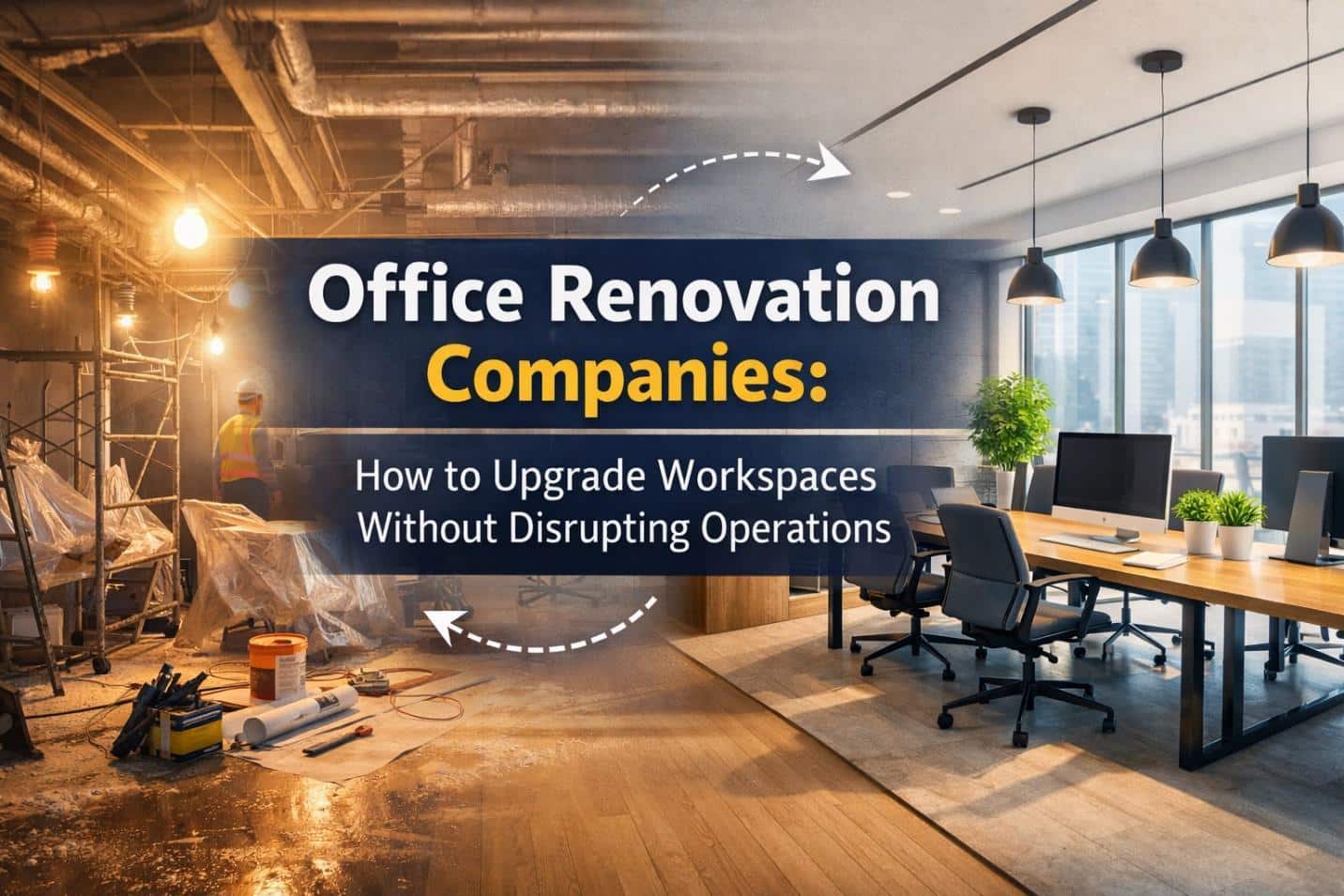
Selecting professional office renovation firms assist organizations in updating their workplaces while keeping their workforce engaged.
This guide outlines how renovation firms can upgrade an office without disrupting operations and what the business should consider during the upgrade process.
Understanding Operational Office Renovations
Office renovations are unlike vacant-space projects. Work is commonly undertaken when employees are on site; therefore, safety, scheduling, and communication are essential. Contractors need to consider the business hours and sensitive equipment, as well as the movement of employees.
It’s important to know how to coordinate construction and the daily business. The aim should be to create a modern, comfortable, safe, and efficient space, even during the renovation process.
Planning Renovations with Least Disruption
Office renovations are best planned to avoid disruption.
Pre-Renovation Assessments
- Assess layouts, utilities, and structural conditions.
- Detect high-traffic zones and sensitive working zones.
- Evaluate noise, dust, and access restrictions.
Clear Scope and Scheduling
- Establish renovation processes and schedules.
- Work during off-hours/weekends whenever possible.
- Coordinate milestones to internal business operations.
Employee Communication Plans
- Share renovation schedules and impact.
- Give alternative work arrangements where necessary.
- Be transparent to minimize uncertainty.
Phased Building and Zoning Plans
Phased construction enables offices to be operational during renovations.
Work Area Zoning
- Isolate construction and working areas.
- Temporary walls, signage, and access control.
- Keep the emergency exits and routes clear.
Phases of Renovation in Sequence
- Refurbish a department or a floor at a time.
- Relocate working units rather than halting business.
- Less disruption by doing controlled sequencing.
Noise and Dust Control
- Use low-noise equipment and dust containment.
- Plan more noisy activities during off-peak working hours.
- Ensure there is proper ventilation.
Safety and Compliance in Active Renovations
When employees are around, safety is a priority.
On-Site Safety Measures
- Conduct safety programs that are OSHA-compliant.
- Utilize tools, materials, and equipment that are secure.
- Carry out daily safety checks.
Fire and Building Code Compliance
- Ensure that temporary modifications comply with the codes.
- Coordinate inspections without interrupting operations.
- Keep a good level of lighting and signage.
Accessibility Considerations
- Preserve ADA access routes.
- Give alternative solutions in case of pathway interference.
- Keep emergency and bathroom access.
Technology and Infrastructure Improvements
Office renovation nowadays tends to lean towards the integration of technology.
IT and Network Coordination
- Install upgrade cabling, servers, and connections.
- Plan work to avoid downtime.
- Work hand in hand with IT teams.
Energy-Efficient Systems
- Install effective lighting, heating, and cooling.
- Enhance air quality and temperature.
- Lower operating expenses over the long term.
Smart Office Features
- Combine access control systems and security systems.
- Enhance hybrid work with flexible plans.
- Improve modern meeting room cooperation.
The U.S. Energy Information Administration states that building operating costs can be reduced by up to 15-20 percent in the long run through retrofitting offices with energy-efficient features.
Cost Control and Timeline Management
Renovating an active office requires careful budget oversight.
Accurate Cost Planning
- Include contingencies for unforeseen conditions.
- Account for after-hours work costs.
- Avoid scope creep through clear documentation.
Schedule Monitoring
- Track progress against milestones.
- Adjust phases as operational needs change.
- Prevent delays through proactive coordination.
Industry reports show that office renovation projects with phased planning reduce schedule overruns by up to 25%, compared to unplanned renovations.
Real-World Example
A professional services company based in Houston had its 40,000-square-foot office renovated and remained fully operational. The renovation firm adopted a staged construction process where they started with the conference rooms and common areas during evenings and weekends.
As work was underway, departments were shifted temporarily inside the building. Disruption was limited with noise management and effective communication. The project was delivered on time, which improved collaboration areas and energy efficiency without disrupting business operations.
Advantages of Hiring Experienced Office Renovation Firms
- Minimal downtime and disruption by operations.
- Better safety and regulation.
- Improved integration of construction and business requirements.
- Efficiency in productivity and workspace in the long term.
Final Verdict
Office refurbishment can bring significant value when properly planned and implemented. Renovating workspaces without interfering with the working process requires experience, communication, and orderly implementation. Office renovation firms that specialize in occupied settings assist companies in modernizing without compromising on productivity.
Renovations provide an investment in employee experience, efficiency, and future growth. When companies such as Arrant Construction commit to office renovation processes, they bring well-regulated planning, consciousness of compliance, and gradual implementation to aid in an easy transition and sustainability of performance at the workplace.
Frequently Asked Questions (FAQs)
How long do office renovations usually take?
Timelines vary, but phased office renovations often take several weeks to a few months, depending on the scope.
Can renovations happen while employees are working?
Yes. Experienced office renovation companies plan phased work to minimize disruption.
How is safety managed during active renovations?
Contractors implement safety zones, inspections, and OSHA-compliant procedures.
What upgrades are most common in office renovations?
Common upgrades include lighting, HVAC, technology infrastructure, and flexible layouts.
How can businesses reduce renovation disruptions?
Clear planning, phased construction, after-hours work, and strong communication help reduce impact.
