


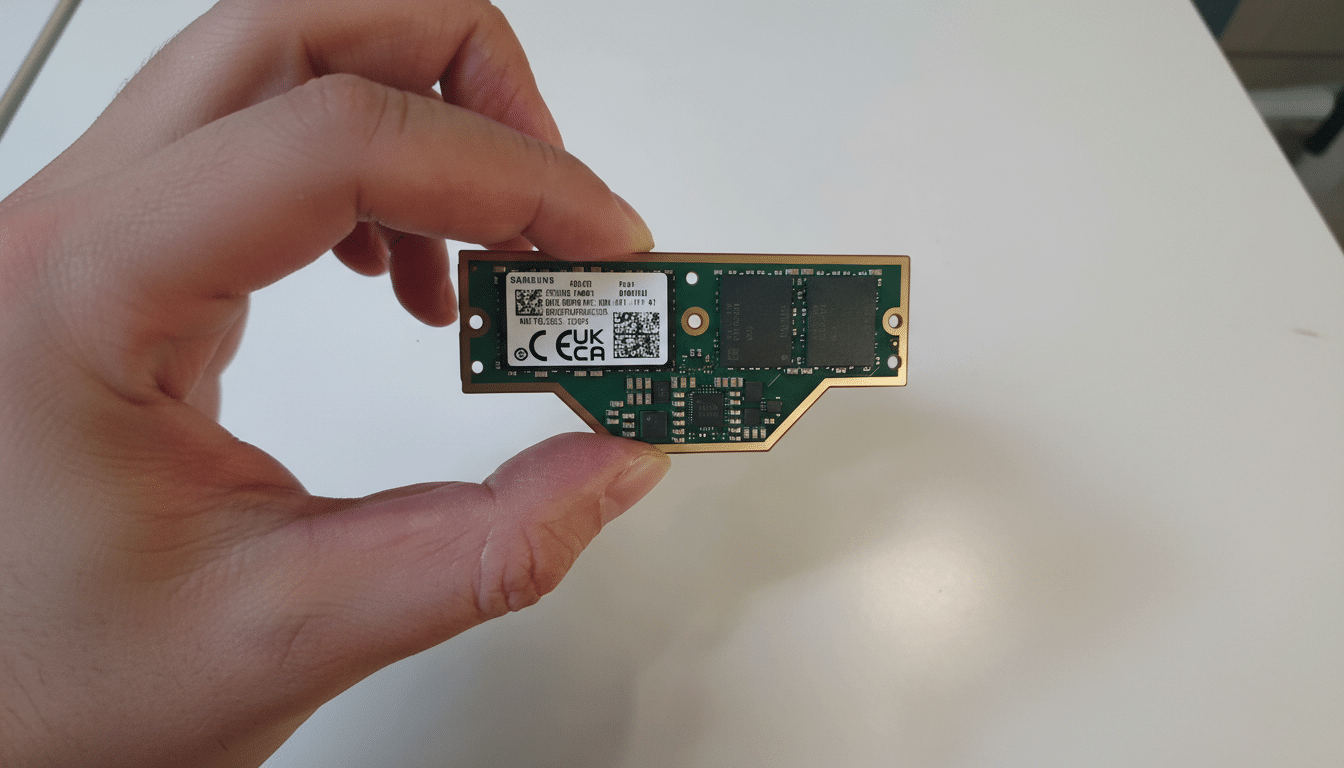
Lenovo’s China team has previewed a next-generation memory milestone, sharing an image on Weibo of a Samsung-built LPCAMM2 module that squeezes 96GB of LPDDR5X into a remarkably compact package. The module is rated up to 9,600 MT/s, a bandwidth tier usually reserved for soldered smartphone-class memory, not upgradeable laptop parts. It isn’t in mass production yet, but the sneak peek signals that ultra-fast, high-capacity low-power memory is nearing mainstream notebooks sooner than many expected, as first noted by Wccftech.
Why LPCAMM2 Matters for Faster, Upgradeable Laptops
LPCAMM2 is the JEDEC-standardized evolution of CAMM, the compression-attached memory module format originally pioneered in mobile workstations. It combines the efficiency and speed of LPDDR5X with the upgradeability and serviceability that IT managers expect from traditional SO-DIMM slots. Compared with dual SO-DIMM configurations, LPCAMM2 frees up board space, trims Z-height, and simplifies high-speed signal routing—key advantages for thin-and-light designs that are increasingly constrained by thermals and layout.

The 96GB Samsung module Lenovo showed easily leapfrogs today’s retail LPCAMM2 options. Intel previously highlighted Crucial’s LPCAMM2 at up to 64GB and 7,500 MT/s; a single 96GB module is a 50% capacity jump and a roughly 28% increase in peak data rate on paper. For creators, engineers, and developers who hit memory ceilings fast, that extra headroom can be the difference between swapping and staying in RAM.
Specifications and performance context at 9,600 MT/s
At up to 9,600 MT/s, this LPCAMM2 sits near the top of LPDDR5X bins that memory makers like Samsung have been publicly demoing for the last two years. The form factor’s short trace lengths and compression connector are designed to preserve signal integrity at those speeds, something DDR5 SO-DIMMs in laptops typically can’t match. In dual-slot systems, two 96GB modules would theoretically enable 192GB in an ultrabook footprint—territory once reserved for bulky mobile workstations.
Real-world impact should show up across bandwidth-sensitive workloads: integrated GPU performance, on-device AI inference with larger context windows, real-time video effects, and analytics pipelines that thrive on fast, contiguous memory pools. Moving from 7,500 MT/s to 9,600 MT/s increases peak bandwidth per channel, reducing stalls in those memory-bound scenarios.
Which laptop platforms are likely to support it first
All signs point to Intel’s next wave of laptops as early beneficiaries. Intel has stated that its Panther Lake platform can support LPCAMM2 at 9,500 MT/s and above, aligning neatly with this Samsung module’s target. By contrast, current AMD and Qualcomm consumer laptops typically rely on soldered LPDDR5X, often topping out near 8,533 MT/s, and haven’t broadly exposed LPCAMM2 sockets in shipping designs.
Lenovo, one of Intel’s largest notebook partners and an early proponent of modular memory in premium ThinkPads, is well-positioned to move quickly once volume parts are available. Expect the first adoptions in high-end ultraportables and compact mobile workstations where every square millimeter matters and customers are willing to pay for top-tier performance-per-watt.
Manufacturing and cost questions facing early LPCAMM2
As impressive as the demo is, scale is everything. The path to mass production depends on steady yields of high-density LPDDR5X—often built on 24Gb dies—and a robust supply chain for the CAMM2 compression connector. Market researchers at TrendForce have flagged tightness in cutting-edge DRAM supply in recent cycles, particularly for high-density mobile parts, which could keep initial pricing elevated.
Early LPCAMM2 modules already carry a premium versus mainstream SO-DIMMs, and a 96GB, 9,600 MT/s bin will almost certainly sit at the top of that stack. OEMs may reserve it for halo configurations or workstation SKUs initially, with wider deployment as yields improve and competition among suppliers—Samsung, Micron, SK Hynix—pushes costs down.
The Bigger Picture For Upgradeable Ultrabooks
If LPCAMM2 takes hold, it could reverse a decade-long trend toward soldered memory in premium laptops. Standardization by JEDEC means multiple vendors can build interoperable modules, extending device lifespans through upgrades and simpler repairs—benefits that resonate with enterprise buyers focused on total cost of ownership and with consumers prioritizing right-to-repair.
Lenovo’s Weibo tease isn’t a retail launch, but it’s a strong signal that ultra-dense, ultra-fast low-power memory is ready to move from trade-show demos to product roadmaps. With Samsung pushing capacity, Intel validating high-speed support, and Lenovo preparing platforms, the remaining variable is timing. If mass production lands on schedule, the next generation of thin laptops could deliver bandwidth and capacity once thought impossible for machines this small.
