


New renders of Motorola’s next Razr Ultra suggest a deliberate pivot away from the thin-at-all-costs race, pointing to a thicker clamshell that could challenge Samsung’s upcoming Galaxy Z Flip 8 on battery life, performance, and practicality. The device, also expected to be marketed as the Razr 70 Ultra in some regions, appears in images attributed to noted leaker OnLeaks in collaboration with XpertPick, showing familiar styling with a few strategic tweaks.
A Thicker Shell With Purpose for Everyday Usability Gains
The renders depict a large cover display that wraps around dual cameras, a clean, symmetrical frame, and the classic flip silhouette. A side-mounted fingerprint reader remains, and what looks like Motorola’s dedicated AI button sits on the left edge, signaling a continued push into on-device AI shortcuts and features.
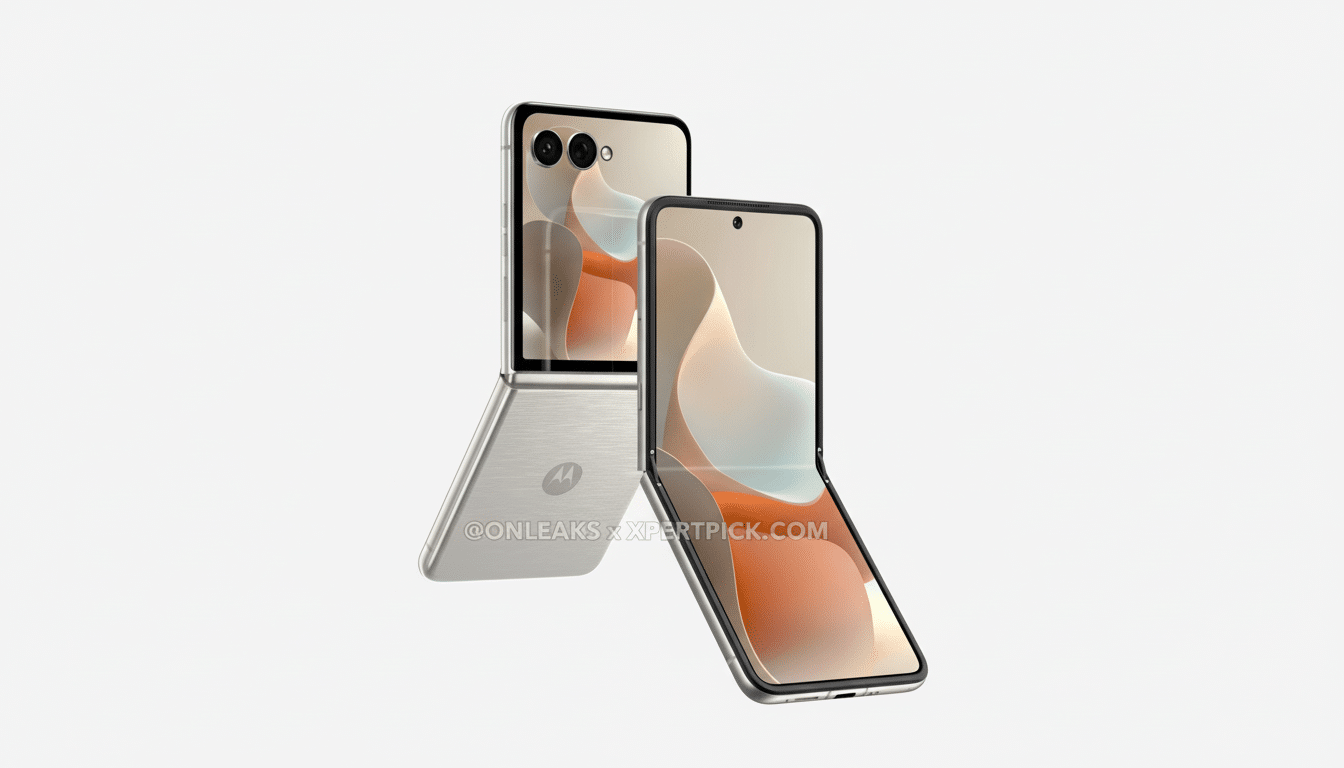
What stands out is the profile. While many foldable makers shave millimeters to tout the thinnest spec sheet, this Razr looks noticeably chunkier than the prior generation, which slimmed down to roughly 7.2mm when unfolded (excluding the camera bump). That added volume isn’t a step back—it’s likely a calculated investment in everyday usability.
What a Bigger Body Buys You in Battery and Performance
Battery is the headline benefit. The previous Razr Ultra already packed about 4,700 mAh—exceptional for a flip—and even a modest increase in chassis thickness can unlock several hundred additional milliamp-hours. For context, recent Samsung clamshells hover around 4,000 mAh, so a higher-capacity Razr would set the pace on endurance in this category.
Thermal headroom is another win. Next‑gen Snapdragon silicon can deliver big leaps in AI acceleration and graphics, but only if heat is managed. A slightly thicker frame allows for larger vapor chambers and heat spreaders, improving sustained performance and keeping frame temperatures in check during camera use, gaming, or prolonged navigation.
Charging and camera hardware also benefit from more space. Motorola has recently shipped clamshells with up to 45W wired and 15W wireless charging; extra internal volume could support higher wattage, a bigger wireless coil, or both. On the imaging side, larger sensors and brighter optics need physical depth. A few extra tenths of a millimeter can mean better light capture, improved low‑light results, and more stable lens modules.
Durability could quietly improve too. With more internal room for hinge components and seals, a thicker design may enhance longevity and resilience against particles. Samsung has pushed dust resistance with IP48 on recent Flip models; a sturdier Razr chassis could help close that gap or even match similar protections.

Displays and Usability on Larger Cover and Inner Screens
The leak points to an inner foldable panel around 7 inches and an outer screen near 4 inches—among the largest in the flip segment. That expansive cover display matters: it keeps quick tasks—maps, messaging, calls, music, payments—on the outside, reducing how often you need to open the phone and saving both time and battery.
Analyst firms like Display Supply Chain Consultants have tracked steady growth in cover display sizes and usage on flips, a trend driven by users who want fewer unfolds and more functionality at a glance. If Motorola holds steady on panel sizes while improving battery and thermals, the day‑to‑day experience could feel meaningfully more robust.
How It Stacks Up to Samsung’s Galaxy Z Flip 8 This Year
Samsung’s Flip line typically emphasizes polish, long software support, and strong durability credentials. If Motorola responds with class‑leading battery life, faster charging, and a more capable outer display, the Razr Ultra could offer a compelling alternative for power users who value stamina over extreme thinness.
Both brands are likely to lean on upgraded AI experiences, tighter app continuity between screens, and smoother multitasking. The difference may come down to trade‑offs: razor‑thin elegance versus a slightly thicker build that runs cooler, lasts longer, and shoots better in challenging light.
Outlook: What To Watch As Motorola Finalizes Razr Ultra
Official specs and pricing remain under wraps, but the design direction is clear. Watch for final battery capacity, charging wattage, ingress protection, and main sensor size as key tells of Motorola’s priorities. With clamshells accounting for roughly 50% of foldable shipments globally according to Counterpoint Research, a more practical Razr Ultra could resonate with buyers who want a flip that behaves like a no‑compromise flagship.
If the leak pans out, Motorola isn’t chasing the thinnest trophy—it’s chasing the best daily driver. In a maturing category, that might be the smarter win.

