


If you’re worried about addiction in teens, you’re not alone. Between vaping headlines, fentanyl fears, and rising anxiety, it can feel like teen substance use is spiraling. The reality is more nuanced: many traditional measures of teen substance use have stayed low or declined in recent years, but the risks haven’t disappeared—they’ve shifted.
Here’s what’s happening, why it can still feel like teen addiction is “everywhere,” and what to do if you’re concerned about a teen in your life.
- Teen substance use isn’t rising across the board—but the landscape has changed
- Why it feels like teen addiction is increasing
- Vaping and high-potency products changed the “visibility” of use
- The drug supply is riskier than it used to be
- Teen mental health strain can drive coping behaviors
- Does “not rising overall” mean addiction isn’t a concern?
- Signs a teen may be developing a substance problem
- What treatment looks like when a teen needs help
- A local Atlanta data note (and why date ranges matter)
- What’s the best next step if you’re worried?
- Worried about teen addiction—what would support look like right now?
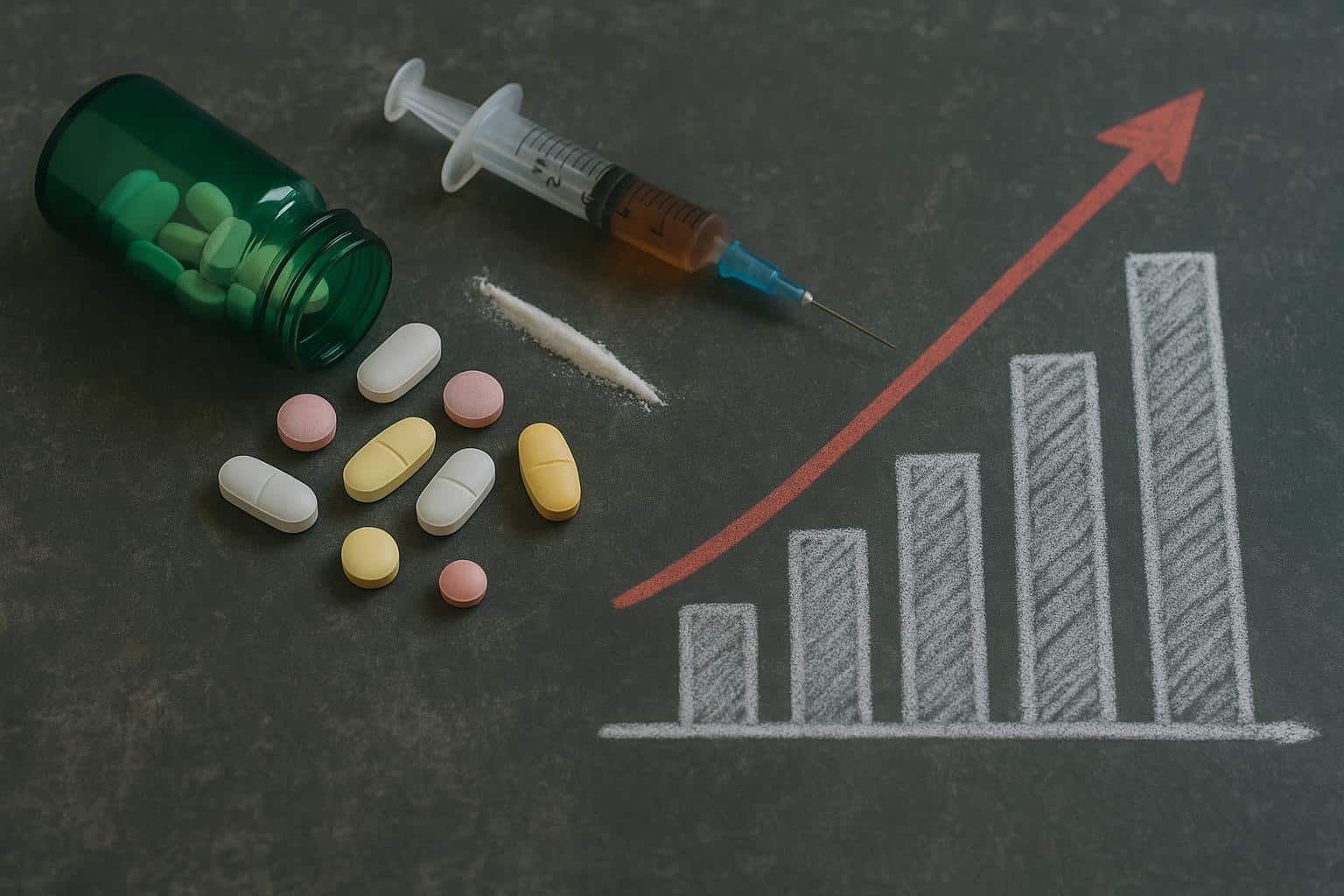
Teen substance use isn’t rising across the board—but the landscape has changed
National surveys show encouraging trends. The NIH’s Monitoring the Future study reported that most adolescent drug use remained low in 2024, with alcohol, nicotine vaping, and cannabis still the most commonly reported substances among teens, and overall levels generally holding steady or declining compared to recent years.
At the same time, the CDC’s Youth Risk Behavior Survey (YRBS) trend reporting highlights that teen health behaviors—including substance use—should be looked at alongside mental health and environmental stressors, because these issues interact in real life.
So, if overall use isn’t skyrocketing, why does it feel like teen addiction is on the rise?
Why it feels like teen addiction is increasing
Vaping and high-potency products changed the “visibility” of use
Even if fewer teens are using substances overall, nicotine vaping and high-potency cannabis products can lead to stronger effects, quicker dependence, and more noticeable changes in mood, sleep, and motivation. That can make the impact on families and schools feel more intense, even when fewer students are using.
The drug supply is riskier than it used to be
One of the most frightening changes isn’t the rate of teen use—it’s the risk per use. Counterfeit pills and contamination (including fentanyl exposure) mean experimentation can be more dangerous than in previous decades. This fuels justified fear, and it can make any teen substance use feel like an emergency.
Teen mental health strain can drive coping behaviors
Anxiety, depression, trauma, and social pressure can push teens toward substances as “self-medication.” YRBS reporting frames substance use alongside mental health trends for a reason: stress and coping behaviors often travel together.
Does “not rising overall” mean addiction isn’t a concern?
Not at all. A smaller percentage can still represent a large number of teens—and the teens who are using may be facing stronger substances, more intense stress, and more isolation than past generations.
Also, addiction isn’t only about how many people try substances. It’s about:
- how frequently someone uses
- whether they can stop
- whether their functioning is changing
- whether substances are becoming a coping tool
Signs a teen may be developing a substance problem
A single red flag doesn’t prove addiction. Patterns do. Watch for:
- Personality shifts: irritability, numbness, defensiveness, sudden mood swings
- Sleep changes: staying up all night, sleeping all day, “crashing” after school
- School changes: slipping grades, missing assignments, skipping classes
- Secretive behavior: locked doors, deleted texts, new friend groups they won’t discuss
- Motivation drop: quitting sports, hobbies, or social plans they used to enjoy
- Physical clues: red eyes, frequent headaches, persistent cough, unexplained nausea
If you’re seeing multiple changes at once, it’s reasonable to seek an evaluation—early.
What treatment looks like when a teen needs help
A common misconception is that treatment equals “sending them away.” In reality, many teens benefit from outpatient levels of care that allow them to live at home while receiving structured support.
For example, The Berman Center describes outpatient behavioral health programs in Atlanta designed for adolescents and adults seeking support for mental health and substance use disorders, including structured options like IOP/PHP programming.
The goal is to stabilize the teen, build coping skills, address underlying mental health issues, and repair routines—without waiting for a crisis.
A local Atlanta data note (and why date ranges matter)
SAMHSA provides a metro-area report for Atlanta–Sandy Springs–Marietta, GA that includes substance use and mental health estimates based on combined NSDUH results for 2005–2010 (published in 2014).
That report can be useful for historical context, but it’s not a snapshot of teen trends today—so when reviewing “local” data, always check the collection years.
What’s the best next step if you’re worried?
You don’t need to prove addiction to ask for help. If your gut says something is off, start with:
- a calm conversation (focus on observable changes, not accusations),
- a professional screening/assessment, and
- a plan that addresses both substance use and mental health.
Worried about teen addiction—what would support look like right now?
If you’re seeing signs that substance use or mental health symptoms are disrupting a teen’s life, consider exploring structured outpatient help before things escalate. You can learn more about programs and support options at The Berman Center.

