


Introduction: Snow Control in the Canadian Industrial Environment
Canada faces extended winter seasons with consistent snowfall that affects transportation, warehousing, and logistics operations. Snow accumulation in yards, access roads, and loading zones can disrupt workflows and create safety hazards. For warehouse managers and equipment operators, reliable snow removal is essential to maintain daily operations.
A seventy two inch three point hitch snow blower is commonly used in industrial and agricultural environments to manage heavy snow. Mounted on tractors, this type of equipment allows operators to remove and discharge snow efficiently, especially in areas where piling is not practical.
- Introduction: Snow Control in the Canadian Industrial Environment
- Technical Overview and Use Cases
- Efficiency, Safety, and Productivity
- Technical Requirements and Capability Considerations
- Factors Affecting Performance and Effectiveness
- Safety Considerations and Best Practices
- Equipment Types and Related Tools
- Advantages and Limitations
- Real World Application Example
- Conclusion and Future Trends
Technical Overview and Use Cases
Basic Working Principle
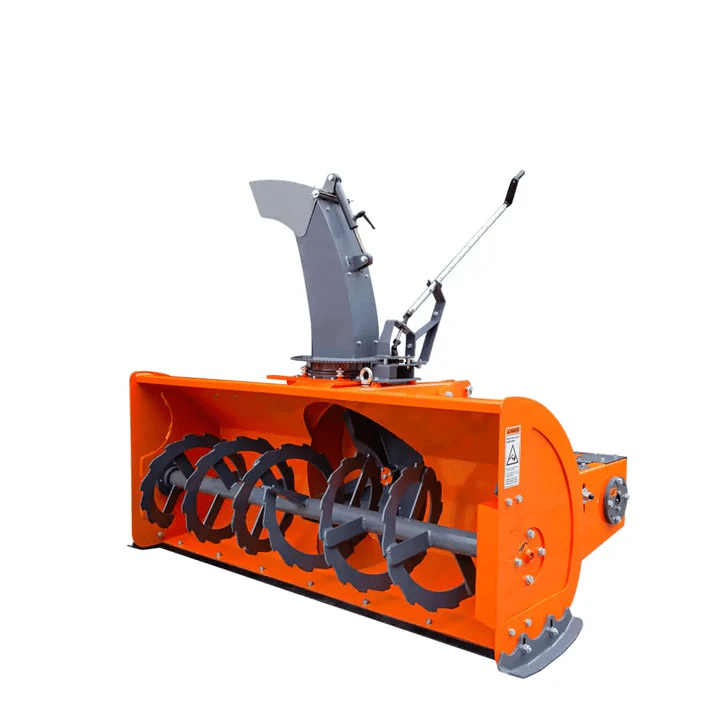
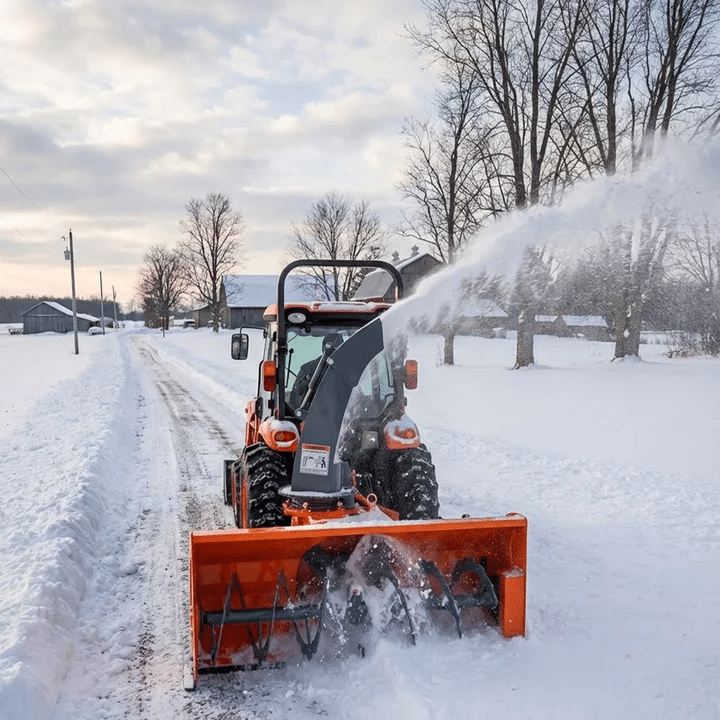
A three point hitch snow blower attaches to a tractor using a standard mounting system. It operates through a power take off shaft that drives an auger and impeller system. The auger collects snow and feeds it into the impeller, which then discharges it through a rotating chute.
Typical Use Cases
This type of snow blower is used in:
- Large warehouse yards
- Industrial access roads
- Distribution center perimeters
- Rural logistics facilities
Efficiency, Safety, and Productivity
Snow removal efficiency directly affects productivity. Blocked routes can delay deliveries and increase operational costs. Unlike pushing equipment, a snow blower removes snow by relocating it away from the work area, reducing the need for repeated handling.
Key productivity benefits include:
- Continuous snow clearing without buildup
- Reduced labor requirements
- Improved access to critical zones
Safety also improves when surfaces are cleared quickly and evenly, reducing slip and collision risks.
Technical Requirements and Capability Considerations
Before selecting a three point hitch snow blower, several technical aspects must be considered:
- Tractor horsepower compatibility, typically between twenty five and ninety horsepower
- Mounting category such as category one or category two
- Impeller diameter and rotational speed
- Chute rotation range for directional control
Operators must understand how to match equipment capacity with snow conditions to maintain effective performance.
Factors Affecting Performance and Effectiveness
Performance depends on multiple factors:
- Snow depth and moisture content
- Ground surface condition
- Travel speed of the tractor
- Maintenance of auger and impeller components
Wet and dense snow requires slower operation to prevent clogging. Uneven terrain may affect the consistency of snow intake.
Safety Considerations and Best Practices
Safe operation of a snow blower requires strict adherence to procedures:
- Inspect equipment before each use
- Keep clear of moving parts such as augers and impellers
- Use proper shielding and guards
- Ensure that bystanders remain at a safe distance from discharge areas
- Operate at controlled speeds in low visibility conditions
Operators should also be trained in emergency shutdown procedures and aware of potential blockages during operation.
Equipment Types and Related Tools
Snow management systems often include a range of equipment:
- Three point hitch snow blowers for removal and discharge
- Skid steer loaders with pushers for bulk movement
- Snow plows for initial clearing
- Salt spreaders for ice control
Each tool contributes to a complete snow management strategy, depending on site layout and operational needs.
Advantages and Limitations
Advantages include:
- Ability to remove snow rather than relocate it nearby
- Effective performance in deep snow conditions
- Reduced need for large storage areas for snow piles
Limitations include:
- Dependence on tractor compatibility
- Higher maintenance requirements due to moving parts
- Potential for clogging in certain snow conditions
Real World Application Example
A logistics hub in Alberta adopted a structured snow management system using TMG Industrial three point hitch snow blowers for clearing access roads and yard perimeters. By combining snow blowing with plowing, the facility maintained clear routes even during heavy snowfall. This approach reduced downtime and improved delivery schedules during peak winter months.
Conclusion and Future Trends
Three point hitch snow blowers play a critical role in industrial snow removal, especially in environments where snow must be fully removed rather than pushed aside. Their effectiveness depends on proper equipment selection, operator training, and maintenance practices.
Future developments in this field are expected to include improved material durability, enhanced chute control systems, and integration with data driven planning tools. As winter operations continue to demand efficiency and safety, snow blowers will remain a key component of industrial snow management strategies.

