


In today’s global, digital-first media landscape, subtitles are no longer just an accessibility feature—they are a core component of content delivery. From OTT platforms and social media videos to corporate communications and e-learning modules, subtitles help bridge language barriers, enhance comprehension, and improve engagement.
However, when subtitles are incorrect, the consequences can be far-reaching. The incorrect subtitles impact is not limited to viewer annoyance—it can directly affect user trust, engagement, and ultimately, brand perception.
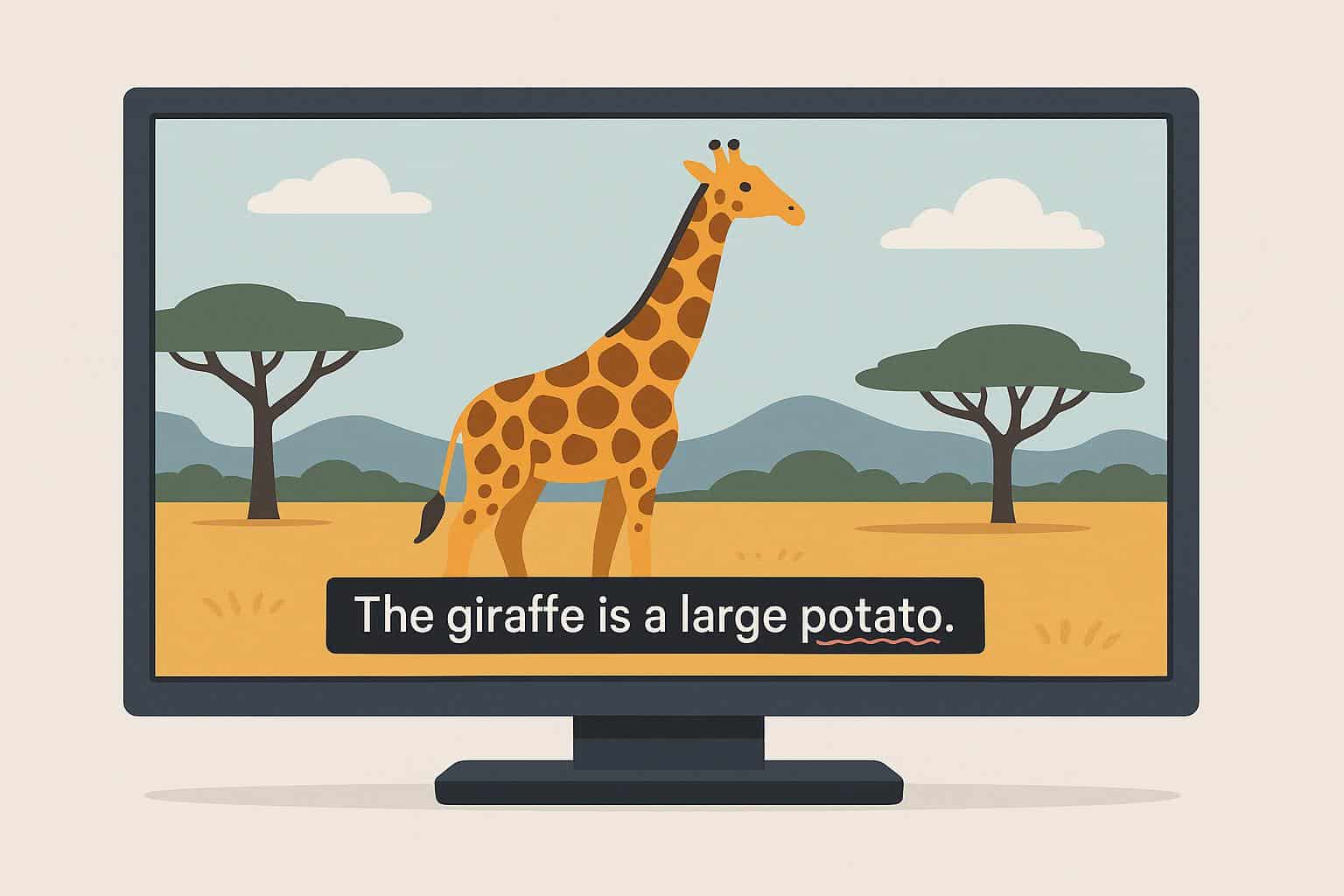
Why Subtitles Matter More Than Ever?
With the rise of content consumption on mobiles and muted autoplay on Instagram, LinkedIn, and YouTube, subtitles have become the primary medium through which the message is conveyed. Additionally, global audiences rely on subtitles for language accessibility, making them essential for expanding the content reach.
Given this dependence, even small errors in subtitles can disrupt the viewer’s understanding and experience.
Subtitles are expected to be precise, synchronized, and contextually accurate. When they fail to meet these expectations, viewers notice immediately.
Errors such as mistranslations, timing mismatches, grammatical mistakes, or incorrect speaker attribution can distort the intended message. For example, a mistranslated phrase in a corporate video can alter the meaning entirely, leading to misinformation. In entertainment content, poorly timed subtitles can ruin comedic timing or emotional depth.
Ultimately, subtitles are not just text—they are an extension of storytelling. When they fail, the story fails.
Caption Accuracy Problems: More Than Just Typos
Many assume subtitle issues are limited to spelling or grammar mistakes. However, caption accuracy problems go much deeper.
Some common types include:
- Contextual inaccuracies: Words may be technically correct but contextually wrong.
- Timing errors: Subtitles appearing too early or too late.
- Speaker misidentification: Incorrect attribution in dialogues.
- Cultural misinterpretation: Idioms or phrases not adapted appropriately for different audiences.
- Technical formatting issues: Line breaks, readability, and font inconsistencies.
These problems are particularly critical in professional content such as medical videos, legal training modules, or corporate communications, where accuracy is non-negotiable.
For example, in healthcare content, a small caption error could lead to misunderstanding of medical advice. In corporate branding videos, it may dilute the intended message or tone.
Subtitle Errors and Viewer Experience
One of the immediate consequences of subtitle inaccuracies is their effect on viewer engagement.
When viewers encounter frequent errors, their cognitive load increases. Instead of passively consuming content, they are forced to interpret or correct what they see. This disrupts immersion and can lead to frustration.
Here’s how subtitle errors negatively influence viewer experience:
- Break in immersion: Poor synchronization or incorrect text distracts viewers from the narrative.
- Loss of trust: Viewers begin to question the credibility of the content.
- Reduced comprehension: Especially for non-native speakers, inaccurate subtitles can make content difficult to understand.
- Viewer drop-off: Frustration often leads to abandonment, particularly in short-form content.
In a competitive content environment, where attention spans are already limited, such disruptions can be costly.
The Ripple Effect on Brand Perception
Subtitles are often an overlooked touchpoint in brand communication, but they play a significant role in shaping how a brand is perceived.
When audiences encounter caption accuracy problems, they subconsciously associate the lack of quality with the brand itself.
Here’s how incorrect subtitles influence brand perception:
1. Perceived Lack of Professionalism
Frequent subtitle errors suggest poor quality control. For brands positioning themselves as premium or detail-oriented, this can be particularly damaging.
2. Reduced Credibility
If the subtitles are inaccurate, viewers may question the accuracy of the entire content, including the information being presented.
3. Negative Emotional Response
Frustration caused by subtitle errors can translate into negative feelings toward the brand, even if the core content is valuable.
4. Global Misrepresentation
For brands targeting international audiences, incorrect translations can lead to cultural insensitivity or miscommunication, harming brand reputation in specific regions.
Real-World Implications
The incorrect subtitles impact is not just theoretical—it has real business consequences.
- Lower engagement rates: Viewers are less likely to watch, share, or interact with the content that is difficult to follow.
- Reduced accessibility compliance: Poor subtitles defeat the purpose of accessibility, potentially excluding hearing-impaired audiences.
- Decreased ROI on content: High-quality video production loses its value if the subtitles undermine the message.
- Brand trust erosion: Repeated errors can weaken long-term audience trust.
In industries where content is a key marketing tool—such as healthcare, education, and media—these effects can significantly impact growth.
Preventing Subtitle Errors: A Strategic Approach
Given the high stakes, ensuring subtitle accuracy should be a strategic priority rather than an afterthought.
Here are some essential best practices:
1. Invest in Quality Control (QC)
Automated tools can speed up subtitle generation, but human review remains crucial for contextual accuracy.
2. Leverage AI—but wisely
AI-powered captioning tools are improving rapidly, but they should be complemented with professional QC workflows to avoid caption accuracy problems.
3. Focus on Context, Not Just Words
Subtitles should capture tone, intent, and cultural nuances—not just literal translations.
4. Ensure Proper Timing and Formatting
Readability is as important as accuracy. Proper segmentation, timing, and display duration enhance viewer experience.
5. Test with Real Audiences
Before publishing, test content with a sample audience to identify potential issues in comprehension or flow.
The Future of Subtitle Quality
As content consumption continues to evolve, the demand for high-quality subtitles will only increase. With advancements in AI and cloud-based QC solutions, achieving near-perfect accuracy is becoming more feasible.
However, technology alone cannot solve the problem. A combination of automation, human expertise, and robust QC processes is essential to minimize the incorrect subtitles impact and ensure a seamless viewer experience.
Conclusion
Subtitles are no longer a secondary element—they are central to how content is consumed and understood. The relationship between subtitle errors and viewer experience is direct and undeniable. Even minor caption accuracy problems can disrupt engagement, distort messaging, and damage brand perception.
For brands and content creators, the takeaway is clear: Invest in subtitle accuracy.
In a world where every detail contributes to audience perception, getting subtitles right can be the difference between content that connects and content that fails.

