


Choosing sunglasses can be surprisingly easy to get wrong. You might find a pair that looks great in the mirror, only to discover that it slips down your nose, feels heavy after an hour, or does little to help with glare on a sunny day.
Sunglasses should do more than complete an outfit. The right pair can make bright environments more comfortable, reduce distracting reflections, and help protect your eyes from ultraviolet radiation.
- Put UV Protection First
- If You Wear Glasses, Think About Prescription Sunglasses
- Don’t Overlook Glare
- Get the Fit Right
- Match Your Sunglasses to Your Routine
- Lens Color Is About More Than Appearance
- Keep Sunglasses Handy All Year
- Think About Sunglasses When Driving
- Think About Lens Material
- Don’t Forget About Style
- Look After Your Sunglasses—and Your Eyes
- Finding the Right Pair
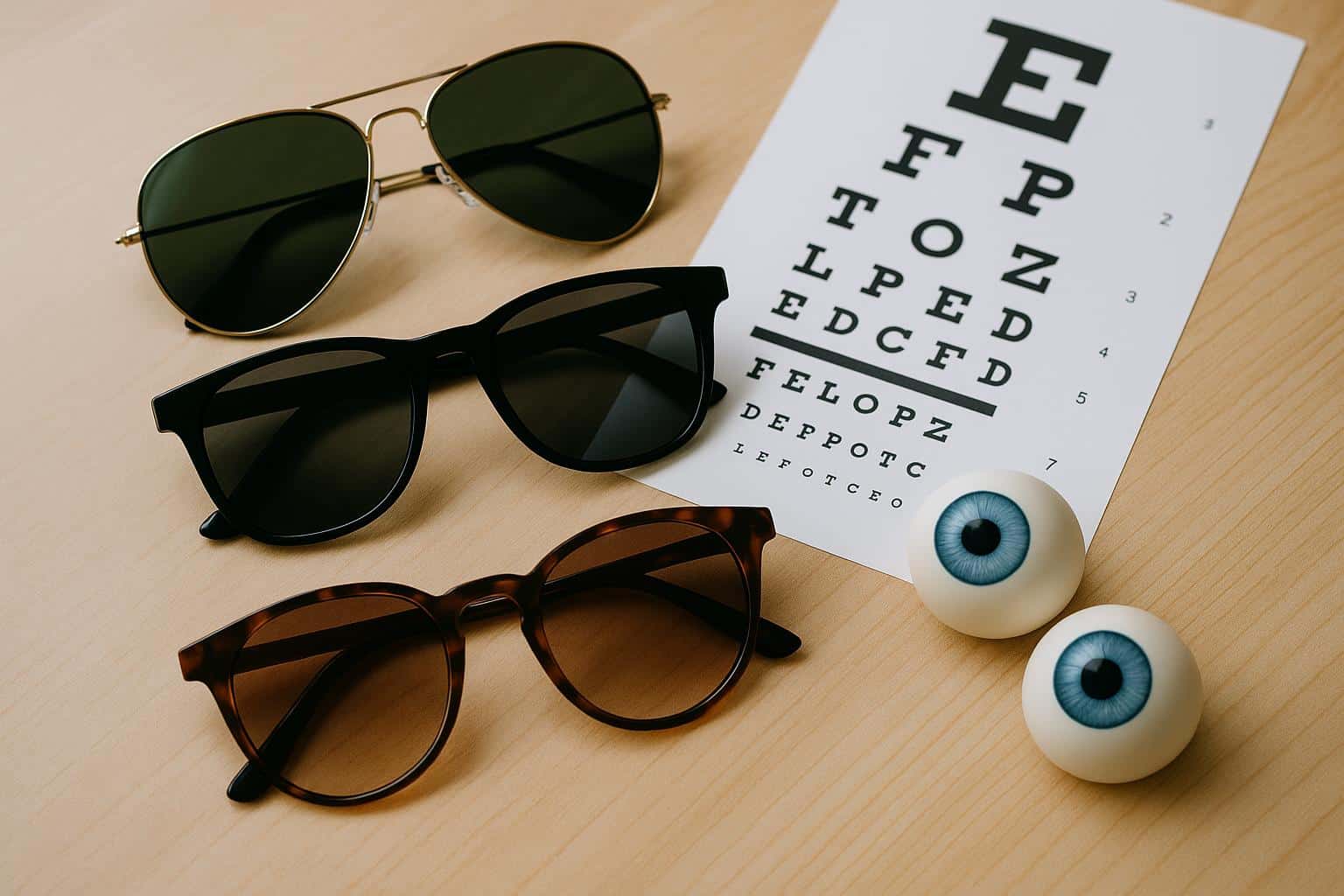
The best choice depends on more than appearance. Your daily routine, prescription, lens features, frame fit, and the conditions in which you usually wear sunglasses all deserve some thought.
Whether you spend most of your time commuting through the city, driving, traveling, or enjoying the outdoors, a little consideration before buying can help you find a pair you will actually want to wear.
Put UV Protection First
Before thinking about frame shape or lens color, check the level of UV protection. Ultraviolet radiation is invisible, so the appearance of a lens does not tell you how well it protects your eyes.
Look for sunglasses that block both UVA and UVB rays, as proper UV protection helps shield your eyes from harmful ultraviolet exposure. Labels such as “UV400” or “100% UV protection” can also be useful when comparing different options.
Lens darkness, however, should not be confused with UV protection. A very dark lens may reduce brightness without necessarily providing better UV filtering. Sun exposure can also be intense in places you might not expect, since snow, water, and sand can reflect sunlight back toward your eyes.
When choosing between two pairs, focus on their stated UV protection rather than simply picking the darker lens.
If You Wear Glasses, Think About Prescription Sunglasses
For people who need vision correction, wearing sunglasses can sometimes feel like an extra chore. You leave the house wearing your regular glasses, realize the sun is brighter than expected, and suddenly have to decide whether to carry a second pair or put up with the glare.
Prescription sunglasses remove much of that inconvenience by combining vision correction with sun protection.
That can make a noticeable difference in everyday situations. You can drive during the day, walk around a new city, sit outside at lunch, or spend an afternoon exploring without constantly switching between glasses.
When ordering prescription sunglasses, make sure your prescription is current. It is also important to check the lenses’ UV protection rather than assuming that every pair of prescription sunglasses offers the same level of protection.
Fit deserves attention as well. A frame that pinches behind your ears or constantly slides down your nose can become irritating surprisingly quickly.
Don’t Overlook Glare
Bright sunlight is only part of the problem. Reflected light can be just as uncomfortable, whether you are driving on a sunny road, walking beside a lake, or spending an afternoon at the beach. Snow, water, and glass buildings can all bounce light toward your eyes and create distracting glare.
Polarized lenses can help in these situations by reducing reflected glare and making bright environments more comfortable. Polarized lenses can improve visual comfort, especially when you spend a lot of time outdoors.
It is important, however, not to confuse polarization with UV protection. Polarized lenses can reduce glare, but that does not automatically mean they provide adequate UV protection. If you want both benefits, check that the sunglasses offer the appropriate UV protection as well as polarization.
Get the Fit Right
A comfortable fit can be the difference between sunglasses you wear every day and sunglasses that spend most of their time in a drawer.
The frame should sit comfortably on your nose without constantly sliding forward. The temples should feel secure without squeezing the sides of your head, and your ears should not feel pressured after extended wear.
Coverage matters too. Frames that leave large gaps around the sides may allow more sunlight to reach your eyes. Larger or wraparound styles can provide additional coverage, which can be useful for people who spend long periods outside.
That does not mean you need the biggest frame you can find. Face shape, personal taste, comfort, and intended use all matter.
Shopping online requires a little extra attention. Check the listed frame measurements and compare them with a pair you already own. If your current sunglasses fit well, their measurements can give you a useful starting point when choosing another frame.
Match Your Sunglasses to Your Routine
The best sunglasses are not necessarily the ones with the most features. They are the ones that fit naturally into your everyday life.
If you spend most of your day walking between meetings, running errands, or commuting, a lightweight frame that stays comfortable for hours may be more useful than a specialized sports design. If you spend weekends outdoors, durability and a secure fit may matter more. Frequent drivers may benefit from lenses that reduce reflected glare, while travelers might prefer a versatile pair that is easy to pack and comfortable to wear all day.
Your environment can also affect how comfortable your eyes feel. Long hours outdoors, bright conditions, and dry air can all contribute to eye discomfort, so understanding what can affect eye comfort can help when choosing everyday eyewear.
Rather than choosing sunglasses simply because they are popular or look good on someone else, choose a pair that works for your routine. When your sunglasses are comfortable, practical, and suited to the places you actually go, you are much more likely to wear them consistently.
Lens Color Is About More Than Appearance
Colored lenses can completely change the look of a pair of sunglasses, but tint should not be confused with protection.
Gray lenses are popular because they reduce brightness without dramatically changing the way colors appear. Brown and amber lenses create a warmer view and can improve contrast in some conditions. Other colors are often chosen because people simply like the way they look.
There is nothing wrong with choosing a lens color based on style or preference. Just make sure that choice comes after checking the important specifications.
A dark tint does not automatically provide better UV protection. Think of lens color as a matter of visual comfort and personal preference, while UV protection is a separate feature that needs to be verified.
Keep Sunglasses Handy All Year
Sunglasses often get packed away when summer ends, but there is no real reason to treat them as a seasonal accessory.
A bright winter day can be just as uncomfortable for your eyes as a summer afternoon, particularly when sunlight reflects off snow. Spring and autumn can bring plenty of clear, bright days too.
One of the easiest ways to remember your sunglasses is to keep them where you are likely to need them. A case in your bag, car, or near the front door can save you from realizing halfway through your day that you left them at home.
For prescription wearers, having prescription sunglasses available can make this habit even easier. You can step outside without having to choose between seeing clearly and dealing with bright sunlight.
Think About Sunglasses When Driving
Daytime driving can expose you to more glare than you might expect. Sunlight can reflect off the road, vehicle windows, mirrors, and other surfaces, making certain parts of the journey uncomfortable.
A suitable pair of sunglasses can make bright conditions easier to manage. Polarized lenses may be particularly useful when reflected glare is a regular problem.
Still, the priority should always be clear vision. Sunglasses that are excessively dark can make it harder to see in low-light conditions, and some lenses may interfere with the visibility of digital displays.
For that reason, choose sunglasses according to when and where you drive. A pair that works beautifully on a bright afternoon may not be appropriate for every lighting condition.
Think About Lens Material
Lens material is another detail that is easy to overlook when shopping, especially when most of the attention goes toward frame design.
Polycarbonate lenses are lightweight and resistant to impact, which makes them a practical choice for active lifestyles. Trivex offers another lightweight option with good impact resistance. Traditional plastic lenses can also work well for everyday use, depending on your prescription and preferences.
The right material depends on what you need from your sunglasses.
For example, someone who spends most of the day at a desk may have very different priorities from someone who spends weekends cycling, hiking, or playing outdoor sports.
If you have a stronger prescription, an optical professional can also help you consider factors such as lens thickness, weight, and appearance before you make a decision.
Don’t Forget About Style
Practical features may come first, but there is no reason your sunglasses cannot look good too.
You are likely to wear them in public, so it is natural to care about frame shape, color, proportions, and how they work with the rest of your wardrobe.
The key is finding a pair that balances appearance with everyday usability. A stylish frame that constantly slides down your face will probably become frustrating. Likewise, a technically excellent pair that you dislike looking at may spend more time in its case than on your face.
Choose something that feels like you. When a pair is comfortable and suits your personal style, wearing it regularly becomes much easier.
Look After Your Sunglasses—and Your Eyes
Once you find the right pair, taking care of it can help keep it useful for longer.
Dust, fingerprints, and smudges can make bright conditions more distracting, while scratches may interfere with your view. Clean your lenses with a microfiber cloth rather than using clothing or other rough materials that could damage the surface.
When you take your sunglasses off, put them in a protective case instead of dropping them into a bag with keys, chargers, or other objects.
Your eyes also deserve attention beyond choosing the right eyewear. If you notice persistent blurred vision, unusual sensitivity to light, problems seeing at night, or another change in your vision, do not assume that different sunglasses will solve it. A professional eye assessment can help identify whether there is an underlying issue that needs attention.
Sunglasses are useful for protecting your eyes and improving comfort outdoors, but they are not a substitute for professional eye care.
Finding the Right Pair
Buying sunglasses does not have to involve comparing every feature on every pair you see. Start with the things that genuinely affect your daily experience.
Look for reliable UV protection, choose a frame that feels comfortable, and consider polarization if glare is a regular problem. If you need vision correction, prescription sunglasses can save you from constantly switching between regular glasses and sunglasses.
Once those basics are covered, you can focus on the details that make the pair yours—whether that means a classic frame, a bold color, a modern shape, or something understated.
The best sunglasses are ultimately the ones you will actually wear. When protection, clear vision, comfort, and personal style come together, sunglasses become much more than an accessory. They become a practical part of everyday life.

