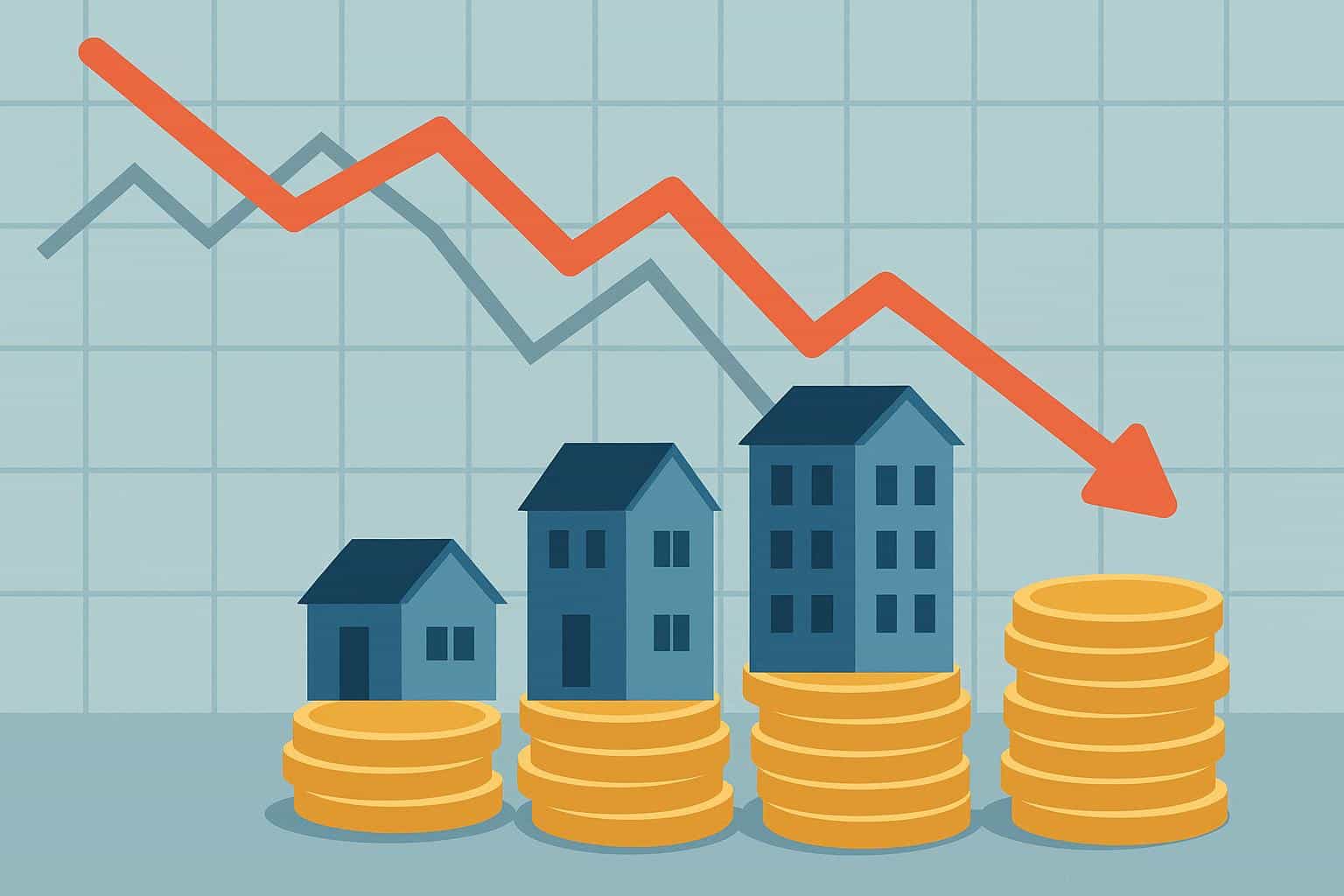
Some people think that property prices are only determined by location alone. However, it is not true. While location plays a major role, broader economic conditions generally decide if prices rise rapidly, remain stable, or decline. From interest rates and inflation to employment trends and government policies, the economy impacts how people buy, sell, and invest in real estate. Hence, understanding these economic forces helps homeowners, buyers, and investors make smarter, informed, and more confident decisions.
The Strong Link Between the Economy and Real Estate
“The real estate market shows the overall health of the economy. When the economy is growing, people feel positive about their financial future. This optimism motivates spending, borrowing, and long-term investments like buying property. Increased demand naturally results in higher property prices.
On the other hand, during economic slowdowns, uncertainty dominates. People delay big financial commitments, banks tighten lending, and investors become cautious. As demand falls, property prices either stagnate or decline, showing how closely real estate follows economic momentum.” Jake Miakota, CEO at Subdivisions
Interest Rates: The Biggest Driver of Property Prices
Interest rates are one of the most dominant economic factors affecting property prices. When central banks lower interest rates, borrowing gets cheaper. Lower mortgage payments allow buyers to afford higher-priced properties, which increases demand across housing markets.
When interest rates increase, affordability decreases. Even small rises can considerably impact monthly mortgage payments, pushing many buyers out of the market. Reduced demand often slows price growth. Also, it may even trigger price corrections in overheated markets.
Inflation and Its Complex Effect on Real Estate
Inflation impacts property prices in both positive and negative ways. Moderate inflation generally leads to rising property values, as construction materials, labour costs, and land prices increase. Real estate is normally seen as a hedge against inflation and attracts investors during inflationary periods.
Though high inflation decreases purchasing power. When living expenses rise faster than incomes, buyers struggle to save for down payments or qualify for mortgages. It can weaken housing demand despite rising property values on paper.
Employment Levels and Job Market Stability
“Employment plays an important role in shaping housing demand. A strong job market with stable employment and wage growth gives people the confidence to buy homes. Additionally, higher incomes improve loan eligibility and increase competition among buyers, pushing prices upward.
Increasing unemployment or job insecurity has the opposite effect. Fewer people qualify for mortgages, and some homeowners may be forced to sell. Increased supply combined with lower demand often leads to declining property prices.” John Swann, Founder of John Buys Your House
Wage Growth and Household Income
Beyond employment, wage growth directly impacts affordability. When salaries rise consistently, households can manage higher mortgage payments and afford better properties. This leads to stronger demand, particularly in urban and high-growth areas.
Besides, stagnant wages limit purchasing power, even if employment levels stay stable. When income growth fails to keep pace with rising property prices, markets ultimately cool as affordability becomes a challenge.
Economic Growth and Investor Activity
Economic growth fuels investor confidence in real estate markets. Therefore, expanding economies attract domestic and international investors looking for stable returns. Infrastructure development, commercial expansion, and population growth all surge the demand for residential and commercial properties.
During economic downturns, investor activity slows. Uncertainty lessens risk appetite, and investors often wait for clearer signals before entering the market. Decreased investment can slow price appreciation, especially in luxury and commercial real estate segments.
Supply, Demand, and Construction Trends
Economic conditions strongly impact construction activity. During periods of economic expansion, developers are way more willing to invest in new projects. It is because of the strong demand and easier access to financing.
When the economy is weaker, construction slows as developers avoid risk. However, limited supply can sometimes support prices; prolonged downturns often reduce demand more than supply. Hence, it results in oversupply in certain markets and falling prices.
Government Policies and Economic Interventions
Government policies can considerably shape property prices. Low-interest housing loans, tax benefits, and first-time consumer incentives stimulate demand and push prices upward.
On the contrary, stricter lending regulations, higher property taxes, or reduced housing subsidies can slow the market. Plus, economic reforms, zoning laws, and development regulations also influence long-term price trends.
Currency Strength and Foreign Investment
In many markets, foreign investment plays a considerable role in property pricing. When a country’s currency weakens, property becomes more affordable for foreign buyers. Hence, it increases the demand and drives prices higher.
A stronger currency may decrease international interest. Particularly, during global economic uncertainty. As an outcome, luxury and investment-focused property segments are often the most influenced by currency fluctuations.
Consumer Confidence and Buying Behaviour
Consumer confidence is a powerful factor. Yet, it is often an overlooked factor. When people feel secure about their financial future, they are more willing to take on long-term commitments like buying property. Negative economic news, political uncertainty, or global instability can reduce confidence, even if economic indicators remain stable. Fear and hesitation slowed buying activity, thus, it cools the property market without any major structural changes.
Urbanisation and Economic Migration
Economic opportunities drive migration patterns, which directly impact the property prices. Cities with growing industries, better infrastructure, and higher wages attract workers, which increases housing demand and pushes prices upward. Regions facing economic decline generally experience population outflows. As demand decreases, property prices in these areas may stagnate or decline, regardless of national economic performance.
Recessions and Property Market Adjustments
Generally, recessions result in property market corrections instead of total collapses. Reduced demand, tighter credit, and cautious investors slow price growth. Plus, it may cause temporary declines. Historically, property markets tend to recover after recessions, especially in economically resilient areas. Buyers with long-term perspectives often find opportunities during declines when prices are more negotiable.
Long-Term Trends vs Short-Term Fluctuations
While economic conditions result in short-term volatility, property prices generally rise over the long term. Population growth, urban expansion, and limited land supply support gradual appreciation.
However, short-term economic cycles matter for timing. Buying during economic recovery or stable growth phases often leads to better long-term returns than buying at peak economic highs.
How Buyers Can Navigate Economic Changes
When you understand economic signals, it helps you make smarter decisions. Monitoring interest rates, employment trends, and government policies allows buyers to evaluate market conditions more accurately. Instead of reacting emotionally to market hype or fear, informed buyers focus on affordability and long-term value. Plus, they also focus on economic fundamentals before committing to a purchase.
What Property Investors Should Watch
Investors must pay close attention to economic indicators like inflation trends, GDP growth, and currency movements. These elements influence rental demand, capital appreciation, and overall returns. Diversifying investments across locations and property types can help decrease economic risk. Hence, investors who understand economic cycles are better positioned to protect and grow their portfolios.
Final Thoughts
Economic conditions play a defining role in shaping property prices. Moreover, interest rates, inflation, employment levels, government policies, and consumer confidence all interact to influence real estate demand and value. However, markets may fluctuate in the short term; understanding these economic forces enables buyers and investors to make informed, confident decisions.
Additionally, real estate is not just about buildings and land. Rather, it is a reflection of economic health and human behaviour. When you stay informed about economic trends, you can navigate property markets more wisely and build lasting wealth over time.
Kathlyn Jacobson is a seasoned writer and editor at FindArticles, where she explores the intersections of news, technology, business, entertainment, science, and health. With a deep passion for uncovering stories that inform and inspire, Kathlyn brings clarity to complex topics and makes knowledge accessible to all. Whether she’s breaking down the latest innovations or analyzing global trends, her work empowers readers to stay ahead in an ever-evolving world.