


The term “hit and run” doesn’t really appear in the official books, but there is a law – N.C. General Statue § 20-166 – that focuses on the “duty to stop” and “furnishing information”.
It’s very important to understand these rules because the consequences of not following them can take your simple ticket to a permanent felony record. Don’t leave the scene no matter the situation. It can be a minor fender bender or a more serious collision, stay where you are until the police get there.
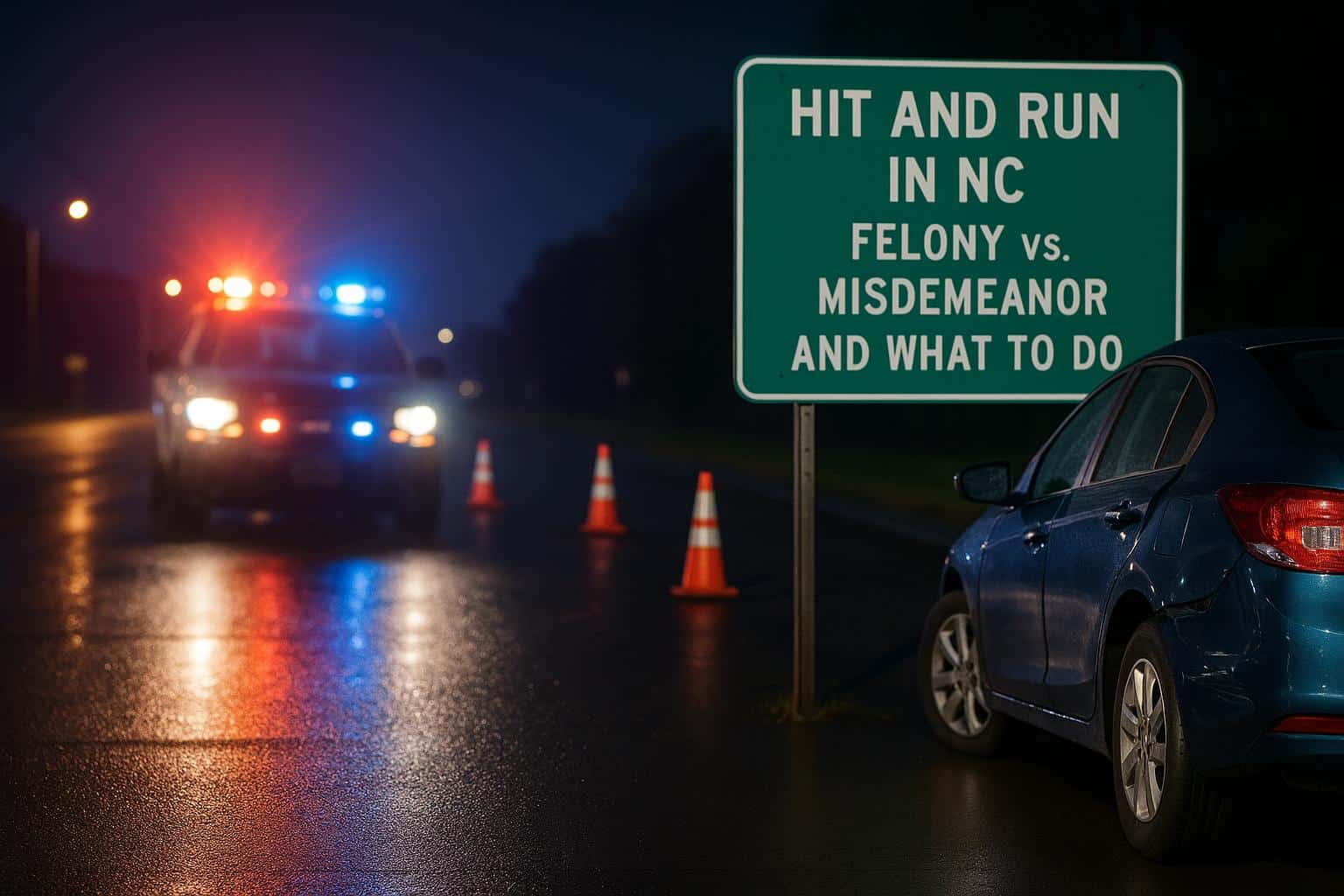
1. Your Legal Duties at the Scene
If you were involved in an accident, you are required to do three things no matter who’s fault it is.
- Stop Immediately: Bring your vehicle to a halt at the scene or as close as possible without interfering with the traffic.
- Remain at the Scene: Stay until law enforcement authorizes you to leave, unless you need to leave to see a doctor or call the police (in which case you must return promptly).
- Provide Information: Exchange your name, address, driver’s license number, and vehicle registration with the other parties involved.
Note on Unattended Property: If you hit a parked car or a stationary object (like a mailbox) and can’t find the owner, leave a note with your contact information and report the incident to the nearest police department within 48 hours.
2. Misdemeanor vs. Felony Charges
The outcome of the accident will dictate the type of charges you will get. Here’s a table comparison between misdemeanor vs felony charges for you to get a better idea about it.
| Scenario | Charge Level | Potential Penalty |
|---|---|---|
| Property Damage Only | Class 1 Misdemeanor | Up to 120 days in jail and fines. |
| Personal Injury | Class H Felony | 4 to 25 months in prison; mandatory license revocation. |
| Serious Injury or Death | Class F Felony | 10 to 41 months in prison; mandatory license revocation. |
3. The “Reportable Accident” Threshold
In North Carolina, you are legally required to report an accident to the police immediately if it meets any of the following criteria:
- There is any injury or death.
- Total property damage appears to be $1,000 or more.
- A vehicle is seized for an impaired driving offense.
With modern vehicle sensors and high repair costs, even a “minor” dent often exceeds the $1,000 mark. When in doubt, call the police to ensure a DMV-349 crash report is filed.
4. Why Fault Doesn’t Excuse Leaving
In North Carolina there is a rule called “Pure Contributory Negligence”. This rule means that in case of an accident, if you are at fault even 1%, you might be stopped from recovering any damages from the other driver.
This is why so many people have the instinct of leaving the accident if they think they are even a little bit at fault. But this is considered a criminal act. You could be 0% at fault and get a felony charge if you didn’t stop.
5. What to Do If You Are a Victim
If the other driver flees, your actions are critical for both your safety and your future insurance claim:
- Don’t Chase: Do not follow the fleeing vehicle. This will lead to reckless driving and dangerous situations on the road.
- Document Everything: One of the most important things to do is to get their license plate number, make, model, and color.
- Check for Cameras: Take a look around to see if there are any witnesses who recorded the accident. You can also look for security cameras from nearby shops.
- Use Your UM Coverage: In NC, there is a type of insurance called Uninsured Motorist (UM) coverage and it is often used to pay for damages when the other driver cannot be identified.
Protect Your Future After a Collision
Accidents are scary moments and in these moments some people decide to leave the scene due to fear or not being able to think straight on the spot. If you got involved in an accident, don’t leave the scene, because this split-second decision can turn a simple insurance claim into a bigger issue that can affect your life severely due to the legal battle you will have to deal with. The law in NC is clear: you should stop no matter who’s fault it is. Stay on the spot, exchange your contact information and report the incident. This is how you protect your driving privileges and your freedom.
If you’re facing charges and aren’t sure of your next steps, reach out to an experienced traffic attorney for help to navigate the process.
Author Bio
Grant S. Scheuring at Scheuring Law, PLLC is a dedicated traffic attorney handling misdemeanor, felony, DWI, and traffic related matters in the following counties: Granville, Franklin, Warren, Vance and Person County. With years of experience navigating the complexities of N.C.G.S. § 20-166 and the DMV-349 reporting process, he helps drivers protect their records and their right to the road.
