


Google says it can shrink VR and AR prototyping from weeks to under a minute with a new workflow called Vibe Coding XR, powered by its Gemini AI model. Describe an experience in plain language, and a working spatial prototype materializes—no game engine setup, no scripting, no fiddly build steps.
What Vibe Coding XR Does and How It Works
The pitch is simple: talk to your headset and ask for a scene—“Create a room where I can grab and throw glowing cubes”—and Vibe Coding XR assembles it. Gemini interprets your intent, pieces together assets and interactions, and pushes a runnable XR experience you can test immediately.
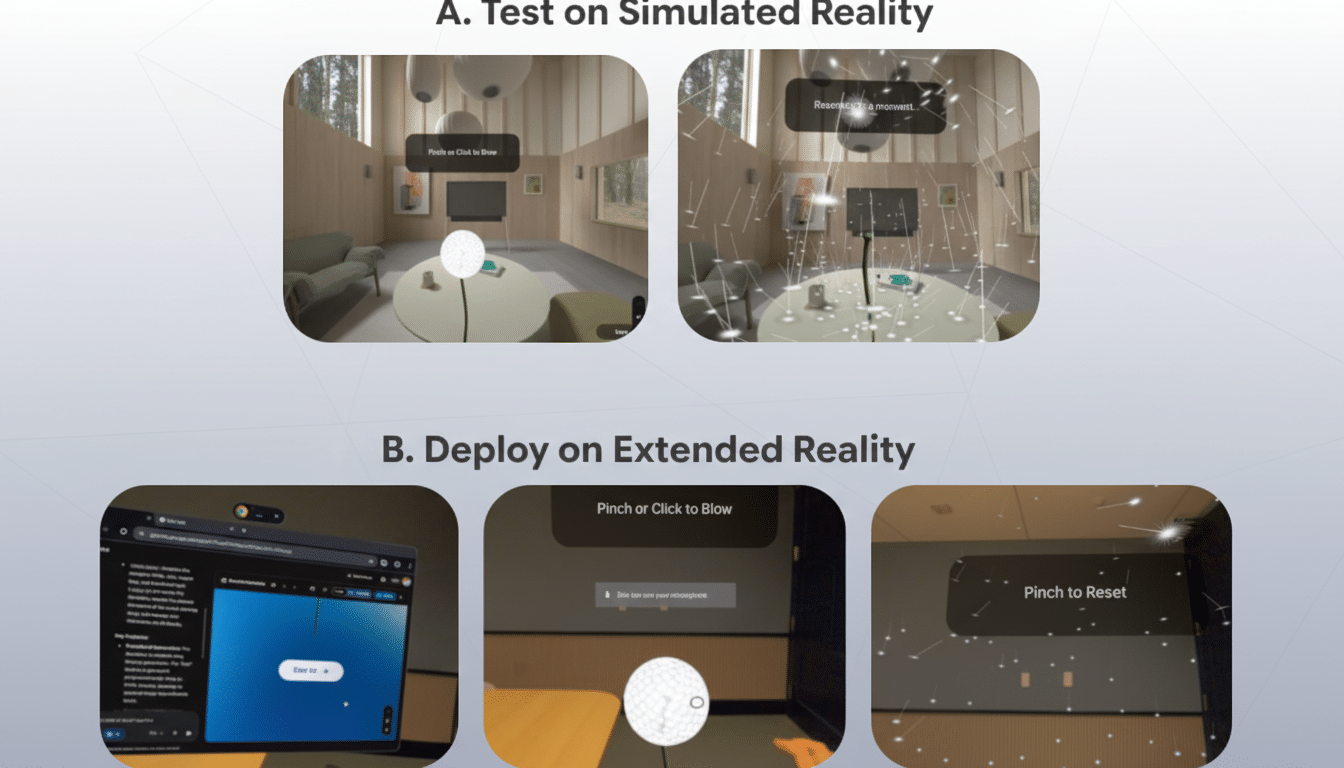
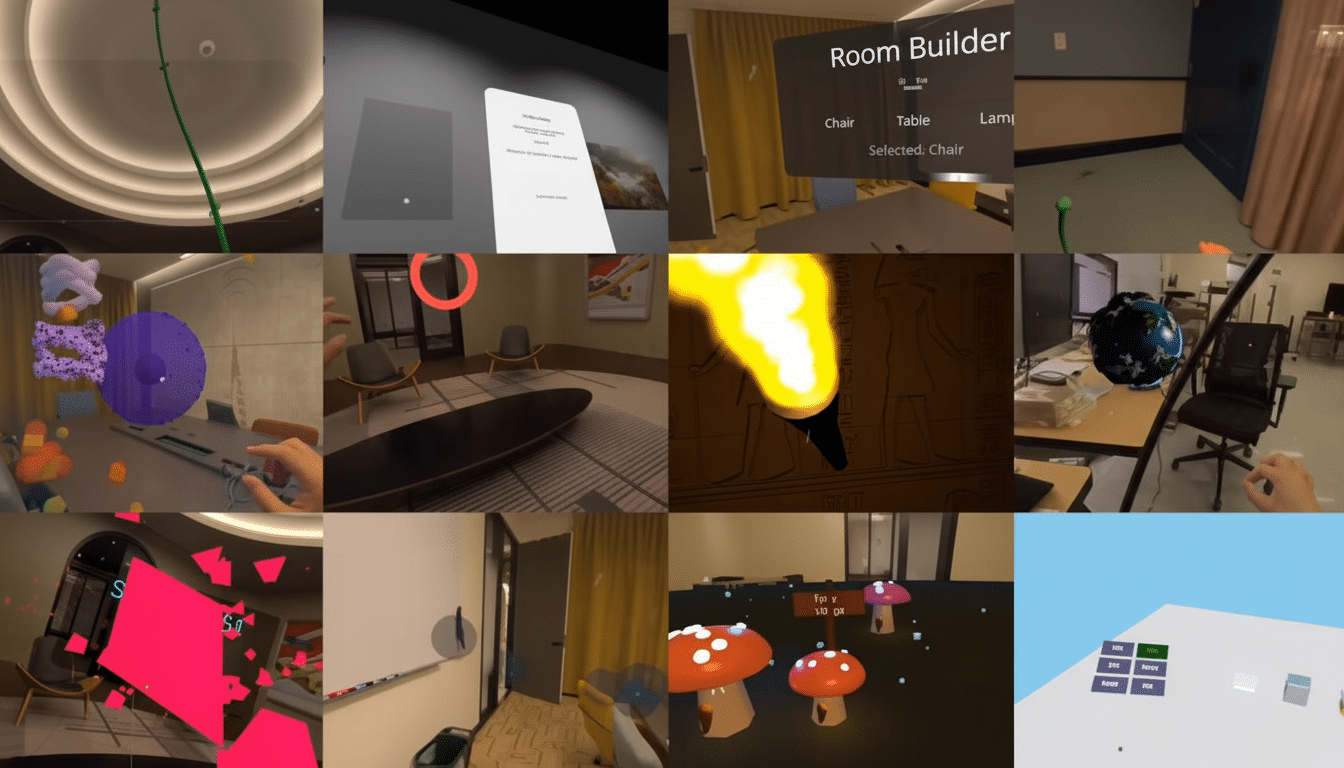
In demos, that approach spun up a playable take on the Chrome Dino game, a math tutor that uses 3D shapes to illustrate Euler’s theorem, a physics lab with balance scales, and a chemistry setup where you can ignite virtual flames. It’s rapid, hands-on ideation instead of days spent wiring up prefabs and colliders.
How XR Blocks Assemble Worlds From Modular Parts
Under the hood, Google leans on a modular system it calls XR Blocks—pre-built components for physics, interaction, and UI. Rather than generating every line of code from scratch, Gemini composes these vetted modules, reducing the chance of brittle logic and odd edge cases.
Think of it like snapping together LEGO bricks instead of 3D-printing each piece. That compositional design mirrors how UI frameworks and game engines already work, but here the AI converts natural-language goals into a scene graph, behaviors, and input mappings automatically.
Speed Versus Fidelity in Rapid XR Prototyping
Vibe Coding XR is built for speed, not shippable apps. You’ll still refine assets, performance, and edge-case logic in a traditional toolchain like Unity or Unreal. But for design sprints and user testing, an instant prototype can be a game-changer—teams can iterate on five ideas in a morning instead of nursing one build for a week.
Model choice matters. Google notes that while a lighter Gemini Flash configuration can crank out a simple “dandelion” scene in about 20 seconds, Gemini Pro proved more reliable at avoiding hallucinated functions or APIs. That reliability is critical when chaining multiple interactions, physics rules, and UI states.
Why This Could Reshape XR Workflows and Teams
VR and AR development traditionally requires juggling 3D assets, scripting, input systems, and platform quirks. Even a basic proof-of-concept can take days to get from whiteboard to headset. By moving from “specs and tickets” to “prompt and play,” teams can validate mechanics, pacing, and onboarding in real time.
The timing is notable. Industry analysts expect renewed momentum in spatial computing as new platforms and standards mature. Professional services firms have pointed to significant long-term economic upside for XR, with studies such as PwC’s forecasting substantial gains by 2030. Tools that compress iteration cycles can help organizations test training, simulation, and retail concepts faster—before committing full budgets.
Availability and Platform Limits for Vibe Coding XR
For now, Vibe Coding XR remains experimental and tied to Android XR. Google says the only device that runs it today is the Samsung Galaxy XR, available in the US and South Korea. If you don’t have that headset, you can still try a desktop simulator, but you’ll miss the full spatial interaction layer that makes the rapid loop compelling.
Export paths and interoperability will be key questions. Teams will want clean hand-offs to established engines, source control–friendly scene files, and guardrails for prompt engineering. If Google adds multiuser prototyping, asset versioning, and OpenXR-aligned outputs, this could slip from flashy demo to everyday tool.
The Bottom Line on Google’s Vibe Coding XR Approach
Vibe Coding XR doesn’t replace seasoned developers, but it does remove the slowest part of XR creation: getting from idea to something you can touch. With Gemini orchestrating proven building blocks, prototyping moves at the pace of conversation—and that may be the spark XR teams have been waiting for.

