


Google is changing how teens graduate out of parental supervision on its platforms, moving to require explicit parent approval before a 13-year-old can disable Family Link controls. The shift follows high-profile criticism of a policy that let minors unilaterally opt out the moment they became teenagers.
What Changed and Why It Matters for Teen Supervision
Under the prior setup, a child supervised through Family Link could remove those controls upon turning 13 without a parent’s consent. Google will now make that a joint decision: teens must request to end supervision and parents must approve the change. Practically, it flips the default to keep protections on until both sides agree.

The adjustment is significant because age 13 is a legal threshold tied to the U.S. Children’s Online Privacy Protection Act, not a developmental milestone. By requiring co-consent, Google is acknowledging that the readiness to navigate payments, app stores, and data-sharing varies widely among teenagers.
Criticism That Catalyzed the Policy Shift at Google
The move came on the heels of a viral LinkedIn post from online child safety advocate McKay, who flagged discrepancies in Google’s transition emails. She said the message to her included generic information on age requirements, while her teen’s email linked to instructions on removing supervision at 13—without mentioning parental consent.
The post drew heavy engagement, with hundreds of comments and roughly 375,000 impressions, amplifying concerns that families weren’t being clearly informed of the stakes. McKay, who authored a 2025 complaint to the Federal Trade Commission about youth safety practices at the company, called the prior approach one of the most predatory she had observed in nearly a decade of advocacy work.
Google has said the policy change was in the works before the viral criticism. Kate Charlet, the company’s head of global privacy, safety, and security, wrote on LinkedIn that the update is intended to keep safeguards in place until both parent and teen agree the timing is right.
How Family Link Works Now for Teens and Parents
Family Link allows guardians to manage app downloads, set screen-time limits, filter content, and track basic account activity. Once a teen assumes control of their account, parents lose the ability to set downtime or block specific apps, and they no longer see purchase history inside Family Link. Teens also gain broad access to Google Wallet and Pay, including use of cards added to their profile before age 13.
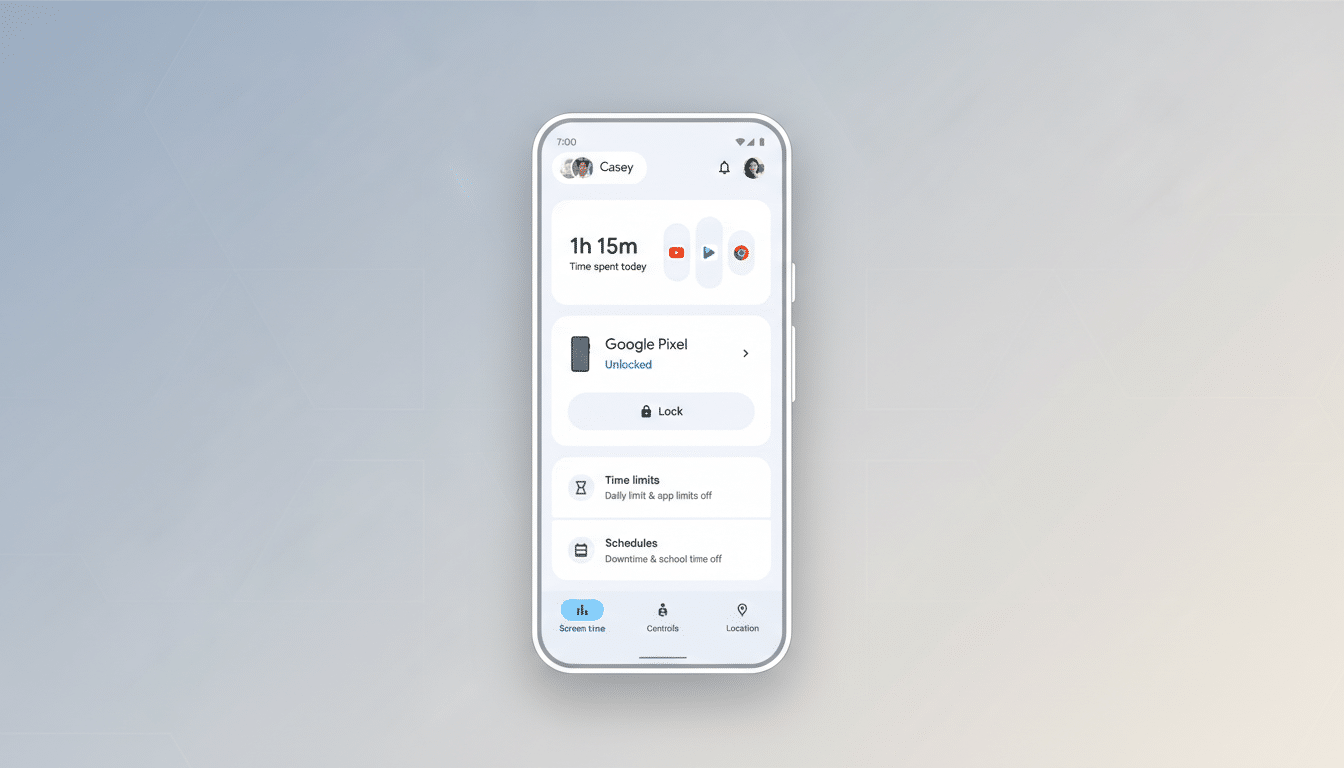
With the new approach, families should expect a clearer opt-out flow. Instead of an automatic path to independence, teens will submit a request to end supervision; parents will receive a prompt inside Family Link to review and approve or deny. The aim is to create an intentional, documented handoff rather than a default off-ramp.
The Bigger Picture on Youth Safety and Regulation
The change lands amid intensifying scrutiny of tech’s approach to minors. Pew Research Center reports that about 95% of U.S. teens have access to a smartphone, and most use multiple social platforms daily, putting significant weight on platform defaults. Common Sense Media’s latest research shows tween and teen screen time continues to rise, while the American Academy of Pediatrics encourages gradual autonomy guided by family media plans and ongoing conversations.
Regulators are sharpening their focus as well. The FTC has stepped up enforcement of COPPA, while several U.S. states have advanced child online safety laws that push for high-privacy defaults and stronger parental tools. Internationally, the U.K.’s Age-Appropriate Design Code has influenced product decisions across the industry, encouraging companies to limit data collection and restrict features for younger users.
What Parents Should Do Next Before Their Child Turns 13
Parents using Family Link should review supervision settings, especially payment methods and app-level permissions, before a child’s 13th birthday. Consider removing stored cards or tightening purchase approvals, and confirm that two-factor authentication is enabled for both parent and teen accounts.
It’s also a good time to set expectations: discuss why some controls remain in place, what signals readiness for more independence, and how you’ll revisit decisions together. With the new consent requirement, Google is putting families in the driver’s seat—now the value comes from using that checkpoint to make intentional, informed choices.
