


Google is preparing a major shift for Fitbit: an AI “Coach” that can draw on your clinical medical records to tailor feedback. It’s a bold pitch that could turn a step counter into a health companion with real clinical context—and it raises weighty questions about data flows, consent, and who gets to see what about your body.
What Google Is Proposing for Fitbit’s AI Coach
At the center is Gemini, Google’s flagship model, rebranded in the Fitbit app as Coach. The idea is simple: if the AI understands your diagnoses, prescriptions, lab results, and care plans, it can move beyond generic tips to guidance that factors in conditions like hypertension, asthma, or diabetes. Google says participation is optional, users retain control, and medical data will not be used for ads.
- What Google Is Proposing for Fitbit’s AI Coach
- How the Data Would Flow Between Partners and Fitbit
- Privacy Promises and Guardrails for Medical Data Use
- Why Google Wants Clinical Context in Fitbit’s AI Coaching
- Adoption and Friction Points for Linking Medical Records
- What to Watch Next as Google Tests Fitbit’s AI Coach
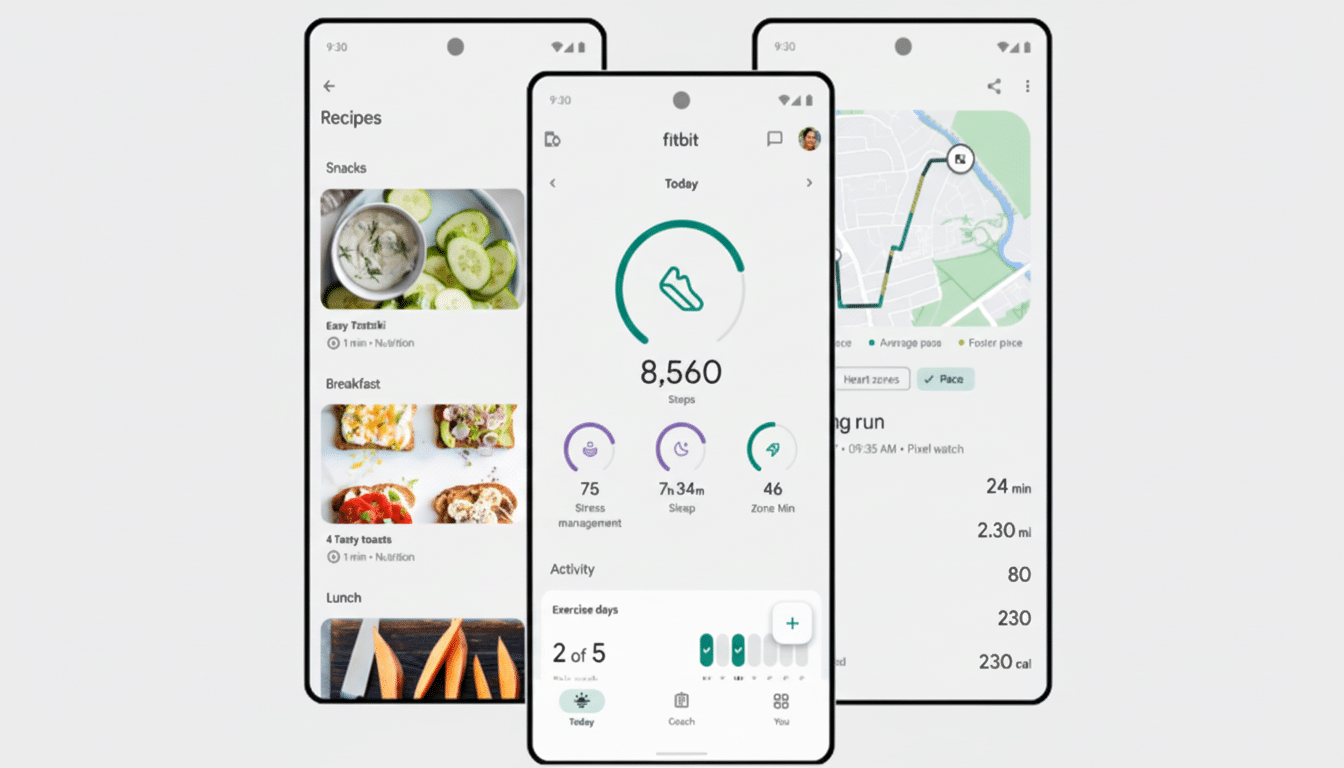
The effort fits Google’s longer strategy of folding Fitbit deeper into its ecosystem. Since acquiring Fitbit for $2.1 billion, Google has migrated accounts, pushed Pixel Watch as the hero device, and leaned into paid Premium features. AI is the next layer—and medical record connectivity is its most consequential ingredient.
How the Data Would Flow Between Partners and Fitbit
Google is not asking you to upload PDFs from your patient portal. Instead, it is tapping partners that already connect to U.S. health systems. Requests to gather clinical data route through b.well Connected Health, a platform that aggregates records from hospitals, clinics, and insurers using the FHIR standard. Identity verification—proving you really are you—relies on Clear, the biometric security company familiar from airport lanes, which authenticates with a government ID and a selfie.
On the back end, this means Fitbit’s AI could receive structured data such as medications, allergies, immunizations, problem lists, vitals, and lab values. In theory, Coach could reconcile a new prescription with your resting heart rate trends, or adjust sleep advice if your record shows obstructive sleep apnea. The clinical context is precisely what most consumer wearables—and their cookie-cutter coaching—lack.
Privacy Promises and Guardrails for Medical Data Use
Google’s pledge that medical data won’t be used for ads will draw scrutiny, and not only from privacy advocates. When the European Commission cleared the Fitbit acquisition, it required Google to silo health and fitness data from its advertising stack. In the U.S., HIPAA governs providers and insurers, not most consumer apps, but the Federal Trade Commission has been expanding enforcement through the Health Breach Notification Rule, penalizing health apps that share sensitive data without proper consent.
Context matters here: once clinical data leaves a covered entity and lands in a consumer app, HIPAA protections often do not follow. That’s why design choices—data minimization, on-device processing where feasible, strong access controls, and transparent deletion policies—are critical. The Office of the National Coordinator for Health IT has pushed nationwide interoperability via FHIR and the Trusted Exchange Framework, but those rails must be paired with meaningful user control.
The risk is not theoretical. According to public breach tallies maintained by the Department of Health and Human Services, large healthcare cyber incidents have exposed data on well over 100 million individuals in recent years. Linking medical records to a high-profile consumer platform broadens the target surface, even if each partner maintains strong security.

Why Google Wants Clinical Context in Fitbit’s AI Coaching
Clinical data could make wearables’ signals actionable. A spike in resting heart rate means something different if you’re taking beta blockers. Recovery scores after a workout will be interpreted differently when the record shows anemia or long COVID. By blending EHR data with continuous sensors, Google can train models on longitudinal outcomes and, in time, nudge users toward interventions with measurable impact.
There is also a competitive angle. Apple’s Health Records ties into hundreds of systems and already centralizes medications, labs, and immunizations on iPhone. Amazon owns a primary care provider in One Medical. Whoop and Oura market performance and recovery to niche audiences. For Google, a smarter Fitbit anchored in clinical reality is a way to keep pace—and potentially differentiate with AI that reasons across more context than step counts and sleep stages.
Adoption and Friction Points for Linking Medical Records
The plumbing for this exists. ONC reports that nearly 90% of U.S. office-based physicians use certified EHRs, and large shares of hospitals participate in national exchange networks. Patients are also more engaged: ONC data indicates roughly 3 in 5 Americans accessed their online medical record at least once in a recent year. Still, connecting that ecosystem to a consumer app requires spotless identity proofing, consent flows people actually understand, and clear off-ramps for revocation and deletion.
Trust will hinge on details: What data fields are ingested by default? Can users see an auditable log of every access? Are inferences from medical data treated with the same protections as the source records? Are models trained on de-identified aggregates, and how is de-identification validated? Answers to these questions determine whether “not used for ads” is the floor or the start of a credible privacy posture.
What to Watch Next as Google Tests Fitbit’s AI Coach
Expect a gradual rollout as Google tests the experience on Android and iOS and expands health system connections. Watch for transparency reports, third-party audits, and whether Google offers on-device options for the most sensitive inferences. Also watch regulators: the FTC has signaled that opaque data sharing in health apps is a red line, and state privacy laws are tightening.
If Google executes well, Fitbit’s AI Coach could evolve from motivational quotes into a companion that respects clinical nuance. If it stumbles on privacy or security, users will balk at handing over the most intimate data they possess. The prize is enormous—a wearable that actually understands your health. So is the responsibility.

