


For heavy web searchers, the right AI assistant is the one that speeds understanding, not just answers questions. Google’s AI Mode is doing exactly that, and for many users it’s becoming compelling enough to replace Perplexity. Three features stand out: more natural follow-ups with plain-language explanations, seamless coexistence with classic Google Search, and deep integration across Google’s vast ecosystem. Together, they turn routine research and troubleshooting into a faster, less fragmented experience.
More Natural Follow-Ups and Clearer Explanations
The promise of AI-assisted search is conversation, not just retrieval. In practice, Google’s AI Mode handles iterative questions with an approachable voice that reads like a knowledgeable colleague rather than a lecturer. Ask it to unpack SSH port forwarding like you’re five, or to compare vector databases with real-world examples, and it adapts tone and level without sounding stilted. That elasticity matters in the flow of research, where you often need one more nudge to connect the dots before moving on.
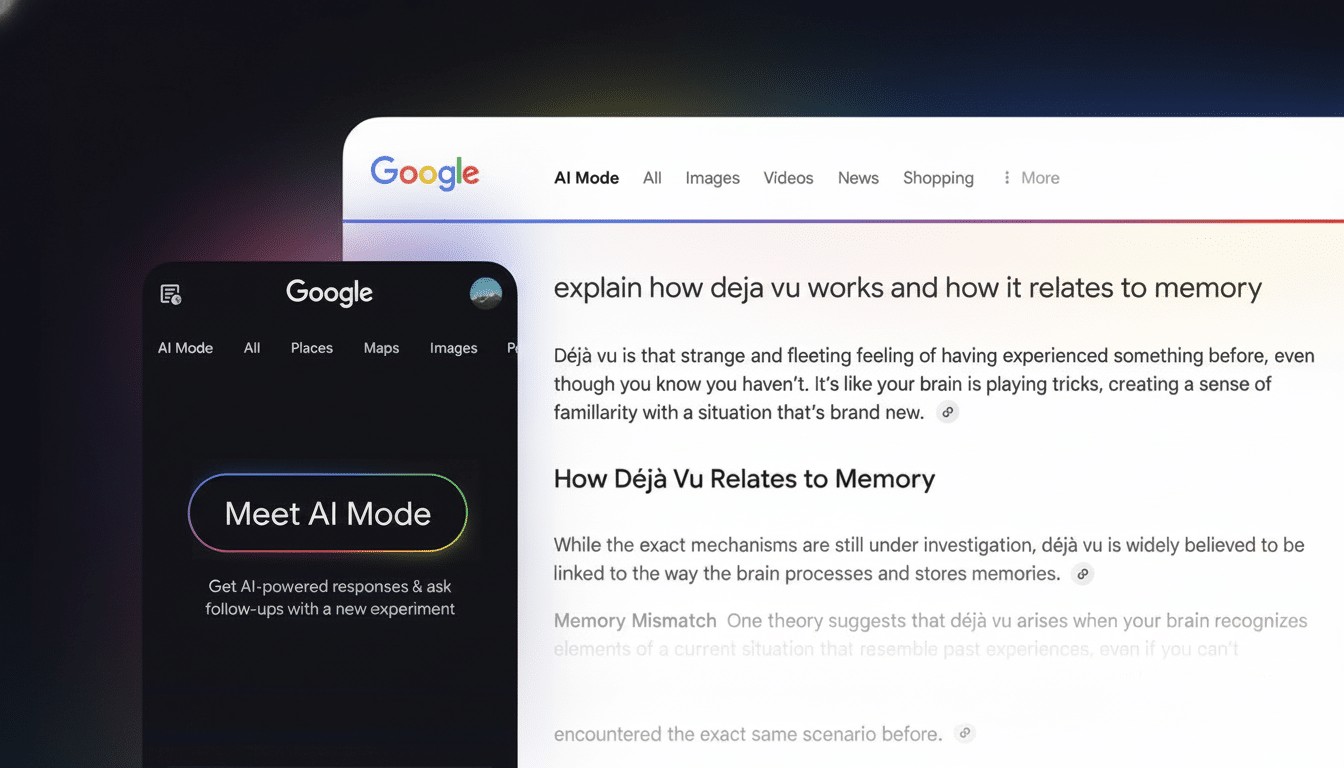
Perplexity is excellent at precision and citations, but it can feel formal and fixed in structure. Google’s responses trend toward everyday language, and when prompted to simplify or give analogies, it usually follows through with concrete, digestible framing. The result isn’t fluff; it’s friction reduction—less time decoding jargon, more time applying what you just learned.
AI Results and Classic Google Search in One Flow
The second advantage is architectural. AI Mode augments rather than replaces Google’s familiar results page. You can pivot between a synthesized AI overview and the traditional wall of blue links with a single tap, keeping context and query history intact. No copy-pasting queries into a new site, no resetting the conversation when you want primary sources or niche forums.
This duality pays off when you’re hunting for a specific fix or a long-tail answer buried in community threads. Often, the fastest path is skimming an AI digest to get oriented, then jumping straight into sources—developer docs, a Reddit comment with thousands of upvotes, or a trusted publisher’s deep dive. Because Google indexes the open web at massive scale—StatCounter consistently measures Google’s global search share above 90%—the handoff between AI summary and authoritative links tends to feel comprehensive rather than constrained by a smaller source set.
Ecosystem Advantages Boost Relevance and Speed
Google’s third edge comes from how tightly AI Mode plugs into products people already use. If you learn best by watching, AI Mode can surface key moments from relevant YouTube videos in-line, making it easy to jump to the explanation you need. YouTube’s scale—billions of logged-in users and a deep bench of expert creators—means there’s often a high-quality walkthrough one click away.
Local intent benefits from Maps data as well. Google has said Maps receives tens of millions of updates daily, and those real-time signals help AI Mode ground answers about nearby services, hours, and transit with fewer dead ends. When you’re switching from context-building to action—booking, navigating, or shopping—tabs like News and Shopping remain one tap away. That “everything in one place” design cuts down the app and tab-hopping that slows research, especially for power users who run dozens of queries a day.
In effect, AI Mode behaves like a command center across the Google stack. You can start with an AI summary, pull a product comparison from Shopping, verify store availability on Maps, and finish with a YouTube chapter breakdown—without rewriting your query or leaving the core interface. The compounding time savings become obvious over a week of daily use.
What Perplexity Still Gets Right and the Trade-Off
None of this diminishes what Perplexity does well. It remains a leader in transparent sourcing, with crisp citations and fast, focused answers. Its recent push into agentic workflows—demonstrated by its system that orchestrates multiple large language models for multi-step tasks—is genuinely ambitious and ahead of many rivals. If your priority is compact outputs with rigorous attributions, Perplexity is hard to beat.
The trade-off is scope and switching costs. If your workflow involves frequent pivots between AI summaries, primary sources, video explainers, and local decisions, the ability to stay inside Google’s interface reduces friction. For users who live in their browser and constantly blend research with action, AI Mode’s integrations create a smoother end-to-end path from question to outcome.
Bottom Line: Why Many Users Are Switching to Google’s AI Mode
Three factors are tipping the scales toward Google’s AI Mode: conversational clarity that accelerates understanding, a dual-mode interface that preserves the strengths of classic search, and ecosystem reach that streamlines every step after the answer. Perplexity remains a strong, innovative alternative, but for fast, everyday research and execution, AI Mode’s cohesion is the reason many users are making the switch—and not looking back.

