


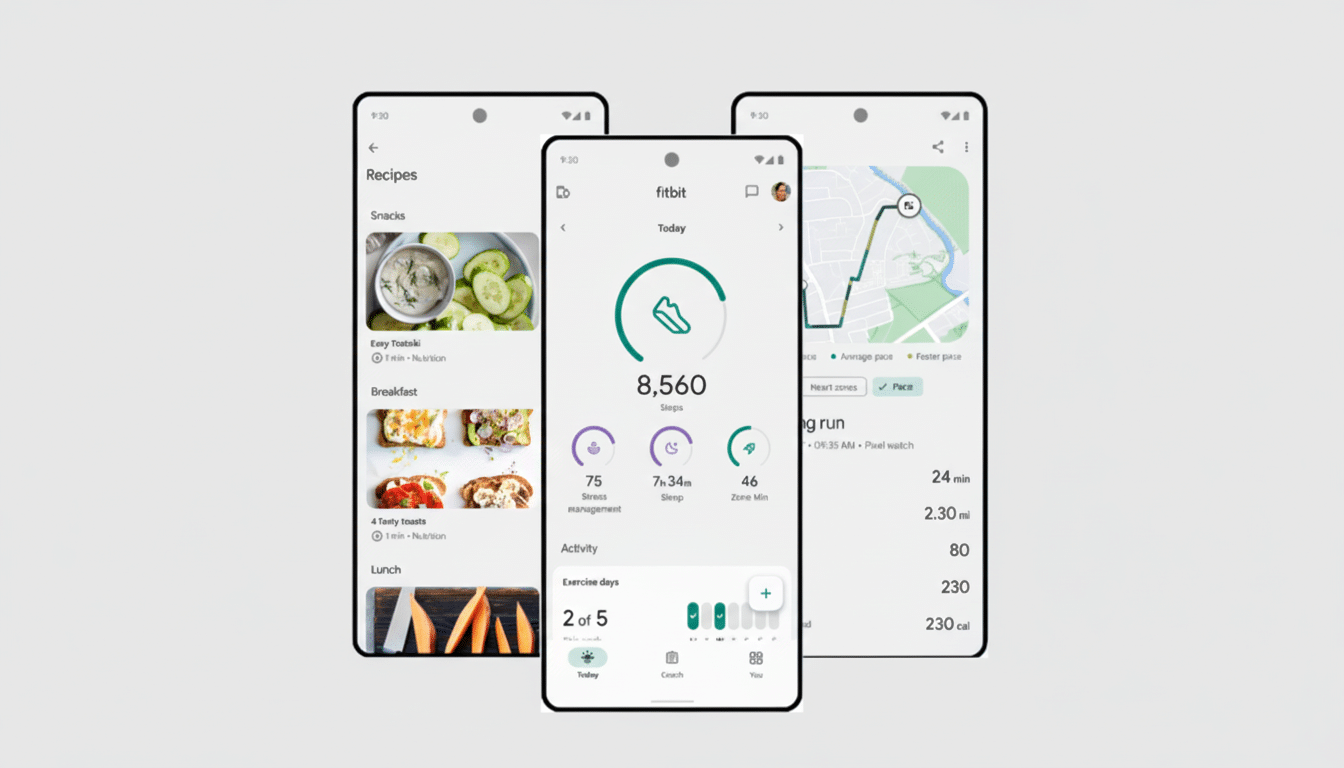
Fitbit’s next act moves squarely into medical territory. The company is rolling out the option to import your medical records into the app and then ask its AI for personalized guidance. It can analyze labs, medications, and visit history alongside your sleep, activity, and heart metrics. The promise is convenience and context. The question is whether that’s safe.
What Fitbit Is Rolling Out in Its New AI Health Update
The new capability lets users connect electronic health record data to Fitbit so the AI “coach” can tailor responses. Ask about a cholesterol panel, and it can weigh results against your exercise trends and sleep patterns. Wonder if a new medication might affect workouts, and it will surface relevant considerations.
- What Fitbit Is Rolling Out in Its New AI Health Update
- How the AI Uses Your Records for Personalized Coaching
- The Privacy Question Around Imported Medical Records
- Is the AI Advice Clinically Safe and Reliably Accurate
- Regulatory and Liability Landscape for AI Health Coaches
- Practical Tips to Review Before You Choose to Opt In

Fitbit says guardrails are built in: the coach is not diagnosing conditions or prescribing treatment, and it will nudge users to consult clinicians when a question crosses into medical advice. Similar record-upload features already exist in apps from smaller rivals like Whoop, underscoring a broader shift toward AI-augmented health coaching.
Two more features sit alongside the medical-data push.
- A public preview to connect a continuous glucose monitor and query the AI about blood sugar trends around meals or workouts.
- Updated sleep staging models that aim to better distinguish naps, interruptions, and transitions between sleep phases.
How the AI Uses Your Records for Personalized Coaching
In practice, the system fuses clinical context with lifestyle telemetry. For example, if your LDL is borderline high, the coach can reference your activity minutes, resting heart rate, weight trends, and logged nutrition to suggest behavior changes tied to your reality—more high-intensity minutes if your baseline is low, or earlier bedtimes if your sleep debt is large.
Fitbit says it has invested in validation to reduce the risk of inaccurate answers and that users’ medical records, like other Fitbit health data, are not used for advertising. It has not specified whether imported records are stored on-device or in Fitbit’s cloud.
The Privacy Question Around Imported Medical Records
This is where many will pause. HIPAA generally does not protect data in consumer wellness apps unless the app is acting for a covered entity, according to guidance from the Department of Health and Human Services’ Office for Civil Rights. That means your imported records may fall under app privacy policies and state laws rather than hospital-grade protections.
The Federal Trade Commission has made clear that personal health record vendors are subject to its Health Breach Notification Rule. Recent enforcement actions against GoodRx and BetterHelp for sharing sensitive health data with advertisers highlight the stakes. Fitbit states it does not use health data for ads and controls stay with the user, but consumers should still review sharing settings, data export options, and deletion pathways.
Interoperability also matters. If Fitbit uses standards like FHIR to ingest records, you may be pulling in a subset of your chart—labs, meds, problems, vitals—via patient portals. Know exactly which sources you connect and what flows back out, including any sharing with research, analytics, or third-party services.
Is the AI Advice Clinically Safe and Reliably Accurate
Large language models can be insightful and still get things wrong. Academic evaluations show AI-generated health answers can be high quality in many scenarios, but variability and “hallucinations” remain real risks, especially with nuanced or urgent conditions. Even when an AI is careful to avoid diagnoses, phrasing can nudge users toward actions that feel prescriptive.
Fitbit’s coach is designed for education and lifestyle coaching, not clinical decision-making. Treat it like a smart explainer: useful for unpacking what high A1C trends with your sleep debt might suggest about habits, not for changing medication doses. The CGM integration is promising for pattern recognition after meals or workouts, but insulin adjustments and hypoglycemia management still belong with a clinician’s plan.
And remember that wearable sleep staging remains imperfect. Independent studies typically find about 60–70% accuracy for sleep stage classification versus lab polysomnography. Improvements are welcome, yet users should avoid overinterpreting single-night changes in REM or deep sleep percentages.
Regulatory and Liability Landscape for AI Health Coaches
Products framed as “general wellness” avoid being regulated as medical devices by the Food and Drug Administration, so long as they do not diagnose, treat, or claim to alter disease. If an AI coach were to cross that line, it could invite FDA oversight. For now, Fitbit appears to be hewing to the coaching lane with referral prompts to clinicians.
On data protection, regional rules matter. In Europe, commitments around using Fitbit data for advertising were formalized during antitrust review of the acquisition. In the U.S., state privacy statutes such as the California Consumer Privacy Act provide access and deletion rights. Know your jurisdiction and exercise those rights if you opt in.
Practical Tips to Review Before You Choose to Opt In
- Connect only the portals and data categories you truly need. Minimize exposure by limiting sources and revoking access you no longer use.
- Read the health data and AI sections of Fitbit’s privacy documentation. Confirm whether data is stored in the cloud, who can access it internally, and how long it’s retained.
- Keep expectations realistic. Use the AI for education and behavior nudges, not diagnosis or medication changes. For symptoms, test results you don’t understand, or any urgent questions, talk to your clinician.
- Monitor outputs for plausibility. If a recommendation seems off, ask the AI to show its reasoning, compare with authoritative guidelines, and cross-check with a professional.
- Back up and manage your data. Periodically export your records, review what’s stored, and delete what you no longer want in the app.
The bottom line: Integrating medical records into a consumer wearables coach could make everyday guidance more relevant. Safety depends on strong privacy controls, clear boundaries between coaching and care, and a user who treats AI as a helpful second opinion—not a doctor in your pocket.

