


Modern agriculture is no longer driven solely by experience and seasonal intuition. Today, data, automation, and real-time visibility play a crucial role in how farms operate, grow, and remain profitable. As farming operations expand and supply chains become more complex, relying on manual records or disconnected systems can slow progress and increase risk. This is where farm management tools become essential for effective agricultural planning.
The Shift Toward Digital Farm Planning
Agriculture has evolved into a highly coordinated business that requires constant monitoring of inputs, outputs, contracts, logistics, and finances. Farmers must track inventory, manage contracts, oversee deliveries, and monitor profitability across multiple fields or locations. Traditional methods struggle to keep up with this complexity.
- The Shift Toward Digital Farm Planning
- What Are Farm Management Tools
- Inventory Management for Better Resource Control
- Contract and Delivery Coordination
- Logistics and Supply Chain Visibility
- Financial Planning and Cash Flow Control
- Field-Level Performance Analysis
- Data-Driven Decision Making
- Scalability for Growing Operations
- Why Choosing the Right Software Matters
- Conclusion
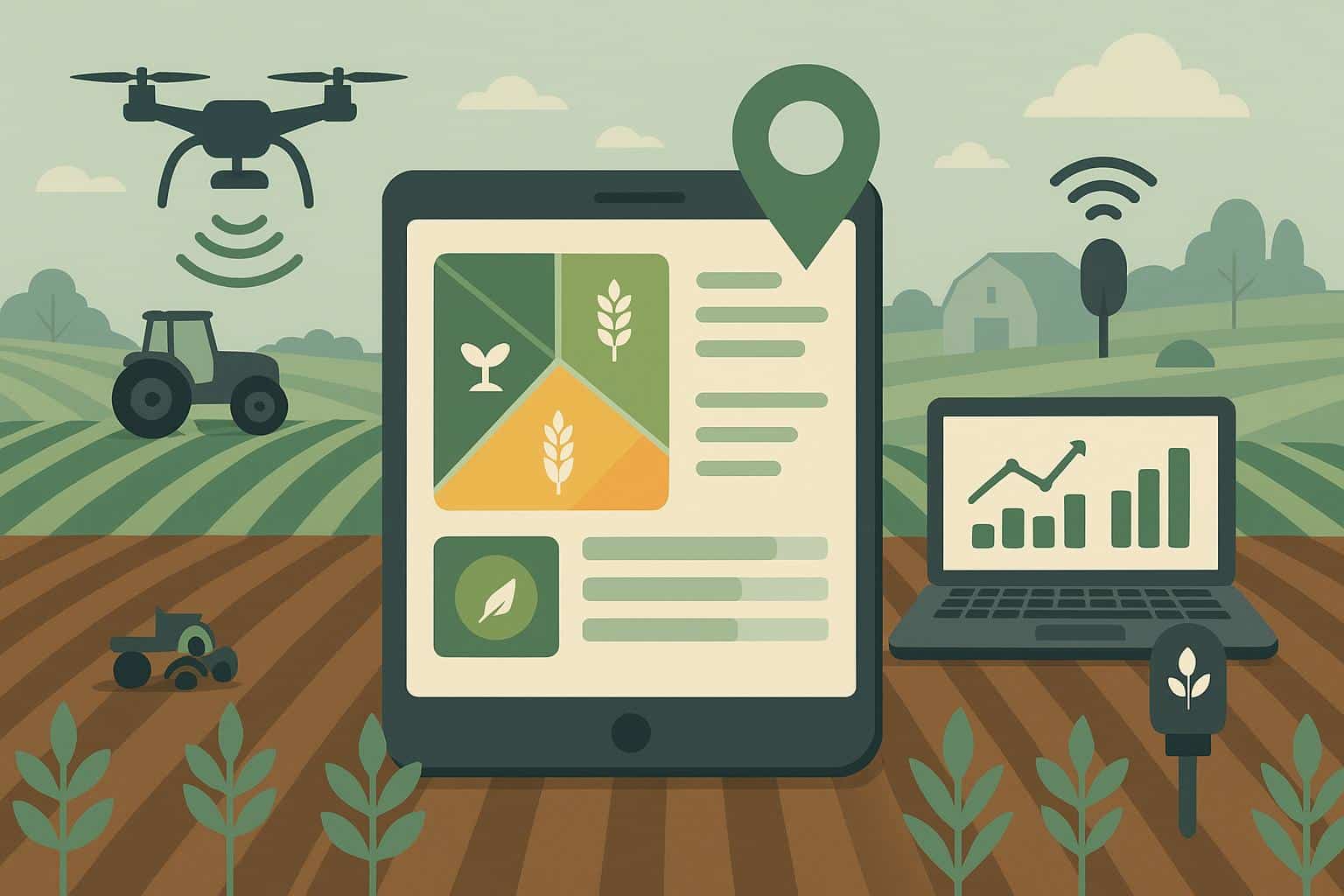
Digital farm management equipments bring structure and clarity to these operations. By centralizing farm data, they enable better planning, stronger control, and faster decision-making. Instead of reacting to issues after they occur, farmers can proactively manage operations with confidence.
What Are Farm Management Tools
Farm management tools are digital systems designed to help farmers plan, track, and optimize every aspect of their agricultural operations. These tools integrate multiple functions into a single platform, reducing paperwork and improving operational transparency.
Core capabilities typically include:
- Inventory and stock tracking
- Contract and delivery management
- Input cost monitoring
- Real-time logistics visibility
- Financial reconciliation and reporting
- Performance analysis at the field level
By consolidating these processes, farm management tools eliminate data silos and reduce errors caused by manual handling.
Inventory Management for Better Resource Control
Inventory is one of the most critical areas in farm operations. Seeds, fertilizers, chemicals, harvested crops, and stored produce all represent financial value. Poor visibility into inventory often leads to wastage, shortages, or unplanned expenses.
Advanced farm management equipments allow farmers to track inbound and outbound inventory in real time. Inputs can be recorded as they arrive, stored, applied, or moved across sites. Harvested produce can be monitored by quantity, quality, and location. This level of control ensures that nothing is overlooked and resources are used efficiently.
Accurate inventory tracking also supports better planning for future seasons, helping farmers understand consumption patterns and optimize purchasing decisions.
Contract and Delivery Coordination
Managing contracts is a complex task, especially for farms supplying to multiple buyers. Delivery schedules, quality specifications, pricing terms, and payment timelines must all be aligned accurately. Manual tracking increases the risk of missed deliveries or incorrect invoicing.
Modern farm management equipments streamline contract execution by linking deliveries directly to contract terms. Each load can be tracked from origin to destination, ensuring compliance with agreed specifications. Real-time updates provide clarity on what has been delivered, what remains outstanding, and how each contract is performing.
This integration reduces disputes, improves trust with buyers, and protects farm revenue.
Logistics and Supply Chain Visibility
Logistics plays a vital role in modern farming, particularly for large-scale operations. Coordinating transport, storage, and delivery schedules can be challenging without proper visibility.
With integrated farm management equipment, farmers gain real-time insight into their supply chain. Loads can be tracked as they move, weights and grades recorded instantly, and delivery confirmations captured digitally. This transparency improves coordination between farmers, drivers, and buyers while reducing delays and errors.
Better logistics visibility also supports compliance and traceability requirements, which are increasingly important in global agricultural markets.
Financial Planning and Cash Flow Control
Cash flow is one of the most sensitive aspects of farm management. Delayed payments, incorrect invoicing, or unexpected expenses can impact operations significantly.
The best farm management software integrates financial tracking directly into daily operations. Payments can be reconciled against deliveries and contracts, giving farmers a clear view of what is owed and when. This enables better cash flow forecasting and reduces reliance on external accounting reconciliations.
By linking operational data with financial outcomes, farmers gain a stronger understanding of profitability drivers across their business.
Field-Level Performance Analysis
Not all fields or crops perform equally. Understanding which areas deliver the highest returns is critical for long-term planning. Traditional record-keeping often lacks the detail needed for this analysis.
Advanced farm management tools combine yield data, input costs, and market prices to assess performance at the field level. This insight helps farmers identify high-performing areas, adjust crop planning, and allocate resources more strategically.
Over time, this data-driven approach supports continuous improvement and smarter investment decisions.
Data-Driven Decision Making
One of the most valuable benefits of using the farm management software is access to real-time data and analytics. Dashboards and reports provide clear visibility into operational status, inventory levels, contract positions, and financial performance.
Rather than relying on assumptions, farmers can base decisions on accurate and up-to-date information. This leads to faster responses, reduced risk, and improved operational efficiency.
Data-driven planning also supports sustainability by optimizing input usage and reducing waste across the farm.
Scalability for Growing Operations
As farms grow, their operational complexity increases. Managing multiple sites, crops, and buyers requires systems that can scale without adding administrative burden.
Modern farm management equipments are designed to support scalability. They allow multiple users, locations, and operations to be managed from a single platform. Integration capabilities ensure that data flows seamlessly across systems as the business expands.
This flexibility makes digital farm management suitable for both current needs and future growth.
Why Choosing the Right Software Matters
Not all systems offer the same level of functionality or reliability. The best farm management software focuses on usability, accuracy, and integration across the agricultural supply chain. It should reduce complexity, not add to it.
Key considerations include real-time tracking, automation, mobile accessibility, data security, and strong support. When these elements come together, farm management software becomes a strategic asset rather than just an operational tool.
Conclusion
Modern agriculture demands clarity, control, and informed decision-making. Digital farm management tools help streamline planning, improve inventory visibility, strengthen contract coordination, and enhance financial oversight. By centralizing operational data and enabling real-time insights, these solutions empower farmers to optimize resources, reduce risk, and adapt confidently to changing market and production conditions.
For farmers seeking end-to-end visibility across inventory, contracts, logistics, and financial performance, AgriChain delivers a powerful solution. Its services support real-time tracking, digital contract execution, inventory control, supply chain transparency, and data-driven decision-making. Designed for modern agricultural operations, AgriChain helps growers reduce risk, improve efficiency, and plan with confidence across every stage of the farming cycle.
