


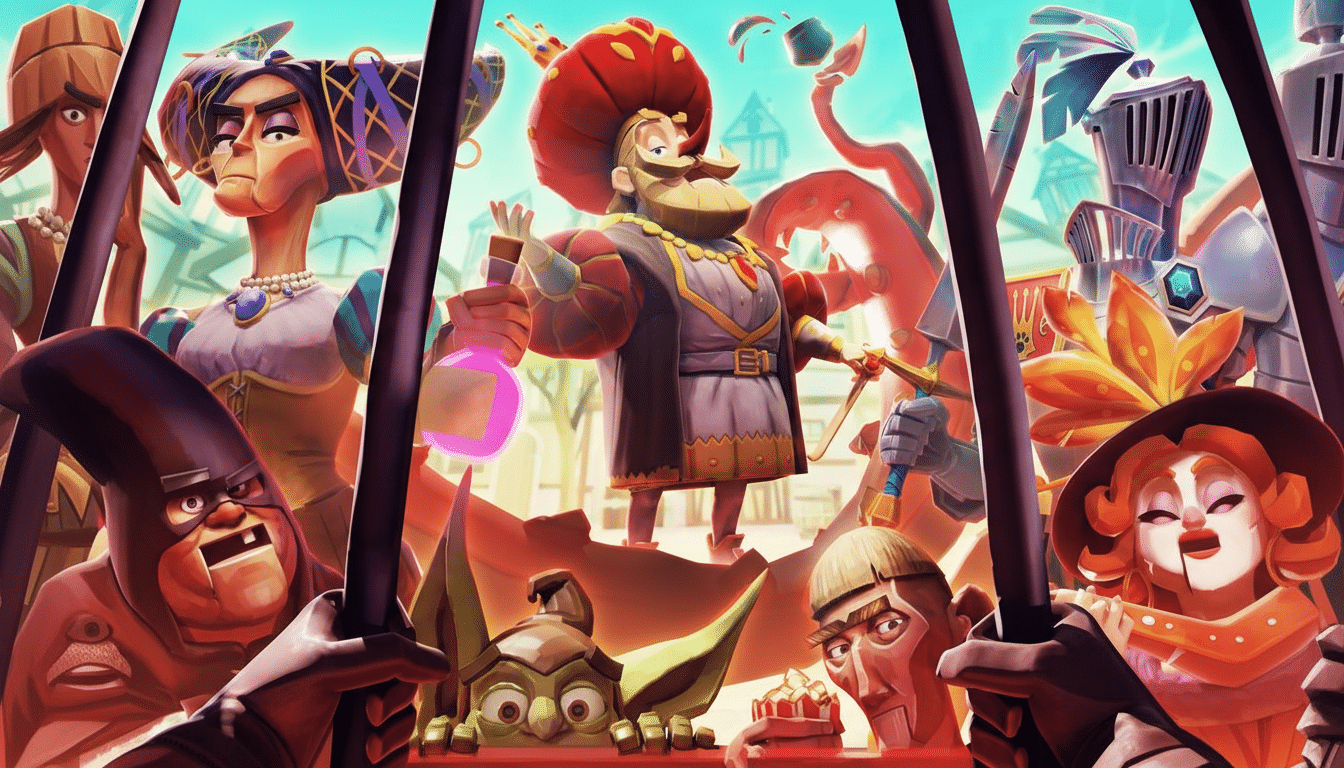
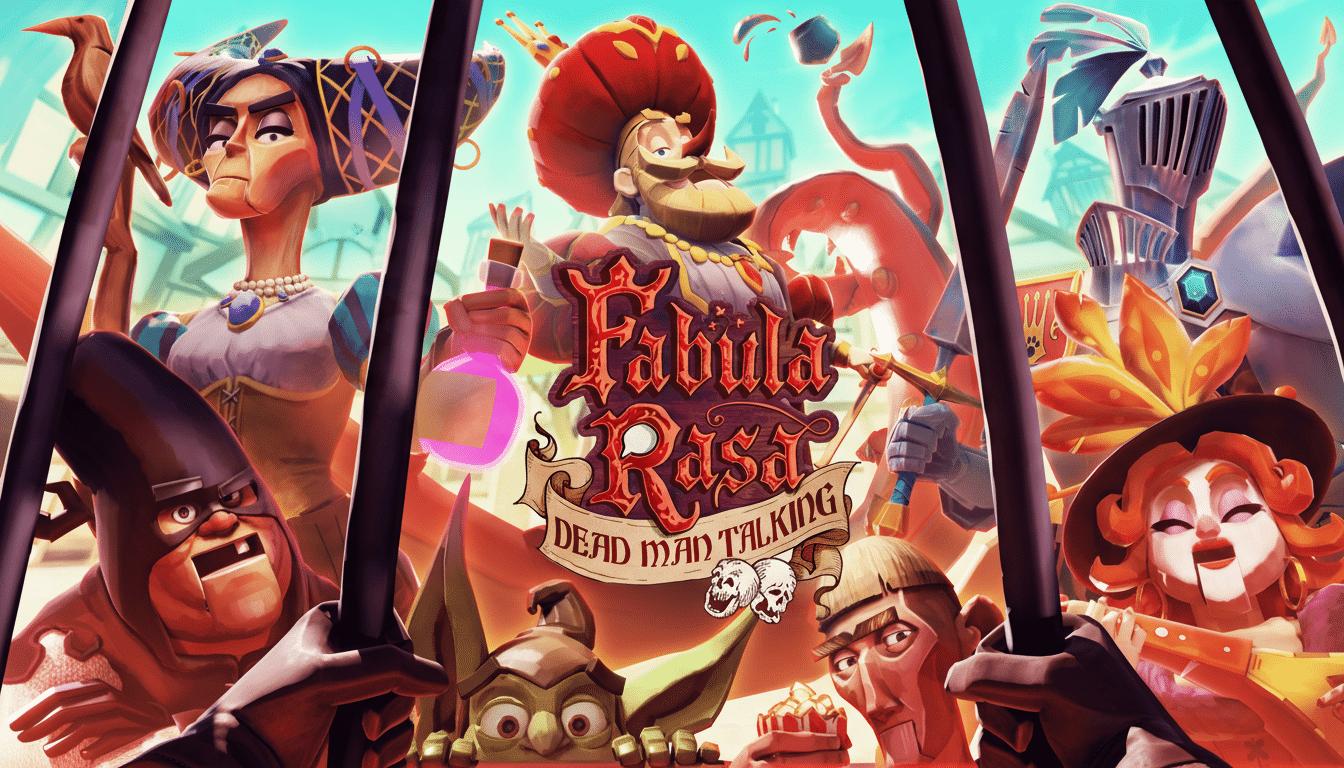
After thirty minutes inside Fabula Rasa: Dead Man Talking, I walked out of the SXSW XR Exhibition convinced I’d just glimpsed the future of role-playing games. This experimental VR title from Brazilian studio Arvore turns every conversation into a fully improvised exchange with AI-driven characters—no dialogue wheels, no canned barks—just freeform performance that reacts to whatever you say.
NPCs Without Scripts Change Everything About Play
The premise sounds simple and quietly radical. You play a condemned prisoner dangling above a monster pit, and your survival hinges on how you talk your way through an ever-shifting cast of visitors. The twist is that none of those characters are locked to preset lines. You invent your backstory on the fly; they answer in kind, reshaping motives, alliances, and even the end of your story in real time.
Imagine the social fabric of an RPG—tavern drunks, pickpockets, guards—suddenly unbound from finite dialogue trees. That last henchman you spared might return three hours later with a grudge or a favor because you asked the right (or wrong) question. It’s the difference between playing through choices and performing a role.
In my session, a tin-can knight eventually revealed himself as three cats in a trench coat, which I parried with a tall tale about three dogs who ran a cobbler shop with me. Minutes later, I bargained with a very short king, promising handmade heels that would silence the “highness” jokes. The game kept up, volley for volley. It never felt like I was tricking an algorithm; it felt like improvising with a troupe that knew its world and wanted to play.
Built Like Improv Theater With LLMs and Voice AI
Arvore describes Fabula Rasa as improv theater in a headset, and that tracks with how it’s built. The team workshopped with comedians, then stitched together a stack of AI tools so characters could “yes, and” your choices instead of snapping back to rails. Dialogue is powered by a large language model—Arvore cites Claude for conversation—and voice delivery comes from ElevenLabs, which makes the back-and-forth feel immediate and in-character.
Crucially, the studio says the art is handcrafted. AI isn’t replacing artists or writers here; it’s the game mechanic. That distinction matters. Ubisoft made waves in 2023 when it unveiled Ghostwriter to help draft NPC barks, and Nvidia’s ACE toolkit for digital NPCs showed where conversational tech is headed. Fabula Rasa pushes that idea into live performance, treating AI as the stage rather than a shortcut in the prop room.
Why This Matters for RPG Design and Player Agency
RPGs have long traded on the illusion of choice. Branching quests and morality meters suggest boundless agency, yet most outcomes collapse into a handful of endings. Freeform dialogue could uncork side stories and character arcs at the pace players actually think and speak. If a stranger in a medieval market can become your confidant because you noticed the scar on his wrist, that’s not a node on a flowchart—that’s authorship shared between player and system.
There’s an audience waiting. According to the Entertainment Software Association’s most recent Essential Facts report, roughly 65% of Americans play video games, and role-playing consistently ranks among the most-loved genres. On PC, Valve’s Steam Hardware Survey has hovered around 2% monthly active users with VR headsets—small but steady. If AI-native conversation shortens the learning curve and deepens presence, that usage could climb, especially as headsets get lighter and cheaper.
Two Big Hurdles: Cost and Latency in Live AI Dialogue
For now, the tech is expensive and a bit fragile. Every improvised scene consumes tokens on a cloud model, and the bill scales with player verbosity. That’s manageable at a festival booth; it’s tricky when thousands of players riff at once. Running smaller models on-device would help, but today’s frontier systems still lean on the cloud for quality.
Then there’s timing. Natural talk depends on quick turns. The telecom standard-bearer ITU suggests one-way voice latency under roughly 150 milliseconds feels responsive; stack cloud inference, network jitter, and text-to-speech, and you’ll often creep above that. Fabula Rasa’s exchanges were impressively fluid, but you can feel the system working under pressure. The good news: model distillation, smarter caching, and edge inference are all moving quickly, and industry roadmaps from chipmakers to cloud providers point to lower costs and faster responses.
The Culture War Around AI in Games and Art
Any mention of AI in development invites skepticism—sometimes for good reason. Some studios have faced backlash for AI-assisted assets, with one indie hit even losing festival awards after using AI-treated textures. Others weathered boycotts and still sold briskly. Fabula Rasa neatly sidesteps much of that by using AI as performance infrastructure while crediting human artists for the world itself. That won’t end the debate, but it reframes the question: not “Is AI replacing people?” but “Can AI unlock play we couldn’t stage before?”
Hands-On Verdict and What Comes Next for Fabula Rasa
Fabula Rasa is still a proof of concept, and Arvore says a commercial release will take time. Token costs must come down; models need to shrink or get cheaper to host; turn-taking must feel seamlessly human. Yet even in this early state, the design clicks. When a character argues to spare your life because of a story you invented seconds earlier, consequence stops feeling scripted and starts feeling earned.
The brightest version of this tech woven into a big open world looks a bit like Westworld without the moral hazard: a place where every stranger can talk, remember, and change. If studios can pair that with strong authored arcs—and resist the temptation to let AI flood the zone with filler—we’ll get RPGs that listen as much as they speak. Fabula Rasa doesn’t just point at that horizon; for a few uncanny, hilarious moments, it lets you live there.

